WASHINGTON: Elon Musk’s AI chatbot Grok produced inaccurate and contradictory responses when users sought to fact-check the Israel-Iran conflict, a study said Tuesday, raising fresh doubts about its reliability as a debunking tool.
With tech platforms reducing their reliance on human fact-checkers, users are increasingly utilizing AI-powered chatbots — including xAI’s Grok — in search of reliable information, but their responses are often themselves prone to misinformation.
“The investigation into Grok’s performance during the first days of the Israel-Iran conflict exposes significant flaws and limitations in the AI chatbot’s ability to provide accurate, reliable, and consistent information during times of crisis,” said the study from the Digital Forensic Research Lab (DFRLab) of the Atlantic Council, an American think tank.
“Grok demonstrated that it struggles with verifying already-confirmed facts, analyzing fake visuals, and avoiding unsubstantiated claims.”
The DFRLab analyzed around 130,000 posts in various languages on the platform X, where the AI assistant is built in, to find that Grok was “struggling to authenticate AI-generated media.”
Following Iran’s retaliatory strikes on Israel, Grok offered vastly different responses to similar prompts about an AI-generated video of a destroyed airport that amassed millions of views on X, the study found.
It oscillated — sometimes within the same minute — between denying the airport’s destruction and confirming it had been damaged by strikes, the study said.
In some responses, Grok cited the a missile launched by Yemeni rebels as the source of the damage. In others, it wrongly identified the AI-generated airport as one in Beirut, Gaza, or Tehran.
When users shared another AI-generated video depicting buildings collapsing after an alleged Iranian strike on Tel Aviv, Grok responded that it appeared to be real, the study said.
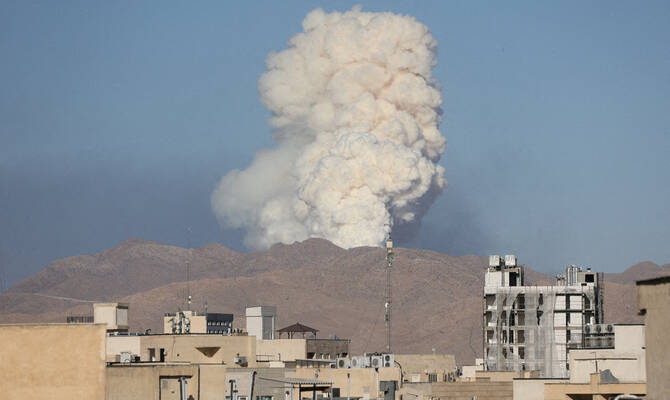
The Israel-Iran conflict, which led to US air strikes against Tehran’s nuclear program over the weekend, has churned out an avalanche of online misinformation including AI-generated videos and war visuals recycled from other conflicts.
AI chatbots also amplified falsehoods.
As the Israel-Iran war intensified, false claims spread across social media that China had dispatched military cargo planes to Tehran to offer its support.
When users asked the AI-operated X accounts of AI companies Perplexity and Grok about its validity, both wrongly responded that the claims were true, according to disinformation watchdog NewsGuard.
Researchers say Grok has previously made errors verifying information related to crises such as the recent India-Pakistan conflict and anti-immigration protests in Los Angeles.
Last month, Grok was under renewed scrutiny for inserting “white genocide” in South Africa, a far-right conspiracy theory, into unrelated queries.
Musk’s startup xAI blamed an “unauthorized modification” for the unsolicited response.
Musk, a South African-born billionaire, has previously peddled the unfounded claim that South Africa’s leaders were “openly pushing for genocide” of white people.
Musk himself blasted Grok after it cited Media Matters — a liberal media watchdog he has targeted in multiple lawsuits — as a source in some of its responses about misinformation.
“Shame on you, Grok,” Musk wrote on X. “Your sourcing is terrible.”


Grok shows ‘flaws’ in fact-checking Israel-Iran war: study
https://arab.news/6f8at
Grok shows ‘flaws’ in fact-checking Israel-Iran war: study

- “Grok demonstrated that it struggles with verifying already-confirmed facts, analyzing fake visuals, and avoiding unsubstantiated claims”


Lebanon approves financial gap draft law despite opposition from Hezbollah and Lebanese Forces
- Legislation aims to address the fate of billions of dollars in deposits that have been inaccessible to Lebanese citizens during the country’s financial meltdown
BEIRUT: Lebanon’s Cabinet on Friday approved a controversial draft law to regulate financial recovery and return frozen bank deposits to citizens. The move is seen as a key step in long-delayed economic reforms demanded by the International Monetary Fund.
The decision, which passed with 13 ministers voting in favor and nine against, came after marathon discussions over the so-called “financial gap” or deposit recovery bill, stalled for years since the banking crisis erupted in 2019. The ministers of culture and foreign affairs were absent from the session.
The legislation aims to address the fate of billions of dollars in deposits that have been inaccessible to Lebanese citizens during the country’s financial meltdown.
The vote was opposed by three ministers from the Lebanese Forces Party, three ministers from Hezbollah and the Amal Movement, as well as the minister of youth and sports, Nora Bayrakdarian, the minister of communications, Charles Al-Hajj, and the minister of justice, Adel Nassar.
Finance Minister Yassin Jaber broke ranks with his Hezbollah and Amal allies, voting in favor of the bill. He described his decision as being in line with “Lebanon’s supreme financial interest and its obligations to the IMF and the international community.”
The draft law triggered fierce backlash from depositors who reject any suggestion they shoulder responsibility for the financial collapse. It has also drawn strong criticism from the Association of Banks and parliamentary blocs, fueling fears the law will face intense political wrangling in Parliament ahead of elections scheduled in six months.
Prime Minister Nawaf Salam confirmed the Cabinet had approved the bill and referred it to Parliament for debate and amendments before final ratification. Addressing public concerns, he emphasized that the law includes provisions for forensic auditing and accountability.
“Depositors with accounts under $100,000 will be repaid in full with interest and without any deductions,” Salam said. “Large depositors will also receive their first $100,000 in full, and the remainder will be issued as negotiable bonds backed by the assets of the Central Bank, valued at around $50 billion.”
He said further that bondholders will receive an initial 2 percent payout after the first tranche of repayments is completed.
The law also includes a clause requiring criminal accountability. “Anyone who smuggled funds abroad or benefited from unjustified profits will be fined 30 percent,” Salam said.
He emphasized that Lebanon’s gold reserves will remain untouched. “A clear provision reaffirms the 1986 law barring the sale or mortgaging of gold without parliamentary approval,” he said, dismissing speculation about using the reserves to cover financial losses.
Salam admitted that the law was not perfect but called it “a fair step toward restoring rights.”
“The banking sector’s credibility has been severely damaged. This law aims to revive it by valuing assets, recapitalizing banks, and ending Lebanon’s dangerous reliance on a cash economy,” he said. “Each day of delay further erodes people’s rights.”
While the Association of Banks did not release an immediate response after the vote, it previously argued during discussions that the law would destroy remaining deposits. Bank representatives said lenders would struggle to secure more than $20 billion to cover the initial repayment tier and accused the state of absolving itself of responsibility while effectively granting amnesty for decades of financial mismanagement and corruption.
The law’s fate now rests with Parliament, where political competition ahead of the 2025 elections could complicate or delay its passage.
Lebanon’s banking sector has been at the heart of the country’s economic collapse, with informal capital controls locking depositors out of their savings and trust in state institutions plunging. International donors, including the IMF, have made reforms to the sector a key condition for any financial assistance.


