

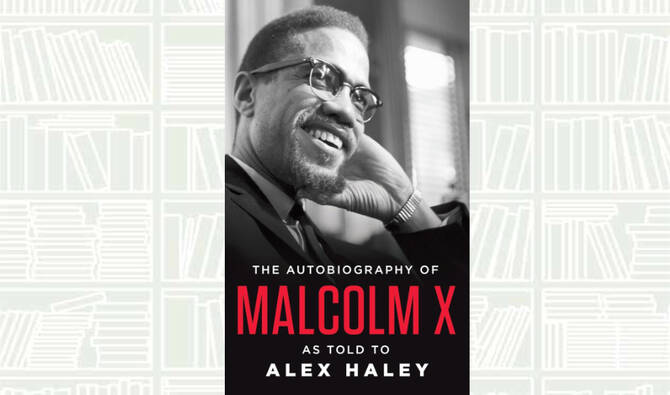

Author: Alex Haley
Malcolm X’s posthumously published 1965 autobiography, crafted with Alex Haley, remains an indispensable document of the 20th-century US.
Its visceral narrative traces an extraordinary metamorphosis — from street hustler to revolutionary thinker — and offers enduring lessons about systemic injustice and the power of self-reinvention.
The opening chapters detail the African American civil rights activist’s fractured youth: His father’s violent death (officially a car accident, though family attributed it to white supremacists), his mother’s mental collapse and his pivot to crime as “Detroit Red.”
What struck me most was how imprisonment became his unlikely crucible.
Through voracious self-education and conversion to the Nation of Islam, Malcolm X transformed into one of America’s most incisive racial commentators.
Haley structures Malcolm’s blistering critiques — including his rejection of nonviolent protest and disillusionment with white liberalism — with journalistic precision.
Malcolm X’s 1964 pilgrimage to Makkah proves the memoir’s most consequential pivot. Witnessing racial unity in the holy city fundamentally reoriented his worldview. He began advocating cross-racial coalition-building against oppression, a philosophical evolution abruptly halted by his February 1965 assassination.
Haley’s contribution deserves note: His disciplined prose tempers Malcolm’s polemical intensity, lending the narrative reflective depth without diluting its urgency.
While academics occasionally quibble over timeline specifics (notably Malcolm X’s early NOI chronology), the memoir’s moral core stands unchallenged.
What lingers for me is Malcolm X’s intellectual ferocity — how his advocacy for education as liberation weaponized knowledge against subjugation.
Malcolm X’s demand for Black self-determination continues to challenge America’s unresolved racial contradictions with unnerving relevance. Half a century later, the book remains essential reading not for easy answers, but for its uncompromising questions.


