

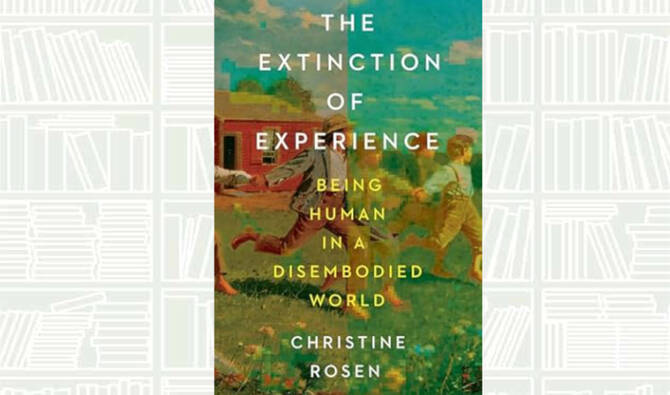

“The Extinction of Experience: Being Human in a Disembodied World” by Christine Rosen, a senior fellow at the American Enterprise Institute, discusses how humans are relying heavily on technology and digital interactions in modern times.
Rosen argues in her 2024 book that this reliance has made people dependent on them for almost everything.
Digital experiences, according to the author, are replacing real-world experiences and, with time, this will push people even further from genuine contact and physical presence.
According to Rosen, this could potentially reduce people’s understanding of empathy and connection, or even memory.
She stresses the importance of utilizing technology wisely and calls for a critical and mindful approach to it. She also emphasizes the need to bring back genuine experiences through physical interaction so they can be treasured.
One of the strong points of the book is the author’s writing style and how she narrows down and simplifies the issue of technology dependency for readers.
On the other hand, its weaknesses — that have been highlighted by readers — are that some of its chapters lack a realistic view of the world we live in, and keep repeating issues and complaining about current problems without providing solutions.
Rosen is also the author of “My Fundamentalist Education” and “Preaching Eugenics.”


