

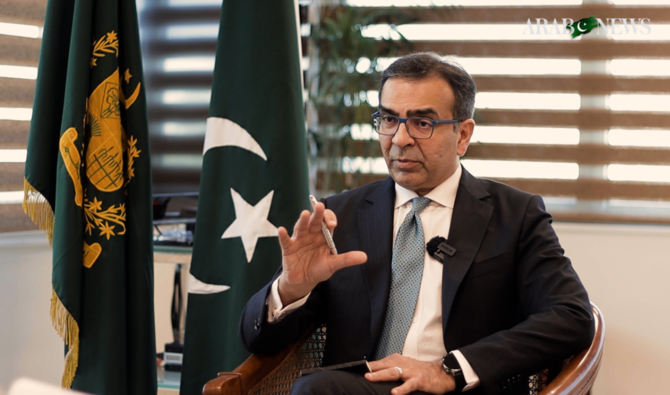

ISLAMABAD/ KARACHI: Pakistan plans to hold final bidding to sell its loss-making national airline by October and complete the sale by the end of this year, the country’s privatization czar said in an interview this week, in what would be Islamabad’s most serious effort yet to sell off Pakistan International Airlines (PIA) after decades of repeated failures and costly government bailouts.
The latest attempt comes as the government seeks to cut losses from state-owned firms that have drained the public purse and undermined economic stability for years. PIA, once a respected carrier in Asia, has been propped up by taxpayers for decades due to political interference, corruption and inefficiencies. Its privatization has also repeatedly collapsed amid union resistance, legal hurdles and low investor appetite.
Selling off unprofitable state companies has been a key demand of international lenders such as the International Monetary Fund (IMF), whose support is critical for Pakistan to avoid default and manage its ballooning debt.
Last week, five consortiums submitted expressions of interest for a 51–100 percent stake in PIA after the government restructured its balance sheet to make the deal more attractive. It has also scrapped the sales tax on leased aircraft and is providing limited protection from legal and tax claims. Around 80 percent of the airline’s debt has been transferred to the state.
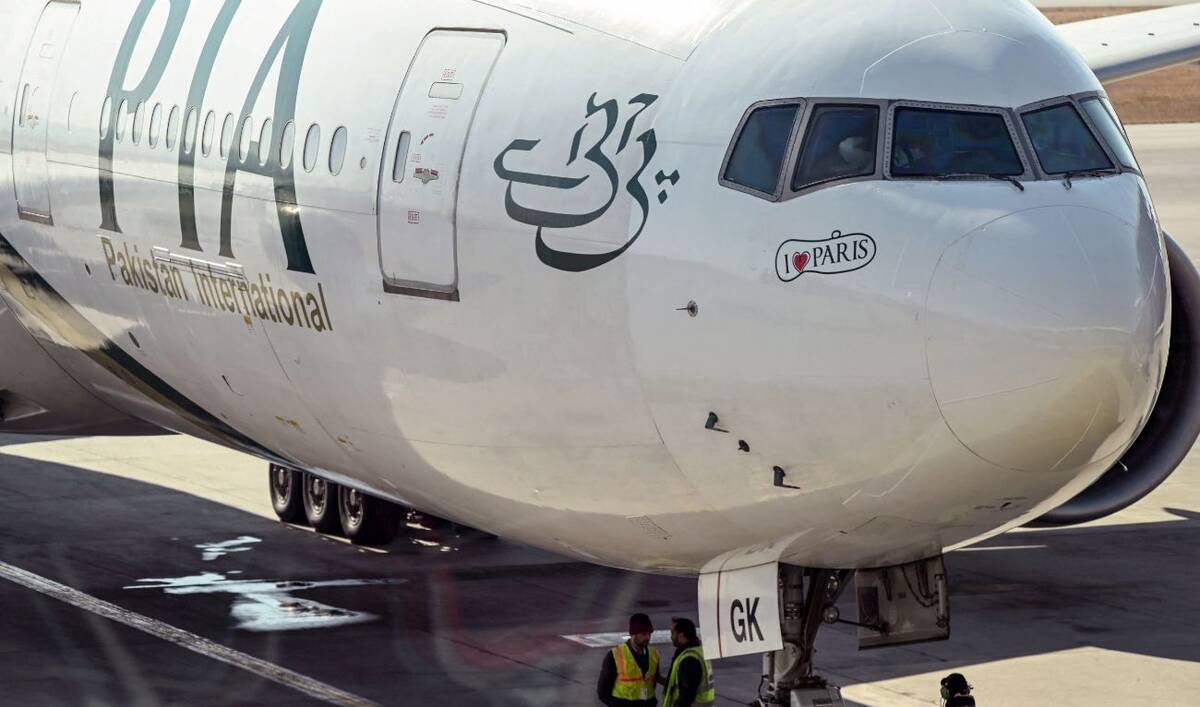
Ground staff stand next to the Pakistan International Airline (PIA) aircraft ahead of its takeoff for Paris at the Islamabad International Airport on January 10, 2025, as EU authorities lift a four-year ban on the state airline. (AFP/ file)
“There are five expressions of interest from five different consortiums. Now we’ll be pre-qualifying them and all five may or may not qualify to go into the due diligence process,” Muhammad Ali, chairman of the Privatization Commission, told Arab News in an interview on Monday.
He said officials hoped to shortlist bidders by the end of June and open a data room in July.
“We are hoping that all the bidders will take roughly two months, 60 days time, for the due diligence and then we will enter into final discussions and negotiation of the terms and conditions of the transaction,” he said.
“So, we are hoping that sometime in September–October we should have the final bidding but in any case, before the end of the year we will wrap it up.”
WHY KEEP MINORITY SHAREHOLDING?
Pakistani state-owned enterprises post annual losses of more than Rs800 billion ($2.87 billion), and when subsidies, grants and other support are included, the burden swells beyond Rs1 trillion ($3.59 billion), Finance Minister Muhammad Aurangzeb told parliament while presenting the budget for fiscal year 2025–26 earlier this month.
PIA has been one of the government’s most costly liabilities, which has accumulated over $2.5 billion in losses in roughly a decade and been surviving on repeated bailouts that have weighed heavily on Pakistan’s strained budget.
To attract buyers, Islamabad has moved PIA’s decades-old bank debt into a separate holding company, leaving a leaner core business with passenger, cargo and engineering operations, among others.
“So, PIA, the aviation, the core company which we are privatizing, that doesn’t have that debt anymore,” Ali said. “So, after taking care of all of that, it will be a positive balance sheet that we will be passing on to the investor.”
Last week’s bids were submitted ahead of a June 19 deadline to acquire up to 100 percent of PIA, which, following a major restructuring effort, posted its first operating profit in 21 years in the year through June 2024.
When asked why the government wanted to keep a minority shareholding rather than sell the whole company, the privatization chief said it was to benefit financially if the airline improved after the sale.
“Frankly, the government is not interested in controlling this entity anymore,” Ali said. “If the government is very actively involved in the decision-making, then that spirit is not met. So, from a control element, we want the private sector to be totally authorized to take all the decisions.”
But once PIA turned around, “the government would want to make some money off it.”
“So, the government would like to keep 20 to 25 percent, that’s our wish list. But again, that depends on our final negotiations with the investors.”
The privatization chief also dismissed concerns that the PIA sale could face the same pitfalls as the government’s partial privatization of Pakistan Telecommunication Company Limited (PTCL) in 2006, when a 26 percent stake and management control were sold to UAE’s Etisalat. To date, the Abu Dhabi-listed operator has withheld $800 million because the government did not transfer title of some properties to PTCL as per the deal terms.
“In case of PIA, there is no issue as far as land title or anything like that is concerned,” Ali said, adding that unlike PTCL, the government would ensure the majority stake was fully transferred and proceeds are received upfront, while any residual stake would be sold later “when the time is right.”
WHAT PRICE TO EXPECT
A previous attempt to sell PIA failed when a $36 million bid from real estate firm Blue World City fell far short of the $305 million floor price for a 60 percent stake, amid concerns over debt, staffing and limited control. The government rejected the bid.
Ali said this time the reference price could be higher given that the airline was showing modest signs of recovery, resuming profitable European routes and hoping for UK clearance soon, which officials expect will lift revenues and support a stronger valuation.
But he insisted Islamabad would walk away again if the new bids fell short, noting that even private sector attempts to sell large assets often required multiple rounds.
“What we would want is we get our reference price or higher. And if we have to wait a bit, we will wait it out a bit,” he added.
“It’s a great asset, frankly. It’s not losing money, it’s making money … PIA is doing well, the Paris route is doing well, they keep adding the flights, we are hoping that the UK route will start … So, with every new route which opens up, PIA’s performance will keep getting better. So I wouldn’t be worried about that [low bids].”
While all five bids in this round are from local consortiums, with only one group including a non-resident Pakistani group from the United States, the privatization chairman said he was not concerned about the lack of foreign interest for now.
“We have this infatuation with trying to get foreign investors in every industry. I think we have to give it a thought... If a local group takes it, I’m very happy,” Ali said, adding that Pakistani buyers could later bring in foreign airline partners once the turnaround took hold.
Pakistan has pledged to reduce the drag of loss-making state firms on the budget as part of reforms tied to its latest $7 billion IMF bailout and to secure fresh external financing.
The government expects to raise about Rs86 billion — basically its last floor price for PIA — in privatization proceeds in the coming fiscal year starting in July, mainly from the national carrier and a few other transactions such as partial sales of power distribution companies and the Roosevelt Hotel in New York.
But with annual losses from inefficient state-owned enterprises estimated at more than Rs850 billion ($3 billion), the modest target underscores how few assets Islamabad realistically expects to offload in the near term.
“In order to get rid of this Rs850 billion loss to the exchequer, we need to have a very, very aggressive privatization and deregulation agenda,” Ali said, “whereby the market forces in the private sector focus on business and the government comes out of this. So it’s a long journey.”


