

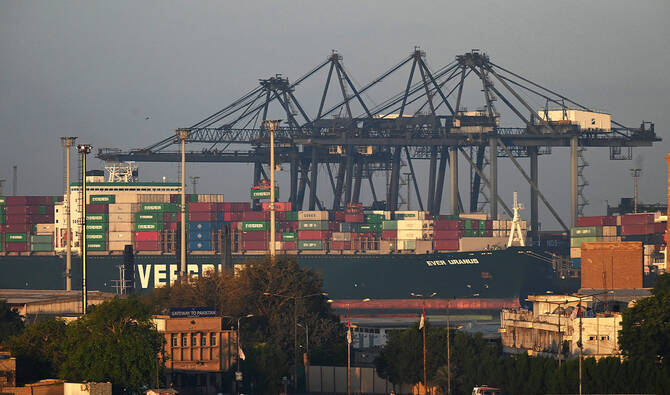

KARACHI: The Pakistani government has reduced port charges for exporters by 50 percent at the country’s second biggest Port Qasim, the Pakistani maritime affairs ministry said on Monday, amid efforts to boost trade and economic growth.
The development came after a strategic roadmap meeting of the ministry, at which Maritime Affairs Minister Junaid Anwar Chaudhry emphasized the government’s commitment to creating opportunities for local businesses and encouraging trade through ports and fisheries.
Pakistan is striving to boost trade and investment amid a gradually healing macroeconomic environment after a prolonged downturn that forced Islamabad to seek external financing from friendly nations and multiple loan programs with the International Monetary Fund (IMF).
“The government’s reform agenda in the maritime sector, including the charge reduction at Port Qasim, signals a strong commitment to supporting the business community, enhancing trade facilitation, and promoting economic development across coastal regions,” he was quoted as saying.
Officials briefed the participants that the Marine Fisheries Department had met its export target of $410 million this fiscal year through fisheries and aquaculture exports, according to the maritime ministry. Additionally, the ship recycling industry had generated a revenue of Rs6 billion ($21.1 million), reflecting the growing potential of maritime industries in the country.
Chaudhry said the government is focused on modernizing port infrastructure, streamlining customs operations, and fostering a business-friendly environment to enhance Pakistan’s competitiveness in international trade.
“The Ministry of Maritime Affairs is actively working on reforms to unlock the economic potential of vast coastline and maritime resources,” he said. “These efforts are part of a broader strategy to transform the maritime sector, boost exports, and contribute significantly to the country’s GDP.”
He announced his ministry’s plans to establish an Aquaculture Industrial Zone aimed at promoting business activities in the marine and aquaculture sectors.
“Pakistan’s first-ever Marine and Aquaculture Policy will be introduced soon to provide a comprehensive framework for sustainable development in these areas,” he said.


