

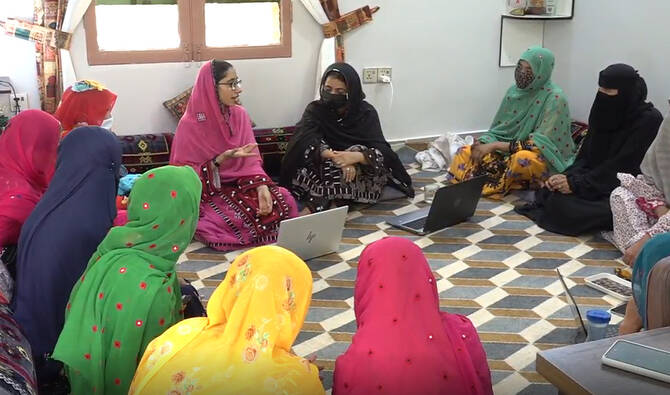

BELA, Pakistan: On a summer afternoon in the village of Ahmadabad Wang village in southwestern Pakistan this month, the sun filtered through the wooden slats of a modest building tucked between fields and dusty open lands.
Inside, the sharp scent of chalk and fabric mixed with the low hum of women’s voices.
Here, on a carpeted floor lined with checkered rugs and cylindrical pillows, women and girls had gathered not to cook or clean or care but to talk: about reproductive health, about puberty. About what they wanted from life and the future.
And they are doing it in an Autaq, a space that for generations has been the exclusive domain of men in the southern Sindh province and in districts of Balochistan that border Sindh, Lasbela being one of them.
“The concept of Autaq is deeply rooted in our culture, both Sindhi and Baloch,” said Hafsa Qadir, 22, a sociology graduate who helped found this women-only version in December last year.
“Here, we talk about a range of challenges — SRHR [sexual and reproductive health and rights], menstruation, hygiene and skill-based education. All those issues that we can’t talk about openly outside, we discuss them freely here.”
Growing up, Qadir had watched her male cousins gather in their Autaq, with cushions piled high and the clink of tea cups punctuating heated discussions. Girls stood at the threshold, never allowed inside.
“Usually, it serves as a community center, but only for men,” she said. “It just represents half of the community.”
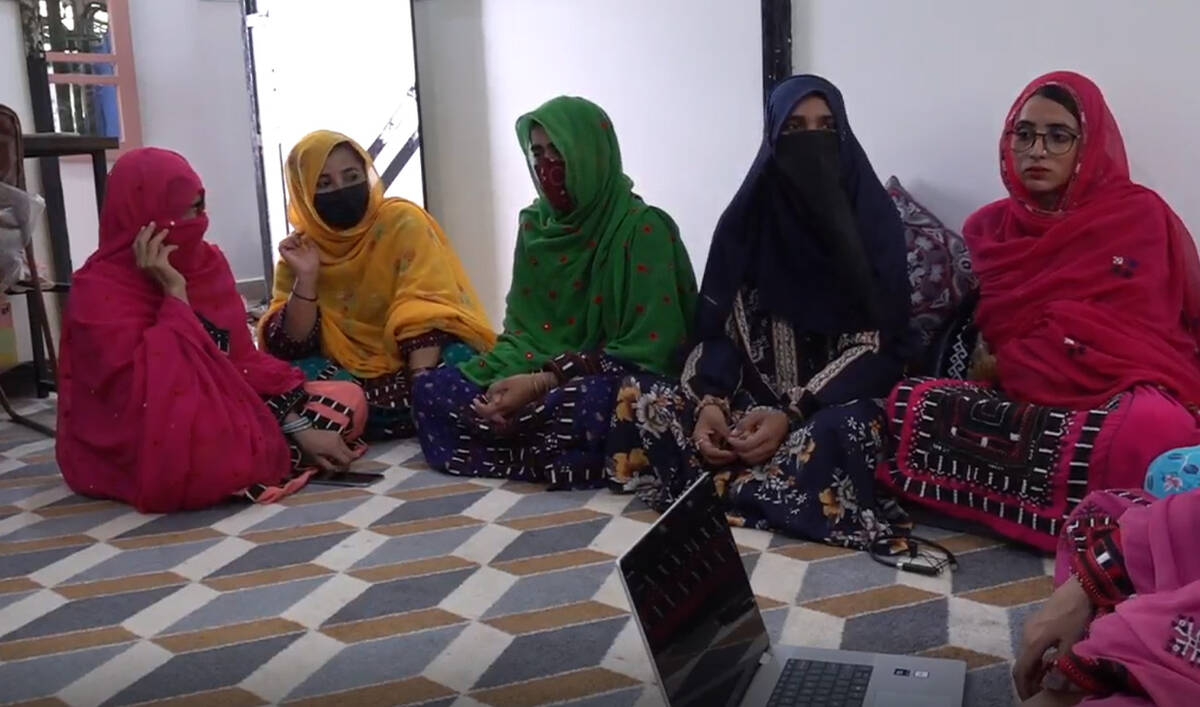
Women attend autaq in Balochistan's Lasbela on June 20, 2025. (AN Photo)
That memory stayed with her until she and six women from surrounding villages decided to build something of their own.
The Addi Autaq, laid with humble furnishings and hand-stitched cushions, now welcomes over 50 women and girls each week. Every time the women gather, the room buzzes with energy and purpose, its walls bearing witness to conversations once whispered behind closed doors.
Next to it Addi Autaq is a small stitching center where women thread needles and run fabric through clacking machines. The clothes they make are sold in local markets and for some, it’s the first time they’ve earned their own income.
“There was no place here before where we could sit and speak openly,” said Saima Kareem, a student who pays her university tuition with her earnings.
“I feel very proud that I can bear my own expenses… cover my educational expenses and help out my family as well.”
“BIG ACHIEVEMENT”
Their revolution has come with quiet persistence.
Balochistan, after all, is no easy place to be a woman. It is Pakistan’s largest province by area but also its most underserved. Female literacy stands at around 24 percent, far below the national average. Access to basic health care is limited. Many girls never complete school and few women join the workforce.
Against that landscape, the idea of women not just gathering, but leading, shaping dialogue, earning money, is almost audacious.
“When we started the Autaq, we faced many challenges,” said Tehreem Amin, 23, an environmental sciences graduate.
“We approached the elders in our families, brothers, fathers, those who were educated, and talked to them, explained our purpose, and gradually helped shift their thinking.”
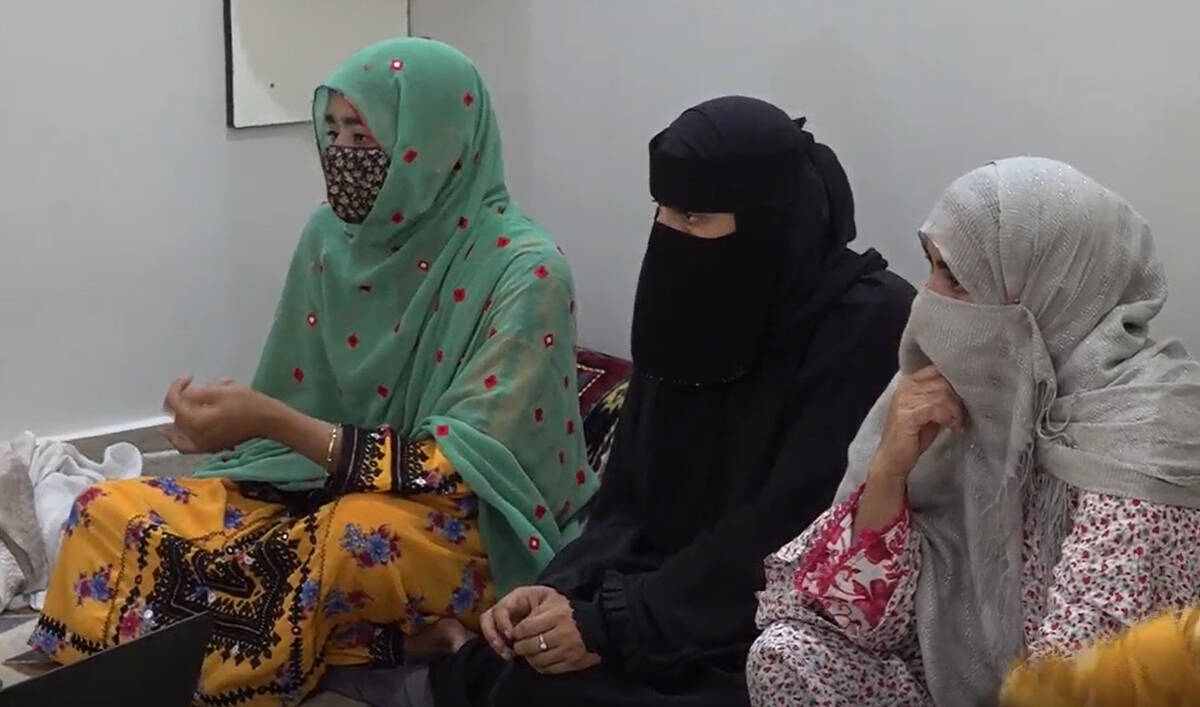
Women participating in an all female Autaq in Balochistan's Lasbela on June 20, 2025. (AN Photo)
Now, once skeptical male relatives are sending their daughters to the Autaq.
“When we started our own Autaq, it had some impact… Some women [on social media] have even said they want to visit, see how we created this Autaq, how we built a space that is truly safe for women,” said Asma Ali, 24, a teacher and co-founder, as evening fell and women left the carpeted room and moved to a nearby garden.
There, in the open air, they held reading circles and dreamt aloud about education, leadership, financial independence.
“The Autaq we’ve established is a big achievement,” Amin, the environmental sciences graduate, said.
“But I believe when such Autaqs exist in every village, in every corner of Pakistan… only then will it be a real success.”


