

Saudi culture sector to triple GDP share to $48bn by 2030, says minister

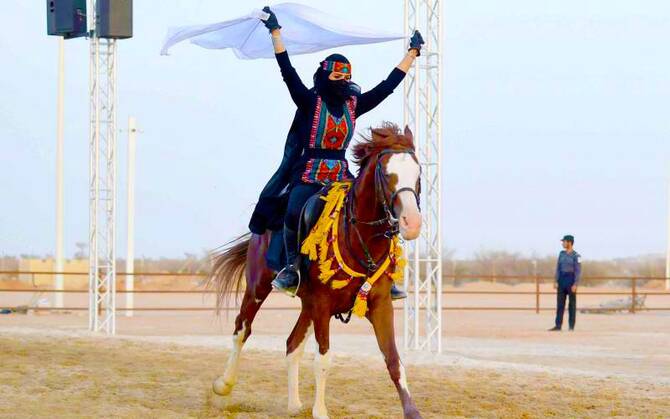
Cultural event attendance exceeded 23.5 million between 2021 and 2024, and major festivals such as the Red Sea Film Festival and Islamic Arts Biennale have become global draws. AFP
Short Url
Updated 22 June 2025
Follow

Saudi culture sector to triple GDP share to $48bn by 2030, says minister

JEDDAH: Saudi Arabia plans to raise the cultural sector’s contribution to gross domestic product to 3 percent — or SR180 billion ($48 billion) — by 2030, up from under 1 percent, according to Minister of Culture Prince Badr bin Abdullah bin Farhan.

In an interview with Al-Eqtisadiah, the minister said the sector has already surpassed its previous 0.91 percent GDP share, with Vision 2030 targets being met ahead of schedule.

“Vision 2030 forms the foundation of the Ministry of Culture’s strategy and direction,” he said. 

“By 2030, we envision a cultural environment that nurtures talent, encourages innovation both locally and internationally, and supports the flourishing of creative and cultural enterprises.” Prince Badr said in the interview. 

“Ultimately, our goal is to increase the sector’s contribution to GDP to 3 percent, equivalent to SR180 billion,” he said. “This represents the core mission of the Ministry of Culture and its affiliated bodies in driving an ambitious cultural transformation.”

Since the ministry’s founding in 2018, employment in the sector has jumped 318 percent, while the number of cultural graduates reached 28,800 in 2024, up 79 percent from 2018. The ministry has also issued over 9,000 licenses, while cultural associations and amateur clubs surged from 28 to 993.

“One notable outcome is the increase in the percentage of citizens who believe culture is important—from under 70 percent to 92 percent,” Prince Badr said. The ministry also oversees national celebrations such as Founding Day and Flag Day and has documented 9,317 antiquities sites and 25,000 urban heritage locations.

Saudi Arabia has now met its Vision 2030 target of having eight UNESCO World Heritage sites, with Al-Faw joining the list in 2024. Cultural event attendance exceeded 23.5 million between 2021 and 2024, and major festivals such as the Red Sea Film Festival and Islamic Arts Biennale have become global draws.

The Cultural Scholarship Program has awarded scholarships to 1,222 students studying at over 120 institutions across countries, including the US, the UK, and France. The program’s flexible design — no age limit or required academic background — has broadened participation. “Today, scholarship recipients are pursuing degrees in fields such as music, theater, and visual arts,” the minister said.

Through the Cultural Development Fund, the ministry has disbursed SR377 million to more than 120 projects. “Key areas of growth include heritage, music, and fashion. More than 1,200 creatives and entrepreneurs have benefited from its development services,” he added.

“Globally, there is increasing recognition of culture’s role in sustainable economic value creation,” the minister said. “Our role is to preserve and promote cultural identity while making it accessible and economically valuable.”


Education spending surges 251% as students return from autumn break: SAMA

Updated 12 December 2025
Follow

Education spending surges 251% as students return from autumn break: SAMA

RIYADH: Education spending in Saudi Arabia surged 251.3 percent in the week ending Dec. 6, reflecting the sharp uptick in purchases as students returned from the autumn break.

According to the latest data from the Saudi Central Bank, expenditure in the sector reached SR218.73 million ($58.2 million), with the number of transactions increasing by 61 percent to 233,000.

Despite this surge, overall point-of-sale spending fell 4.3 percent to SR14.45 billion, while the number of transactions dipped 1.7 percent to 236.18 million week on week.

The week saw mixed changes between the sectors. Spending on freight transport, postal and courier services saw the second-biggest uptick at 33.3 percent to SR60.93 million, followed by medical services, which saw an 8.1 percent increase to SR505.35 million.

Expenditure on apparel and clothing saw a decrease of 16.3 percent, followed by a 2 percent reduction in spending on telecommunication.

Jewelry outlays witnessed an 8.1 percent decline to reach SR325.90 million. Data revealed decreases across many other sectors, led by hotels, which saw the largest dip at 24.5 percent to reach SR335.98 million. 

Spending on car rentals in the Kingdom fell by 12.6 percent, while airlines saw a 3.7 percent increase to SR46.28 million.

Expenditure on food and beverages saw a 1.7 percent increase to SR2.35 billion, claiming the largest share of the POS. Restaurants and cafes retained the second position despite a 12.6 percent dip to SR1.66 billion.

Saudi Arabia’s key urban centers mirrored the national decline. Riyadh, which accounted for the largest share of total POS spending, saw a 3.9 percent dip to SR4.89 billion, down from SR5.08 billion the previous week.

The number of transactions in the capital settled at 74.16 million, down 1.4 percent week on week.

In Jeddah, transaction values decreased by 5.9 percent to SR1.91 billion, while Dammam reported a 0.8 percent surge to SR713.71 million.

POS data, tracked weekly by SAMA, provides an indicator of consumer spending trends and the ongoing growth of digital payments in Saudi Arabia. 

The data also highlights the expanding reach of POS infrastructure, extending beyond major retail hubs to smaller cities and service sectors, supporting broader digital inclusion initiatives. 

The growth of digital payment technologies aligns with the Kingdom’s Vision 2030 objectives, promoting electronic transactions and contributing to the nation’s broader digital economy.