

UN warns of ‘disastrous consequences’ of escalating Sudan fighting

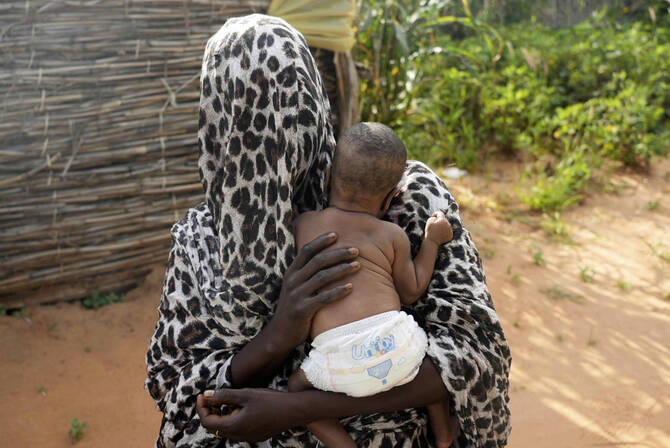
The United Nations’ rights chief Volker Turk said on Friday that escalating fighting in Sudan’s west and center risks aggravating harm to civilians and abuses. (AP)
Short Url
Updated 20 June 2025
Follow

UN warns of ‘disastrous consequences’ of escalating Sudan fighting

  • “The recent fighting and grave risk of further aggravation in an already brutal and deadly conflict raise severe protection concerns,” Turk said
  • “For too long already, the world has witnessed the unbound horrors unfolding in Sudan”

GENEVA: The United Nations’ rights chief Volker Turk said on Friday that escalating fighting in Sudan’s west and center risks aggravating harm to civilians and abuses, more than two years into the country’s war.

Turk in a statement warned of “the disastrous consequences stemming from ongoing and escalating hostilities” in the Darfur and Kordofan regions, “where civilian casualties, sexual violence, abductions and looting have been reported in multiple areas.”

“The recent fighting and grave risk of further aggravation in an already brutal and deadly conflict raise severe protection concerns, amid a pervasive culture of impunity for human rights violations,” Turk said.

The war since April 2023 pits Sudan’s army against the paramilitary Rapid Support Forces, with both sides facing repeated accusations of human rights violations.

The fighting has killed tens of thousands and displaced 13 million, including four million who fled abroad, triggering what the United Nations has called the world’s worst humanitarian crisis.

“For too long already, the world has witnessed the unbound horrors unfolding in Sudan and the untold suffering of its people. Civilians must be protected at all costs. Violations and crimes must be thoroughly investigated and those responsible be held to account,” Turk said.

He pointed to a paramilitary attack on the long-besieged North Darfur state capital of El-Fasher “following months of increased mobilization of fighters, including the recruitment of children.”

Turk said this mirrors a previous offensive on a nearby displacement camp that “led to hundreds of civilian deaths, widespread sexual violence and a humanitarian catastrophe.”

Turk also said civilians were “trapped” in Dibeibat town in South Kordofan state as the warring sides fight to capture it, while the army-held city of El-Obeid in North Kordofan is “reportedly surrounded” by paramilitary forces.

The UN’s International Organization for Migration on Wednesday said more than 16,000 people had been displaced from areas hit by violence, including South Kordofan and Darfur.


Jordan, Germany committed to two-state solution

King Abdullah of Jordan receives German Chancellor Friedrich Merz in Aqaba. (Petra)
Updated 59 min 7 sec ago
Follow

Jordan, Germany committed to two-state solution

  • Chancellor Merz calls for more humanitarian aid to flow into the war-torn Gaza Strip

AMMAN: Jordan’s King Abdullah has warned of “the danger of continued Israeli escalations in the West Bank,” which Israel has occupied since 1967.

King Abdullah received German Chancellor Friedrich Merz during his brief stopover in Jordan on Saturday.

Their discussions in Aqaba focused mainly on the peace process in Israel and the Palestinian territories, AFP reported.

Merz called for more humanitarian aid to flow into the Gaza Strip and for Hamas fighters to lay down their weapons, adding that both Jordan and Germany are committed to a negotiated two-state solution.

FASTFACT

Jordan’s royal palace said in a statement that King Abdullah underlined ‘the need to commit to implementing all stages of the agreement to end the war and deliver humanitarian aid to all areas of the Gaza Strip.’

“There can be no place for terrorism and antisemitism in this shared future,” Merz said.

Jordan’s royal palace said in a statement that King Abdullah had underlined “the need to commit to implementing all stages of the agreement to end the war and deliver humanitarian aid to all areas of the strip.”

The meeting discussed ways to strengthen the partnership between Jordan and Germany, focusing on the deep-rooted ties between the two countries, Jordanian news agency Petra reported.

King Abdullah emphasized the importance of expanding cooperation in various domains, including the economic and defense sectors, and continuing to coordinate in support of efforts to achieve stability in the region, according to Petra.

The leaders highlighted the need to pursue a “political horizon to achieve a just and comprehensive peace in the region.”

Chancellor Merz expressed Germany’s readiness to strengthen cooperation with Jordan in various sectors.

The Syrian Arab Republic’s Sana news agency reported that the two leaders discussed ways to support Syria and Lebanon in maintaining their security, stability, and sovereignty.

They stressed the importance of respecting the sovereignty of regional countries and reviewed key developments in the Middle East.

Deputy Prime Minister and Foreign Minister Ayman Safadi had previously affirmed that Jordan continues to support Syria after years of war and destruction, expressing hope for a stable and secure future that ensures Syria’s territorial unity, Sana added.

King Abdullah separately met with Kaja Kallas, EU high representative for foreign affairs and security policy and European Commission vice president on Sunday to discuss ways to strengthen cooperation within the framework of the strategic and comprehensive partnership between Jordan and the EU.

The meeting at Basman Palace covered the importance of building on available economic opportunities, particularly through the Jordan-EU Summit, scheduled to be held in Amman in January 2026, as well as the joint economic forum scheduled for next year, with participation from investors on both sides.

The meeting also touched on regional developments and the need to achieve comprehensive calm and preserve the sovereignty of states.

The two sides emphasized that the two-state solution is the only way to achieve just and comprehensive peace.

The king reiterated the need to adhere to the terms of the agreement to end the war in Gaza and ensure the flow of relief aid, as well as to stop unilateral measures against Palestinians in the West Bank.

For her part, Kallas emphasized the importance of the EU’s partnership with Jordan and the shared commitment to deepen cooperation in various fields, noting Jordan’s pivotal role in the region.