


ISLAMABAD: Tucked amid the dust and bustle of Islamabad’s fringes, the suburb of Phulgran has long been a magnet for trouble: drug dens, land-grabbing, and a loose grip on law and order.
But now, it has something new: a phenomenon.
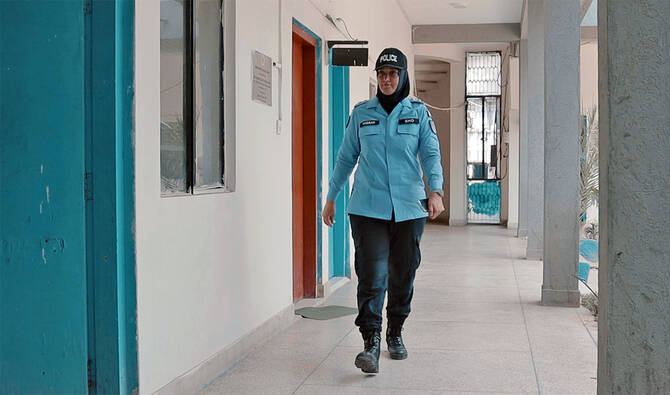
In her blue uniform and a modest headscarf, Misbah Shahbaz quietly took charge in 2025 as Station House Officer (SHO) of Phulgran, Islamabad’s first-ever female SHO at a general, or men’s, police station.
The post of SHO is one of the most visible and operationally significant leadership roles in Pakistan’s police hierarchy, responsible for crime investigation, public safety, and station-level administration. Until now, female SHOs in Islamabad had only led women police stations.
“It’s a historic decision, and I feel very proud,” Shahbaz told Arab News as she walked through a briefing with her team.
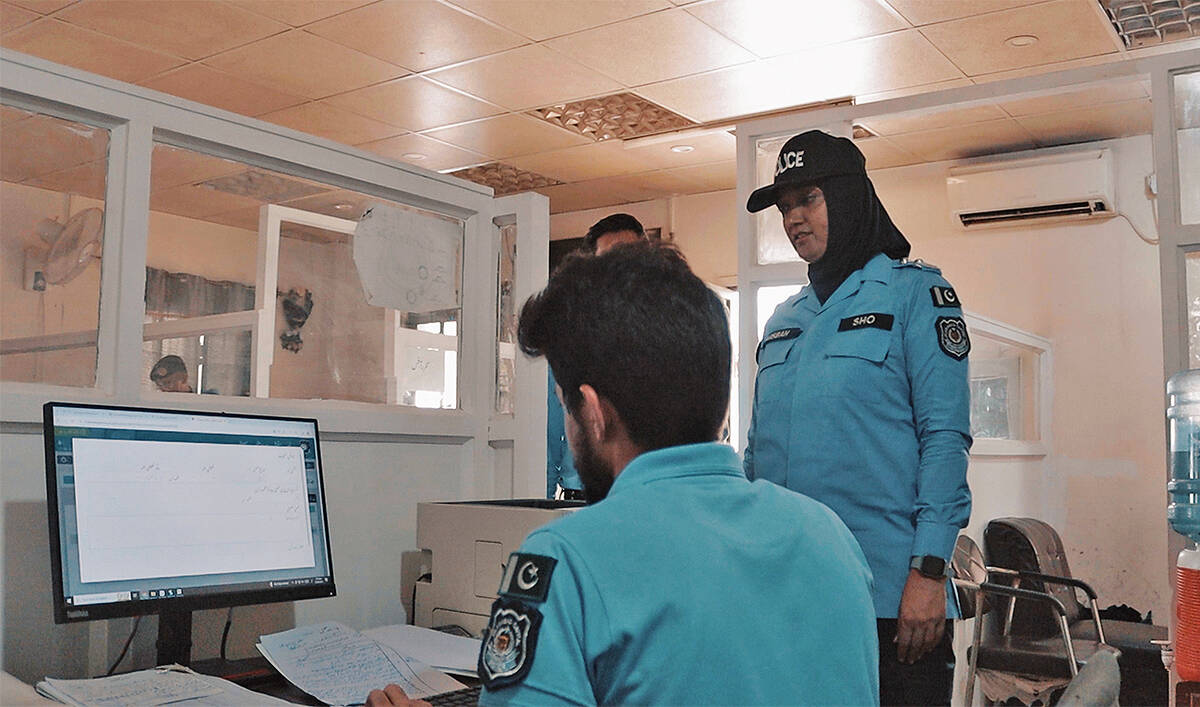
Station House Officer, Misbah Shahbaz (right), talsk to her colleague in Islamabad, Pakistan, in June 17, 2025. (AN photo)
Phulgran sits at the nexus of rural sprawl and urban ambition, where narcotics and land mafias thrive. Shahbaz’s three-fold roadmap is simple: Clean up the drug trade, target land-grab networks, and raise the ethical bar in policing.
Methodical yet unspoken in her stride, she is already tackling the tough territory:
“Drug trafficking is a major concern. I’ve already developed strategies … and God willing, you’ll soon see the results.”
Her academic résumé reads like an MBA case study: she holds a Master’s and an MBA. But she insisted:
“I’ve always been drawn to the uniform … This was never about the degree, it was about a passion to serve.”
Back in 2012, Shahbaz took one of the 87 Assistant Sub-Inspector slots based strictly on merit. And that was just the beginning of a journey in which she says her male colleagues largely treated her as an equal.
“I was lucky to have excellent mentors, all-male officers who treated me no differently,” she said. “They taught me the finer points of investigation, from identifying subtle clues to interviewing techniques.”
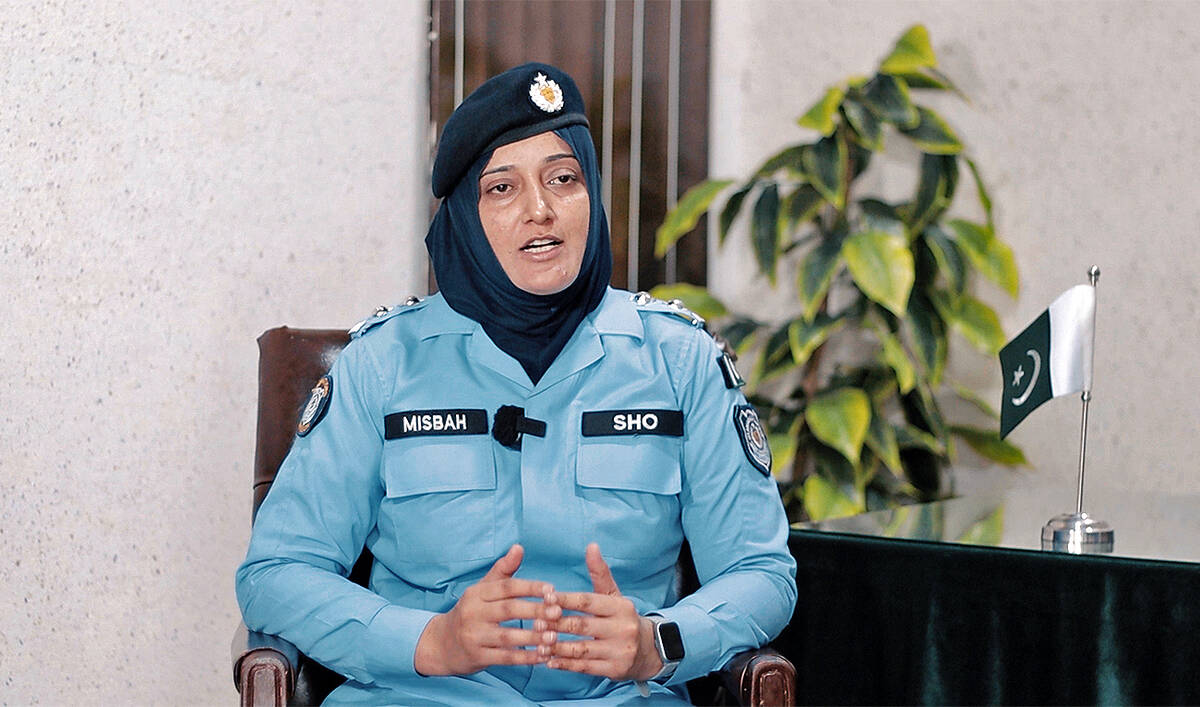
Station House Officer, Misbah Shahbaz, speaks to Arab News Pakistan in Islamabad, Pakistan, in June 17, 2025. (AN photo)
Today, when Shahbaz rolls through Phulgran in her official vehicle, residents pause. Men nod, women whisper encouragement and in the sidewalks, young girls see her, and absorb a message: you, too, can wear the badge.
“She’s not less than any man,” a constable under her command said. “In fact, she leads better.”
TURNING TIDE?
Let’s zoom out: Pakistan’s police force is staggeringly male.
According to the National Police Bureau (NPB) and UN Women Pakistan as of 2023, only about 3.2 % of officers are women, just 15,509 women out of 489,645 total. And while Islamabad fares slightly better, with around 5% of women, most provinces hover at 1–4%.
A mandatory 10 % quota exists but the officers actually recruited, trained, and retained are far fewer. In some provinces, it’s under 1%.
So, Shahbaz’s promotion is more than symbolic. She’s a breakthrough not just for Islamabad but for an entire force held back by gender disparity.
With so few female officers, women are often reluctant to report crimes, especially those involving domestic or gender-based issues. Experts also say the absence of women in decision-making and field leadership reduces community trust in law enforcement.
Female officers like Shahbaz could change that balance.
And her rise isn’t just a personal triumph. It’s the latest clue in the slow shift in a system where less than 1 in 30 cops is a woman.
As the police officer said:
“Islamabad Police already have a reputation for professionalism but I want to raise the bar so that every citizen feels heard and respected.”


