

Pakistan’s second Congo virus death for 2025 confirmed in Karachi

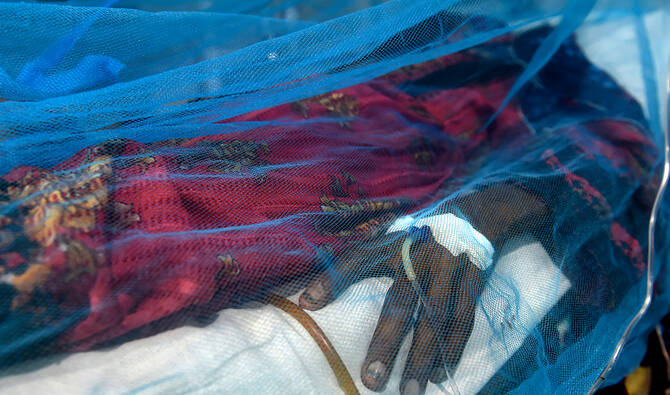
A patient suffering from dengue fever rests under a mosquito net at a hospital in Karachi on October 4, 2022. (AFP/File)
Short Url
Updated 19 June 2025
Follow

Pakistan’s second Congo virus death for 2025 confirmed in Karachi

  • 25-year-old fisherman butchered animals for two days during Eid Al-Adha, developed fever, muscle pain and bleeding complications
  • 42-year-old man from Karachi’s Malir district died on June 17, marking Pakistan’s first confirmed fatality from tick-borne virus in 2025

KARACHI: A 25-year-old fisherman has died from Crimean-Congo Hemorrhagic Fever (CCHF) in Karachi, health authorities confirmed on Thursday, marking Pakistan’s second fatality from the tick-borne virus this year.

The patient, Mohammad Zubair, a resident of Qur’angi Creek in Bin Qasim Town, butchered animals for two days during Eid Al-Adha earlier this month and developed high-grade fever, muscle pain and bleeding complications days later, according to a report by the District Health Officer (DHO) Malir.

“Active search of case was done surrounding that area, no any other case was found,” the official notification said, adding that Zubair’s family members were stable and showing no symptoms of the disease.

This comes just days after a 42-year-old man, also from Karachi’s Malir district, died of CCHF on June 17. According to the Sindh Health Department, his test report came back positive a day earlier, making him the province’s first confirmed fatality from the virus this year.

The Congo virus, which has a fatality rate ranging between 10 to 40 percent depending on timely treatment and the patient’s condition, is endemic in parts of Africa, Europe and Asia. In Pakistan, infections often spike around Eid Al-Adha, when millions of animals are bought, transported and slaughtered, increasing human exposure to infected ticks and animal blood.

Local health teams have carried out community awareness sessions in Karachi’s affected areas and advised residents to use protective clothing and follow hygiene measures when handling livestock.

There is currently no approved vaccine for the Congo virus, though experimental trials are underway in Europe.

Pakistan reported its first case of CCHF in 1976 and continues to see sporadic outbreaks, particularly in rural areas and provinces like Balochistan, which recorded 23 cases and five deaths last year.


Pakistan’s Mahnoor Omer named among TIME’s ‘Women of the Year’ for 2026

Updated 01 March 2026
Follow

Pakistan’s Mahnoor Omer named among TIME’s ‘Women of the Year’ for 2026

  • Omer moved a Pakistani court against the so-called ‘period tax’ in Sept. 2025 which has since sparked a national debate
  • Taxes on sanitary pads in Pakistan can add up to 40 percent to retail price, UNICEF says only around 12 percent women use such products

ISLAMABAD: Pakistani women’s rights activist Mahnoor Omer, who fought against taxes on menstrual products, has been named among the TIME magazine’s ‘Women of the Year’ for 2026.

Omer’s efforts have been recognized alongside 16 activists, artists, athletes and businesswomen in the TIME’s Women of the Year 2026 list, including Olympic gold medalist Sydney McLaughlin-Levrone and Oscar-nominated filmmaker Chloe Zhao.

Dissatisfied with the efforts to educate Pakistani girls about sexual violence, Omer founded the Noor Foundation at the age of 14 and held her own workshops with village girls about everything from climate change to menstruation, according to the TIME magazine.

Two years later, a conversation with a domestic worker about the price of pads made her realize that not everyone could afford these essentials. She moved a court against the so-called “period tax” in Sept. 2025 and the case has sparked a national debate on the subject, considered a taboo by many in Pakistan, since its first hearing late last year.

“A decade and one law degree after her interest in activism was sparked, Omer, now 25, is putting her passion and expertise to work in the name of gender equity,” TIME wrote about Omer on its website.

Taxes imposed on sanitary products in Pakistan can add up to 40 percent to the retail price. UNICEF estimates just 12 percent of women in the country use commercially produced pads or tampons. The alternative, using cloth, risks health impacts including rashes and infections, and can make it impossible for girls to attend school while menstruating.

Omer’s suit, which awaits the government response, has sparked a national discussion. She says she spoke about menstruation to her father and male cousins, who thanked her for standing up for their daughters.
The 25-year-old, who is currently enrolled in a master’s degree in gender, peace, and security at the London School of Economics, sees this case as just the first of many.

“I’m not free until every woman is free,” she was quoted as saying by TIME. “I want to leave no stones unturned in terms of what I can do with the next few decades, as a lawyer for the women in my country and gender minorities in general.”