Hundreds evacuated from Iran via border crossing being sent to homes across Pakistan

Pakistani students walk with their belongings after they returned from Iran, following the Israeli strikes in Iran, in Quetta, Pakistan on June 17, 2025. (REUTERS)
Short Url
Updated 18 June 2025
Follow

Hundreds evacuated from Iran via border crossing being sent to homes across Pakistan

  • 545 pilgrims and 207 students reached Balochistan’s provincial capital of Quetta from the Taftan border crossing with Iran on Tuesday
  • Pakistan closed border crossings with Iran at Panjgur in the southwestern province indefinitely due to escalating Mideast tensions

QUETTA: Pakistani officials say hundreds of students and pilgrims, who were evacuated after Israeli strikes on Iran, will be transported to their homes across Pakistan today, Wednesday, after they were brought a day earlier to Quetta, the capital of the southwestern Balochistan province, which borders Iran.

Commissioner of Quetta, Muhammad Hamza Shafqaat, said 545 pilgrims and 207 students reached Quetta from Pakistan’s Taftan border crossing with Iran and arrangements had been made to transport them to their hometowns.

“We are trying to make them stay in Quetta tonight. There are some restrictions on movement at night from Quetta,” Shafqaat told Reuters.

“There are law and order issues on roads at some places. We want to avoid any unfortunate or untoward incidents.”

Musharraf Abbas, who arrived from Tehran, said he was a student at the Iran University of Medical Sciences. 

“Their [Iran’s] military residences and rooms were at about one-and-a-half-kilometer distance from our residence,” he told Reuters. 

“They were attacked on late Friday night around 330pm in which their high level personnel, including scientists, revolutionary guards and military leaders were killed.”

Pakistan closed its border crossings with Iran at Panjgur in Balochistan province indefinitely due to escalating tensions, the district administration of Panjgur announced on Sunday, June 15. However, one of the busiest crossings at the Taftan border remains operational for repatriation and trade activity.

A group of 214 Pakistani students studying in medical and engineering institutions in Iran arrived at Pakistan’s Taftan border crossing from Tehran following Israeli airstrikes, officials said on Tuesday.

Iran and Israel launched new missile strikes at each other on Wednesday as the air war between the two longtime enemies entered a sixth day despite a call from US President Donald Trump for Tehran’s unconditional surrender.
Pakistan, ADB sign $730 loan agreements to boost SOE reforms, energy infrastructure

Updated 5 sec ago
Follow

Pakistan, ADB sign $730 loan agreements to boost SOE reforms, energy infrastructure

  • Both sign $330 million Power Transmission Strengthening Project and $400 million SOE Transformation Program loan agreements
  • Economic Affairs Division official says Transmission Project will secure Pakistan’s energy future by strengthening national grid’s backbone

KARACHI: Pakistan and the Asian Development Bank (ADB) on Thursday signed two loan agreements totaling $730 million to boost reforms in state-owned enterprises (SOEs) and energy infrastructure in the country, the bank said.

The first of the two agreements pertains to the SOE Transformation Program worth $400 million while the second loan, worth $330 million, is for a Power Transmission Strengthening Project, the lender said. 

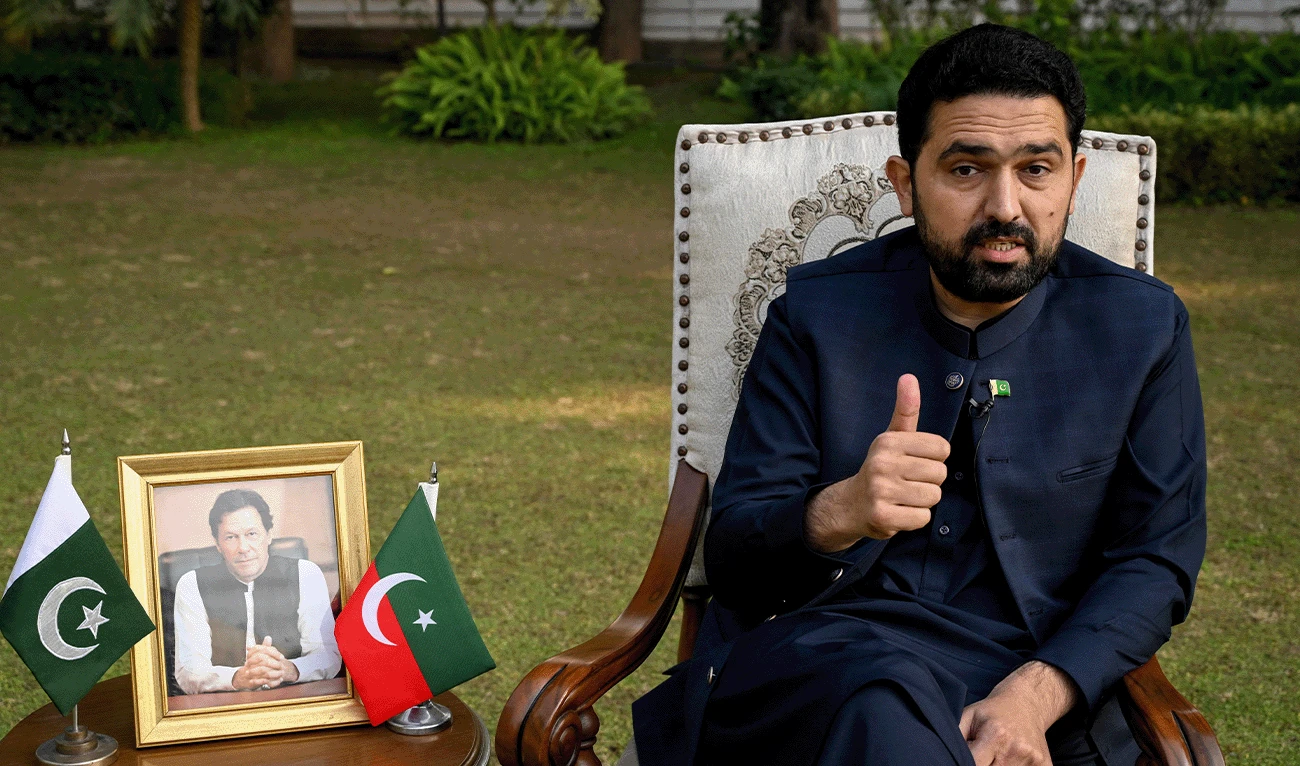
The agreements were signed by ADB Country Director for Pakistan Emma Fan and Pakistan’s Secretary of Economic Affairs Division Humair Karim. 

“The agreements demonstrate ADB’s enduring commitment to supporting sustainable and inclusive economic growth in Pakistan,” the ADB said. 

Pakistan’s SOEs have incurred losses worth billions of dollars over the years due to financial mismanagement and corruption. These entities, including the country’s national airline Pakistan International Airlines, which was sold to a private group this week, have relied on subsequent government bailouts over the years to operate.

The ADB approved the $400 million loan for SOE reforms on Dec. 12. It said the program seeks to improve governance and optimize the performance of Pakistan’s commercial SOEs. 

Karim highlighted that the Power Transmission Strengthening Project will enable reliable evacuation of 2,300 MW from Pakistan’s upcoming hydropower projects, relieve overloading of existing transmission lines and enhance resilience under contingency conditions, the Press Information Department (PID) said. 

“The Secretary emphasized that both initiatives are transformative in nature as the Transmission Project will secure Pakistan’s energy future by strengthening the backbone of the national grid whereas the SOE Program will enhance transparency, efficiency and sustainability of state-owned enterprises nationwide,” the PID said. 

The ADB has supported reforms by Pakistan to strengthen its public finance and social protection systems. It has also undertaken programs in the country to help with post-flood reconstruction, improve food security and social and human capital. 

To date, ADB says it has committed 764 public sector loans, grants and technical assistance totaling $43.4 billion to Pakistan.