


AHMEDABAD: Indian health officials have begun handing relatives the bodies of their loved ones after one of the world’s worst plane crashes in decades, but most families were still waiting Monday for results of DNA testing.
While mourners have held funerals for some of the 279 people killed when the Air India jet crashed in the western city of Ahmedabad, others are facing an anguished wait.
“They said it would take 48 hours. But it’s been four days and we haven’t received any response,” said Rinal Christian, 23, whose elder brother was a passenger on the jetliner.
There was one survivor out of 242 passengers and crew on board the London-bound plane Thursday when it slammed into a residential area of Ahmedabad, killing at least 38 people on the ground as well.
“My brother was the sole breadwinner of the family,” Christian said Sunday. “So what happens next?“
Among the latest victims identified was Vijay Rupani, a senior member of India’s ruling party and former chief minister of Gujarat state.
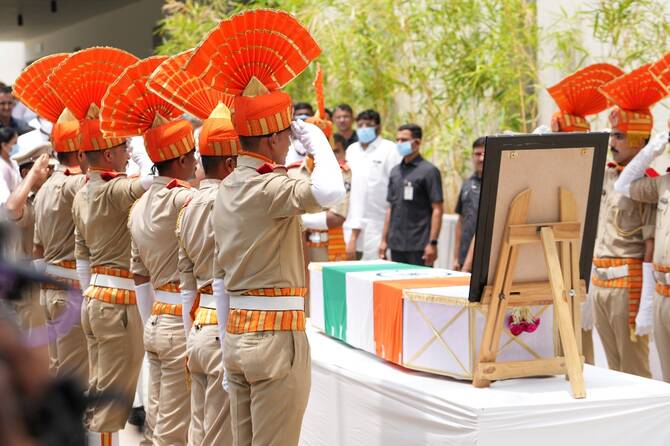
His flag-draped coffin was carried in Ahmedabad by soldiers, along with a portrait of the politician draped in a garland of flowers.
A two-hour journey away in Anand district, crowds gathered in a funeral procession for passenger Kinal Mistry.
The 24-year-old had postponed her flight, leaving her father Suresh Mistry agonizing that “she would have been alive” if she had stuck to her original plan.
Air India said there were 169 Indian passengers, 53 British, seven Portuguese and a Canadian on board the flight, as well as 12 crew members.
Eighty crash victims have been identified as of late Sunday, according to Rajnish Patel, a doctor at Ahmedabad’s civil hospital.
“This is a meticulous and slow process, so it has to be done meticulously only,” Patel said.
One victim’s relative who did not want to be named told AFP they had been instructed not to open the coffin when they receive it.
Witnesses reported seeing badly burnt bodies and scattered remains.
Nilesh Vaghela, a casket maker, was asleep when the crash happened early afternoon.
“Then around 5:00 pm, I got a call from Air India saying they need coffins,” he told AFP after delivering dozens.
“My work is very sad. All these innocent people died, small children,” he said. “Someone has to do it.”
The Boeing 787-8 Dreamliner erupted into a fireball when it went down moments after takeoff, smashing into buildings used by medical staff.
The task of clearing debris from the scorched crash site went on in Ahmedabad, where an AFP photographer saw dozens of workers in yellow hard hats.
Indian authorities have yet to identify the cause of the disaster and have ordered inspections of Air India’s Dreamliners.
The airline said one of its Dreamliners on Monday returned to Hong Kong airport “shortly after take off due to a technical issue” and was undergoing checks.
Indian authorities announced Sunday that the second black box of the Ahmedabad plane, the cockpit voice recorder, had been recovered. This may offer investigators more clues about what went wrong.
Aviation Minister Ram Mohan Naidu Kinjarapu said Saturday he hoped decoding the first black box, the flight data recorder, would “give an in-depth insight” into the circumstances of the crash.
Imtiyaz Ali, who was still waiting for a DNA match to find his brother, is also seeking answers.
“Next step is to find out the reason for this accident. We need to know,” he told AFP.


