

EU chief calls at G7 for world to ‘avoid protectionism’

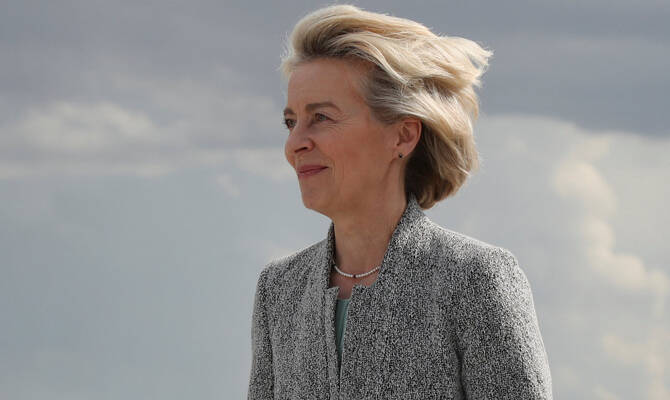
European Commission President Ursula von der Leyen arrives before world leaders meet in Kananaskis for the G7 leaders' summit, at Calgary International Airport in Calgary, Alberta, Canada June 15, 2025. (Reuters)
Short Url
Updated 16 June 2025
Follow

EU chief calls at G7 for world to ‘avoid protectionism’

  • “Let us keep trade between us fair, predictable and open. All of us need to avoid protectionism,” von der Leyen says

KANANASKIS, Canada: EU Commission chief Ursula von der Leyen on Sunday called on G7 leaders to avoid protectionist trade policies as leaders from the industrialized countries arrived at their annual summit.

“Let us keep trade between us fair, predictable and open. All of us need to avoid protectionism,” von der Leyen said at a press briefing, with US President Donald Trump’s tariff onslaught certain to enter the conversations at the three-day event.


‘Solar sheep’ help rural Australia go green

Updated 5 sec ago
Follow

‘Solar sheep’ help rural Australia go green

  • The panels have had another surprising side effect: Because the grass is shielded from the elements, it’s of more consistent quality

DUBBO: Australian farmer Tom Warren’s solar panels look like any other — until you spot the dozens of sheep grazing and napping, helping the country transition to green energy and earning him a decent income while doing it.

More than 30,000 solar panels are deployed across approximately 50 hectares at Warren’s farm on the outskirts of Dubbo, around 400 kilometers west of Sydney.

The farmer and landowner has been working with renewables firm Neoen for more than a decade and said he was initially worried the panels would restrict his sheep’s grazing.

It quickly became clear those fears were unfounded.

“Normally they would seek out trees and camp under the trees, but you can see that the sheep are seeking out the shade of the panels,” he told AFP at the farm in Dubbo.

“So, it’s a much better environment for them as well.”

The farm produces about 20 megawatts of power, he said — a “substantial amount” of the energy needs of the local area.

While he can’t disclose how much he earns from the panels, he said he’s taking in much more than he would from just farming.

“The solar farm income is greater than I would ever get off agriculture in this area — regardless of whether I have sheep running under the panels or not,” he said.

The panels have had another surprising side effect: Because the grass is shielded from the elements, it’s of more consistent quality.

That, in turn, has improved the wool produced by the sheep.

“The wool is actually better and cleaner,” Warren said.

“All over, we’ve had about a 15 percent increase in the gross revenue coming from the sheep running under the solar farm.”

Fellow farmer Tony Inder, based around 50 kilometers south in the town of Wellington, agrees.

His flock is much larger — 6,000 sheep grazing on two plots of land covering 4,000 hectares.