Saudi inflation holds steady at 2.2% in May  

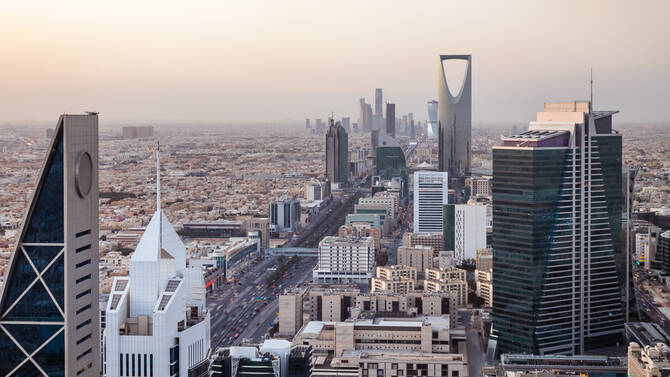
The uptick was fueled by an 8.1 percent rise in housing rents, including a 7.1 percent increase in villa rental prices, according to the latest data released by the General Authority for Statistics. Shutterstock
Short Url
Updated 15 June 2025
Follow

Saudi inflation holds steady at 2.2% in May  

  • CPI remained stable in May 2025, recording 0.1% increase
  • Broader inflation picture reinforced by wholesale price data, which showed 2% year-on-year increase

RIYADH: Saudi Arabia’s annual consumer inflation edged up to 2.2 percent in May, with rental prices emerging as the principal driver behind the increase.  

The uptick was fueled by an 8.1 percent rise in housing rents, including a 7.1 percent increase in villa rental prices, according to the latest data released by the General Authority for Statistics. 

While inflation across the Middle East and Central Asia shows signs of easing, country-level dynamics remain mixed, with Egypt reporting 16.8 percent in May, Jordan at 1.98 percent, Saudi Arabia holding steady at 2.2 percent, and Dubai’s rate moderating to 2.3 percent in April. 

In a release, GASTAT stated: “On a monthly basis, the consumer price index remained stable in May 2025, recording a 0.1 percent increase compared to April 2025.” 


Major initiatives such as NEOM and Jeddah Central are attracting investments among the Vision 2030 development projects. Vision 2030

It added: “This was mainly due to a 0.3 percent rise in housing, water, electricity, gas, and other fuels section, driven by a 0.4 percent increase in actual housing rent prices.” 

On a month-to-month basis, the consumer price index recorded only a modest increase, signaling relative price stability.  However, key segments such as housing, food and beverages, and personal goods and services contributed to the mild inflationary pressure, partially offset by declines in transportation and household furnishings. 

The Kingdom’s inflation dynamics in May highlight the ongoing strain in the housing sector, where rising rental costs have been the most significant inflationary force.  

The housing, water, electricity, gas, and other fuels category saw a year-on-year increase of 6.8 percent, driven primarily by the sharp climb in actual rents.  

This sector carries the greatest weight in the consumer basket, representing 25.5 percent of the overall index, which significantly increases its impact on the national inflation rate. 

GASTAT stated that “rents paid for housing in May 2025 increased by 8.1 percent, attributed to a 7.1 percent increase in rental prices for villas,” underscoring the persistent demand pressures in the residential rental market. 

As urban development and population growth continue, rental affordability may remain a critical issue for policymakers. 

The upward trend in rents is being driven by a complex mix of structural and economic factors.  


Education and health costs recorded limited inflation, with education rising by 1.3 percent. File/SPA

Residential demand in Saudi Arabia’s largest cities, particularly Riyadh and Jeddah, has increased as urban populations grow and Vision 2030 development projects attract investment.  

Major initiatives such as NEOM and Jeddah Central are fueling this trend. At the same time, housing supply has not kept pace, especially in the rental market, despite a pipeline of 3.5 million residential units.  

Construction activity remains below the level needed to stabilize prices. Rising costs for building materials and labor have also pushed up developers’ expenses, contributing to higher rents.  

These dynamics reflect the Kingdom’s rapid urban development under Vision 2030, which aims for a 70 percent homeownership rate and a diversified economy.  

However, as mortgage-backed homeownership increases, rental demand remains strong, continuing to perpetuate upward pressure on rents. 

In addition to housing, food and beverage prices rose by 1.6 percent compared to May 2024, largely driven by a 2.8 percent increase in the prices of meat and poultry. 

These gains coincide with trends observed in the wholesale sector, where the prices of agricultural and fishery products jumped by 4.4 percent over the same period.  

Agricultural products alone posted a 6.2 percent rise, and fishing products increased by 6.1 percent, indicating upstream cost pressures that are gradually being passed on to consumers. 


Construction activity remains below the level needed to stabilize prices. File/SPA

The personal goods and services category also saw a notable annual rise of 4 percent, led by a 24.4 percent increase in prices of jewelry, watches, and precious antiques.  

This increase, while potentially reflecting stronger discretionary spending, also suggests elevated pricing in the luxury goods segment. Meanwhile, catering services drove a 1.8 percent increase in restaurant and hotel prices, adding modestly to overall inflation. 

Education and health costs recorded limited inflation, with education rising by 1.3 percent, primarily due to a 5.6 percent increase in non-university post-secondary costs.  

Health-related prices remained broadly stable, providing some relief in an otherwise inflationary environment. 

However, certain sectors experienced deflationary pressures. Furnishings and household equipment prices dropped by 2.5 percent year on year, largely because of a 4 percent decline in furniture, carpets, and flooring prices. 

Clothing and footwear prices fell by 0.9 percent, driven by a 2.7 percent reduction in footwear prices.  

Transport costs also decreased by 0.8 percent, as the price of vehicle purchases dropped by 1.9 percent. 

These categories helped counterbalance some of the broader upward pressures on the index. 


The prices of agricultural and fishery products jumped by 4.4 percent over the same period. File/SPA

On a monthly basis, the CPI’s 0.1 percent increase was relatively muted. Food and beverage costs rose by 0.1 percent, while personal goods and services increased by 0.5 percent, and tobacco prices ticked up 0.2 percent. 

However, several categories saw declines: transportation fell 0.2 percent, recreation and culture decreased 0.1 percent, furnishings dropped 0.7 percent, clothing and footwear slipped 0.4 percent, and communication declined 0.1 percent.  

The prices of education, health, and restaurants and hotels showed no significant month-over-month changes. 

Wholesale Price Index 

The broader inflation picture is reinforced by wholesale price data, which showed a 2 percent year-on-year increase in the wholesale price index in May. 

The WPI tracks the prices of goods before they reach the retail level, offering insights into future consumer price trends.  

The rise was mainly driven by the same categories that affected the CPI: agriculture and fishery products, which increased by 4.4 percent, and other transportable goods, excluding metals and machinery, which rose by 4.3 percent. 

“This increase was primarily driven by an 8.2 percent rise in the prices of refined petroleum products,” the WPI report stated.  

Furniture and other transportable goods not elsewhere classified recorded a sharp 9 percent increase, further signaling inflationary pressures in non-essential consumer goods. 

Conversely, wholesale prices of metal products, machinery, and equipment fell by 0.3 percent, affected by a 5.1 percent decline in the prices of radio, television, and communication equipment, as well as a 3.3 percent decrease in general-purpose machinery prices.  

The prices of ores and minerals dropped by 1.5 percent, reflecting a general cooling in commodity prices, mainly due to a reduction in the prices of stone and sand. 

Monthly changes in the WPI were largely flat, recording no overall change from April.  

A slight 0.1 percent rise in the prices of transportable goods and ores was balanced out by a 0.3 percent decline in agricultural products and a 0.2 percent fall in metal and digital machinery prices. 


Saudi Arabia sets global benchmark in AI modernization

Updated 53 min 26 sec ago
Follow

Saudi Arabia sets global benchmark in AI modernization

  • Executives hail the Kingdom’s robust infrastructure and strategic workforce programs

RIYADH: Saudi Arabia is emerging as a global leader in artificial intelligence, according to executives from OpenText, one of the world’s largest enterprise information management companies. 

With 22 years of international AI experience, Harald Adams, OpenText’s senior vice president of sales for international markets, said the Kingdom’s modernization efforts are now setting a global standard.

“From my perspective, Saudi Arabia is not only leading the modernization towards artificial intelligence in the Middle East, I think it is even not leading it only in the MENA region. I think it is leading it globally,” Adams told Arab News.

In an interview, Adams and George Schembri, vice president and general manager for the Middle East at OpenText, discussed the Kingdom’s significant investments in AI during the inauguration of OpenText’s new regional headquarters in Riyadh.

“So for us (OpenText), from our perspective, it was a strategic decision to move our MENA headquarters to Saudi Arabia because we believe that we will see here a lot of innovation coming out of the country, we can replicate not only to the MENA region, maybe even further to the global level,” Adams said.

The new headquarters, located in the King Abdullah Financial District, will serve as a central hub for OpenText customers and partners across the Middle East. Its opening reflects a broader trend of tech giants relocating to Riyadh, signaling the Kingdom’s rise as a hub for global AI innovation.

Adams attributed Saudi Arabia’s lead in AI modernization to a combination of substantial financial backing, a unified national strategy, and a remarkable pace of execution.

“I mean, a couple of things, because the ingredients in Saudi Arabia are of course, quite interesting. On the one hand side, Saudi Arabia has deep pockets and great ambitions. And they are, I mean, and they are executing fast, yeah,” he said.
“So from that perspective, at the moment, what we see is that there are, especially on the government side, I can’t see any other government organizations globally moving faster into that direction than it is happening in Saudi Arabia. Not in the region, not even on a global level, they are leading the game,” he underlined.

Schembri added, “Saudi’s AI vision is one of the most ambitious in the world, and AI on a national scale is not good without trusted, secured, and governed, and this is where OpenText helps to enable the Saudi organizations to be able to deliver on the 2030 Vision.”

“The Kingdom’s focus on AI and digital transformation creates a powerful opportunity for organizations to unlock value from their information,” Schembri stated.
“With OpenText on the ground in Riyadh, our customers gain direct access to trusted global expertise combined with local insight — enabling them to manage information securely, scale AI with confidence, and compete on a global stage,” he added.

DID YOU KNOW?

• Saudi Arabia ranks 5th globally and 1st in the region for AI growth under the 2025 Global AI Index.

• The Kingdom is also 3rd globally in advanced AI model development, trailing only the US and China.

• AI is projected to contribute $235.2 billion — or 12.4 percent — to Saudi Arabia’s GDP by 2030.

The inauguration of OpenText’s new regional headquarters was attended by Canada’s Minister of International Trade and Economic Development, Maninder Sidhu, and Jean-Philippe Linteau, Canada’s ambassador to Saudi Arabia. 

Sidhu emphasized the alignment of Saudi Vision 2030 with Canada’s economic and innovation goals.

“His Highness (Crown Prince Mohammed bin Salman) and Vision 2030, there is a lot of alignment with Canada, as you know, with the economic collaboration, with his vision around mining, around education, tourism, healthcare, you look at AI and tech, there’s a lot of alignment here at OpenText Grand opening their regional headquarters,” Sidhu told Arab News.

Saudi Arabia’s AI ambitions are projected to contribute $235.2 billion — or 12.4 percent — to its GDP by 2030, according to PwC. The Saudi Data and AI Authority, established by a royal decree in 2019, drives the Kingdom’s national data and AI strategy.

One flagship initiative, Humain, chaired by Crown Prince Mohammed bin Salman, was launched in May 2025 under the Public Investment Fund. It aims to build a full AI stack — from data centers and cloud infrastructure to models and applications — positioning Saudi Arabia as a globally competitive AI hub. The project plans to establish a data center capacity of 1.8 GW by 2030 and 100 GW of AI compute capacity by 2026.

Saudi Arabia is also expanding international partnerships. In May 2025, Humain signed a $5 billion agreement with Amazon Web Services to accelerate AI adoption domestically and globally, focusing on infrastructure, services, and talent development.

The Kingdom ranked fifth globally and first in the Arab region for AI sector growth under the 2025 Global AI Index, and third worldwide in advanced AI model development, behind only the US and China, according to the Stanford University AI Index 2025.

Education is another pillar of Saudi AI strategy. Starting in the 2025-26 academic year, AI will be taught as a core subject across all public school grades, reaching roughly 6.7 million students. The curriculum will cover algorithmic thinking, data literacy, and AI ethics.

OpenText executives emphasized their commitment to supporting Vision 2030 and the national AI strategy through workforce development.

“OpenText has put a lot of investment in the Kingdom, right. We brought cloud to the Kingdom, we’ve opened our headquarters in the Kingdom, we’ve basically hiring Saudis in the Kingdom, We basically building, if you like, an ecosystem to support the Kingdom. And on top of that, what we’re doing is we’re putting a plan together, if you like, a program to look at how we can educate, if you like, the students at universities,” Schembri said.
“So this is something that we are looking into, we are basically investigating and to see how we can support the Saudi nationals when they come into the workplace. And I’m really excited. I have Harry who is, our leadership who’s supporting this program.”
“It’s something that we are putting together. It’ll take some effort. So it’s still in play because we want to make sure what we put it basically delivers on what we're trying to achieve based on the vision of Saudi,” he added.

“The younger generation is sooner or later either working for us or maybe for a partner or for maybe for a customer. So that’s why we are to 100 percent committed to enable all of that,” Adams said.