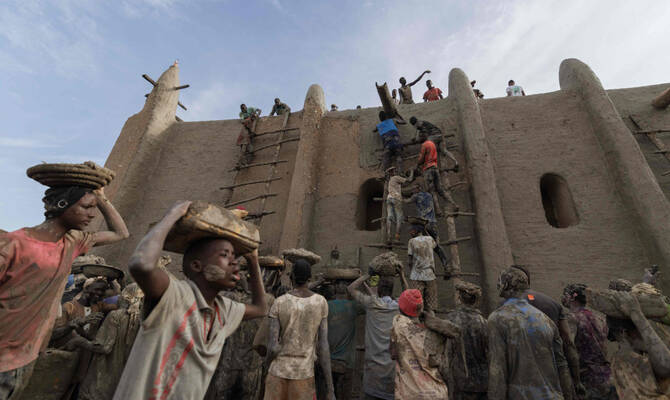
DJÉNNÉ, Mali: Thousands of Malians have replastered the iconic earthen mosque in the historic city of Djenne during an annual ceremony that helps preserve the World Heritage site.
To the sound of drums and festive music, townsmen on Thursday coated the towering three-minaret mosque with fresh mud plaster.
The annual replastering with “banco” — a mix of earth and water — shields the mosque from harsh weather ahead of the Sahel region’s often violent rainy season.
“This mosque belongs to the whole world,” said Aboubacar Sidiki Djiteye, his face streaked with mud as he joined the “unifying” ritual.
“There’s no bigger event in Djenne than this,” he told AFP.
“Replastering the mosque is a tradition handed down from generation to generation,” said Bayini Yaro, one of the women tasked with carrying water for the plaster mix.
Locals prepared the mix themselves, combining water, earth, rice bran, shea butter and baobab powder — a hallmark of Sahel-Sudanese architecture.
Chief mason Mafoune Djenepo inspected the fresh coating.
“The importance of this mosque is immense. It’s the image on all Malian stamps,” he said.
A blessing ceremony followed the replastering, with Qur’anic verses recited in the mosque courtyard. Participants then shared dates and sweets.
First erected in the 13th century and rebuilt in 1907, the mosque is considered the world’s largest earthen structure, according to the United Nations’ cultural body, UNESCO.
Djenne, home to around 40,000 residents and known for preserving its traditional banco houses, has been on UNESCO’s World Heritage list since 1988.
The site was added to the endangered heritage list in 2016 due to its location in central Mali, where jihadist fighters linked to Al-Qaeda and the Daesh group, as well as ethnic militias and criminal gangs, have waged a violent insurgency since 2012.

Ancient Malian city celebrates annual replastering of mosque
https://arab.news/mv2hr
Ancient Malian city celebrates annual replastering of mosque
- The annual replastering with “banco” — a mix of earth and water — shields the mosque from harsh weather
Trump-backed candidate Nasry Asfura declared winner of Honduras’ presidential vote
- The election is continuing Latin America’s swing to the right, coming just a week after Chile chose the far-right politician José Antonio Kast as its next president
TEGUCIGALPA: Trump-backed candidate Nasry Asfura won Honduras’ presidential election, the country’s electoral authorities said Wednesday afternoon, ending a weeks-long count that has whittled away at the credibility of the Central American nation’s fragile electoral system.
The election is continuing Latin America’s swing to the right, coming just a week after Chile chose the far-right politician José Antonio Kast as its next president.
Asfura, of the conservative National Party received 40.27 percent of the vote in the Nov. 30, edging out four-time candidate Salvador Nasralla of the conservative Liberal Party, who finished with 39.39 percent of the vote.
Asfura, the former mayor of Honduras’ capital Tegucigalpa, won in his second bid for the presidency, after he and Nasralla were neck-and-neck during a weeks-long vote count that fueled international concern.
On Tuesday night a number of electoral officials and candidates were already fighting and contesting the results of the election.
The results were a rebuke of the current leftist leader, and her governing democratic socialist Liberty and Re-foundation Party, known as LIBRE, whose candidate finished in a distant third place with 19.19 percent of the vote.
Asfura ran as a pragmatic politician, pointing to his popular infrastructure projects in the capital. Trump endorsed the 67-year-old conservative just days before the vote, saying he was the only Honduran candidate the US administration would work with.
Nasralla has maintained that the election was fraudulent and called for a recount of all the votes just hours before the official results were announced.
On Tuesday night, he addressed Trump in a post on X, writing: “Mr. President, your endorsed candidate in Honduras is complicit in silencing the votes of our citizens. If he is truly worthy of your backing, if his hands are clean, if he has nothing to fear, then why doesn’t he allow for every vote to be counted?”
He and others opponents of Asfura have maintained that Trump’s last-minute endorsement was an act of electoral interference that ultimately swung the results of the vote.
The unexpectedly tumultuous election was also marred by a sluggish vote count, which fueled even more accusations.
The Central American nation was stuck in limbo for more than three weeks as vote counting by electoral authorities lagged, and at one point was paralyzed after a special count of final vote tallies was called, fueling warnings by international leaders.
Ahead of the announcement, Organization of American States Secretary General Albert Rambin on Monday made an “urgent call” to Honduran authorities to wrap up a special count of the final votes before a deadline of Dec. 30. The Trump administration warned that any attempts to obstruct or delay the electoral count would be met with “consequences.”
For the incumbent, progressive President Xiomara Castro, the election marked a political reckoning. She was elected in 2021 on a promise to reduce violence and root out corruption.
She was among a group of progressive leaders in Latin American who were elected on a hopeful message of change in around five years ago but are now being cast out after failing to deliver on their vision. Castro said last week that she would accept the results of the elections even after she claimed that Trump’s actions in the election amounted to an “electoral coup.”
But Eric Olson, an independent international observer during the Honduran election with the Seattle International Foundation, and other observers said that the rejection of Castro and her party was so definitive that they had little room to contest the results.
“Very few people, even within LIBRE, believe they won the election. What they will say is there’s been fraud, that there has been intervention by Donald Trump, that we we should tear up the elections and vote again,” Olson said. “But they’re not saying ‘we won the elections.’ It’s pretty clear they did not.”


