

Design, sustainability, innovation: Hallmarks of German appliance manufacturer Miele

1 / 5
Dr. Reinhard Zinkann, co-proprietor and managing director of Miele
2 / 5
3 / 5
4 / 5
5 / 5
Short Url
Updated 13 June 2025
Follow

Design, sustainability, innovation: Hallmarks of German appliance manufacturer Miele

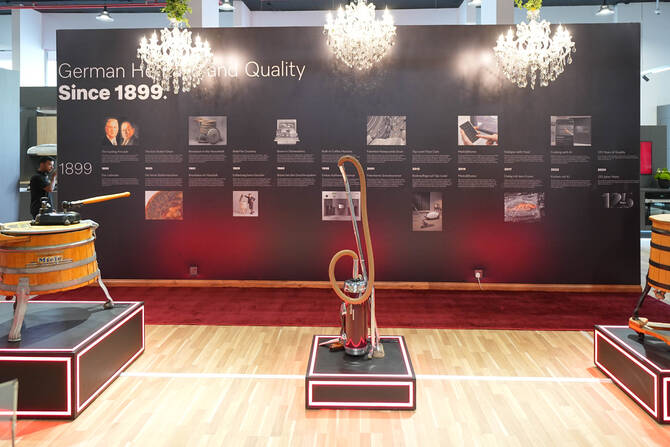
Miele, the 125-year-old German manufacturer of premium appliances, continues to set global benchmarks in design, sustainability, and technological innovation.

At the heart of this evolution is Dr. Reinhard Zinkann, co-proprietor and managing director of Miele, who embodies the brand’s founding ethos: Immer Besser—Forever Better.

For Dr. Zinkann, leading a fourth-generation family business is not about simply maintaining tradition—it’s about enhancing it.

“Being a family business allows us to make decisions with a long-term perspective,” he said. “It frees us from the pressures of short-term gains and allows us to focus on quality, innovation, and environmental responsibility.”

Miele’s dedication to excellence is best illustrated in the life expectancy of its products. 

Designed and tested to last up to 20 years, their durability speaks not only to performance but also to a larger environmental ethic: fewer replacements and less waste.

In markets like the Middle East, where refinement and experiential luxury go hand in hand, Miele’s design philosophy plays a pivotal role. 

The brand seamlessly integrates form and function to craft appliances that are both elegant and efficient.

“We collaborate with top architects and designers globally to ensure our appliances are not just built to perform, but also to complement evolving interior trends,” said Dr. Zinkann.

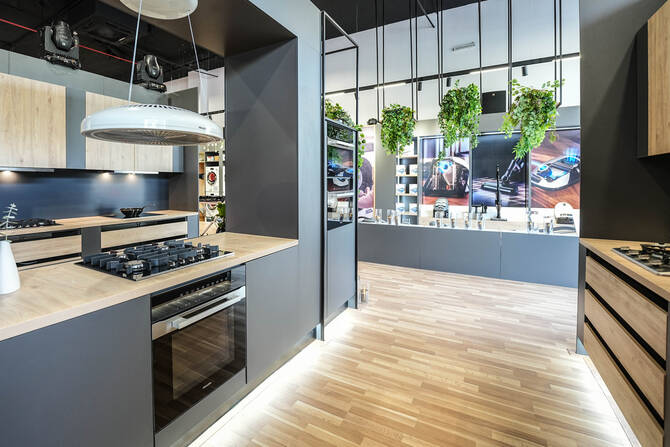
This approach is showcased in the new Miele Experience Center in Riyadh, where fully integrated kitchens and living spaces allow visitors to interact with the brand’s offerings in lifelike settings.

“We’ve significantly reduced our operational CO₂ emissions, and many of our appliances now use recycled materials,” Dr. Zinkann added. “Our products are also designed for disassembly, making them easier to repair and recycle.”

Such initiatives earned Miele the German Sustainability Award 2023, reinforcing the company’s commitment to responsible innovation across its supply chain and beyond.

Miele has embraced smart living through its Miele@home ecosystem. From AI-powered ovens that learn your favorite recipes to washing machines that optimize cycles based on fabric type, Miele’s tech solutions aim to simplify life without sacrificing performance.

“Technology should enhance convenience, not complicate it,” Dr. Zinkann said. “Our goal is intelligent simplicity, always paired with elegance.”

He said: “Saudi Arabia is transforming rapidly, and we see a strong synergy between our values and the Kingdom’s aspirations.”

The center offers more than appliances; it hosts live cooking events, sustainable living workshops, and collaborations with local chefs. It’s a space where innovation meets culture, a symbol of Miele’s long-term commitment to the region.

Miele’s alignment with Vision 2030 isn’t accidental. Its focus on sustainability, innovation, and education mirrors the Kingdom’s path forward. 

Through partnerships with local entities like the Awad Badi Nahas Group, Miele is investing not just in market share, but in societal growth.

“We want to empower communities through knowledge and responsible innovation. Saudi Arabia is a key partner in that journey,” Dr. Zinkann said.

He added: “Today’s customers want appliances that reflect their values — efficiency, design, and sustainability.

“At Miele, we’re redefining what it means to be premium in a world that demands both beauty and responsibility.”


25,000 attend Social Development Bank’s DeveGO25 forum

Updated 27 December 2025
Follow

25,000 attend Social Development Bank’s DeveGO25 forum

The Social Development Bank concluded the second edition of the Entrepreneurship and Modern Business Practices Forum — DeveGo 2025 — announcing the achievement of high-impact outcomes that further reinforced the forum’s position as the largest national platform in the region dedicated to entrepreneurship, innovation, and freelance work in Saudi Arabia and beyond. 

The forum witnessed broad participation from local and international experts, investors, entrepreneurs, and representatives of local, regional, and international institutions.

Over three days at the King Abdulaziz International Conference Center, the forum drew 25,000 participants and visitors, who benefited from over 45 specialized workshops and over 2500 advisory sessions delivered by more than 70 consultants and experts. 

The sessions covered key areas including entrepreneurial planning, business models, venture capital, digital platforms, freelancing, and emerging technologies. 

The forum also featured 20 panel discussions with leading local and international speakers, addressing major global trends in entrepreneurship, including the future of artificial intelligence, the creative economy, digital transformation, and venture investment. 

The forum saw the launch of the Saudi Empretec Fellowship, in the presence of Rebeca Grynspan, secretary-general of the UN Conference on Trade and Development. 

The partners in success within the Social Responsibility Portfolio supporting entrepreneurs were honored. 

It also saw the honoring of 13 winners of the Handicrafts Competition, representing various regions of the Kingdom, the announcement of winners of the Salam Award for Promising Projects, and the recognition of leading entrepreneurial projects fund under the Enterprises Track. 

In addition, the NEXT UP Challenge concluded on the third day of the forum with 20 startups presenting their projects to more than 500 investors, enhancing opportunities for networking and partnership building.

As part of efforts to strengthen the support ecosystem, the forum witnessed the signing of 51 agreements, along with the launch of a suite of new financing products. These included the Capital Expansion Product with a ceiling of up to SR10 million, the Payroll Product with a ceiling of SR2 million, and the Rental Product with a ceiling of SR1.5 million, aimed at supporting enterprises in asset development and covering operational costs. 

This reflects the bank’s direction toward offering more specialized financing tools that respond effectively to market needs.

The forum concluded by reaffirming its role as a unifying national platform for entrepreneurship, where accompanying activities and events provided direct engagement opportunities between entrepreneurs, investors, and experts. 

The forum also highlighted success stories and practical experiences that reflect the scale of entrepreneurial momentum in the Kingdom and the growing role of the Social Development Bank in supporting a national economy driven by innovation and knowledge.