Makkah’s Mashaer metro transports 1.87m passengers during Hajj

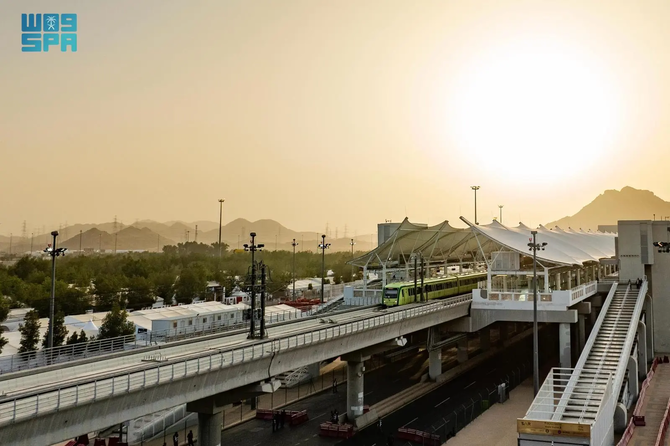
With a fleet of 17 eco-friendly electric trains, each capable of carrying 3,000 passengers, the metro system has significantly reduced traffic congestion and carbon emissions by replacing about 50,000 passenger buses during the Hajj season. (SPA photo)
Short Url
Updated 12 June 2025
Follow

Makkah’s Mashaer metro transports 1.87m passengers during Hajj

  • Mashaer completes 2,154 trips between Mina, Muzdalifah, Arafat
  • Dedicated to serving Hajj pilgrims, it runs for only 7 days every year

MAKKAH: A total of 1.87 million passengers used the Mashaer Metro Train to travel between Makkah’s holy sites during this year’s Hajj, according to Saudi Arabia Railways.

From Dhul Hijjah 7 (June 3) until the end of the Days of Tashreeq (June 9), there were 2,154 trips between the stations of Mina, Muzdalifah and Arafat, the railway agency said in a statement carried by the Saudi Press Agency.

The operational plan for the Mashaer transport system during Hajj 2025 had five main phases, with the first one from June 3 to 4 transporting over 27,000 passengers across all stations.

The second phase moved 282,000 pilgrims from Mina to Arafat, the third transported 294,000 from Arafat to Muzdalifah, and the fourth moved over 349,000 from Muzdalifah to Mina.

“The final phase, which lasted until sunset on the last day of Tashreeq, recorded the movement of over 920,000 passengers to and from Mina 3 (Jamarat) station,” the SPA said.

Saudi Arabia Railways CEO Bashar AlMalik attributed the successful completion of the operational plan to extensive preparatory work, including simulation exercises and trial runs by the agency in coordination with operational and security agencies.


Traveling at 80 km per hour, the train can move passengers from Mina to Arafat in just 20 minutes. (SPA)

Also known as the Al-Mashaer Al-Mugaddasah Metro, or The Sacred Sites Train Line, it consists of nine stations across the holy sites, connected by an 18-km double-track railway. It can accommodate 72,000 passengers per hour in one direction.

Traveling at 80 km per hour, the train can move passengers from Mina to Arafat in just 20 minutes, giving pilgrims ease and comfort and allowing them to concentrate on their Hajj rituals.

Opened in 2010, the line is used exclusively as a shuttle train for pilgrims between holy sites in Makkah, Mina, Mount Arafat and Muzdalifah.

With a fleet of 17 eco-friendly electric trains, each capable of carrying 3,000 passengers, the metro system has reduced traffic congestion and carbon emissions by replacing about 50,000 passenger buses during the Hajj season.


Sustainability in focus as Madinah marks World Soil Day

Updated 06 December 2025
Follow

Sustainability in focus as Madinah marks World Soil Day

MADINAH: Madinah joined the world in celebrating World Soil Day on Dec. 5, highlighting the importance of soil conservation for food security and ecosystems, according to the Saudi Press Agency.

The day holds added significance in Madinah due to its rich agricultural history, diverse soil types — from clay to sand and volcanic Harrat — and its longstanding connection to date production.

The region’s soil faces challenges, notably salinization from imbalanced irrigation and climate change, the SPA added.

Authorities are addressing this through soil protection programs, improved irrigation techniques and sustainable agricultural practices.

Soil plays a vital role in water purification, acting as a natural filter. As winter begins, it is an opportune time to prepare soil for spring, expanding crop cultivation and harvest, the SPA reported.

The Ministry of Environment, Water and Agriculture in Madinah is implementing initiatives to enhance resource efficiency, raise farmer awarenes and combat desertification. Farmers contribute by using organic fertilization and recycling agricultural waste.

World Soil Day highlights the need for collaboration between government agencies, farmers and stakeholders to ensure soil sustainability, preserve agricultural heritage and support Vision 2030’s sustainable development goals.

Approved by the Food and Agriculture Organization in 2013, World Soil Day aims to raise awareness of soil’s critical role in healthy ecosystems and human well-being.