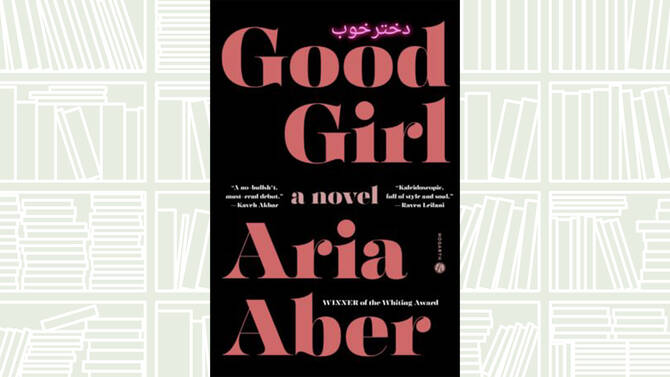
Review: Aria Aber’s debut novel ‘Good Girl’ marks her as a writer to watch
Updated 11 June 2025
Sumaiyya Naseem
JEDDAH: In her debut novel “Good Girl,” German-born poet Aria Aber writes a raw tableau of contemporary German society, plunging readers into post-9/11 psyche through the eyes of Nila, a 19-year-old Afghan German girl.
As Nila stumbles through Berlin’s underground techno scene, the city emerges as a character that, like her, is fractured and being forged anew. Berlin seems to be in the throes of struggling to reinvent itself amidst rising Islamophobia and neo-Nazi violence, while Nila’s quest for selfhood emerges in her rebellion against the suffocating expectations imposed on Afghan girls and the identity crisis born out of living in a society that seems suspicious of her presence.
It's a tale as old as the human desire for movement and refuge: Nila is too Afghan for German society, and too German for the Afghan community, with both watching her every move. Aber’s raw and fragmented narrative style mirrors her character’s splintered identity while capturing her “violent desire” to live and her aching need to belong and to be accepted as she is.
Though the novel occasionally stumbles with uneven pacing and moments that may seem repetitive or overwritten, what sets it apart is the author’s refusal to sanitize or sermonize. Nila’s messy, unconventional path to self-discovery remains unapologetically hers.
The emotional core of the novel lies in the tension between expectations placed on girls and the honor-based abuse that simmers beneath. Nila’s parents, progressive by diaspora standards, permit her artistic pursuits and eschew strict traditions. Yet their insistence on a “good girl” image still carries an undercurrent of control that constrains her freedom.
Ultimately, “Good Girl” is a young woman’s howl against a world that demands she shrink, marking Aber as a writer to watch.
‘The Wild Within’ sees artists breathe new life into Mideast buildings
Updated 16 December 2025
Saffiya Ansari
DUBAI: Lens-based artist Ryan Koopmans and digital artist Alice Wexell are staging a showcase at Dubai’s Leila Heller Gallery that breathes new life into regional buildings.
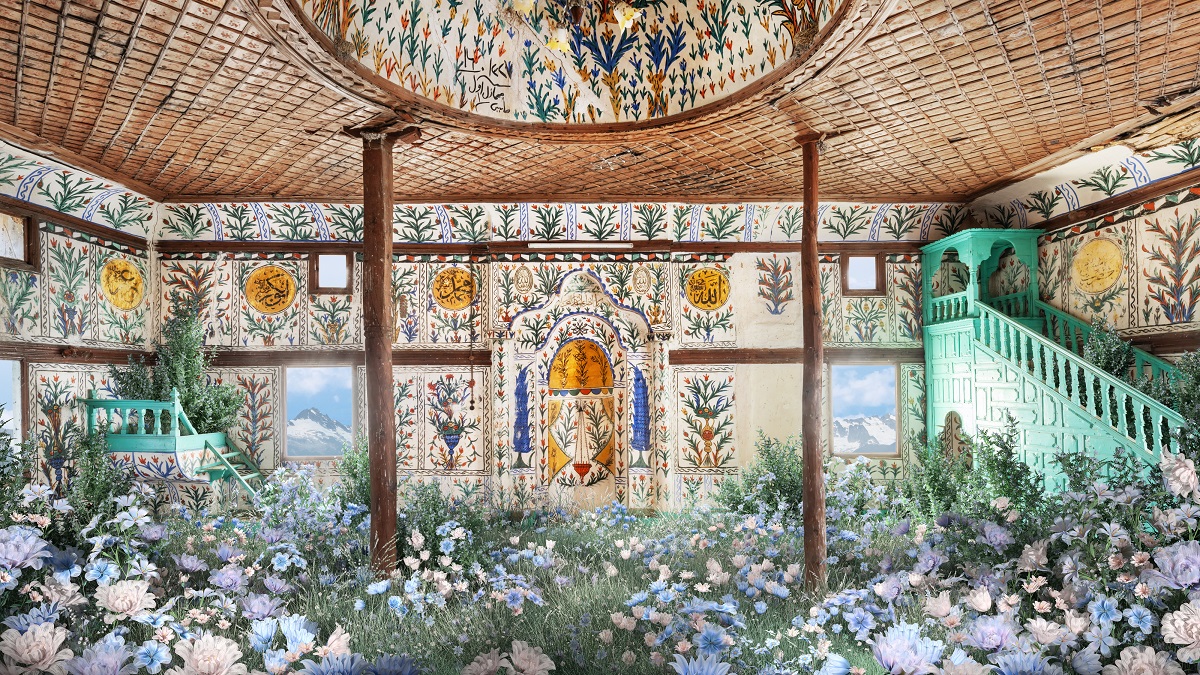
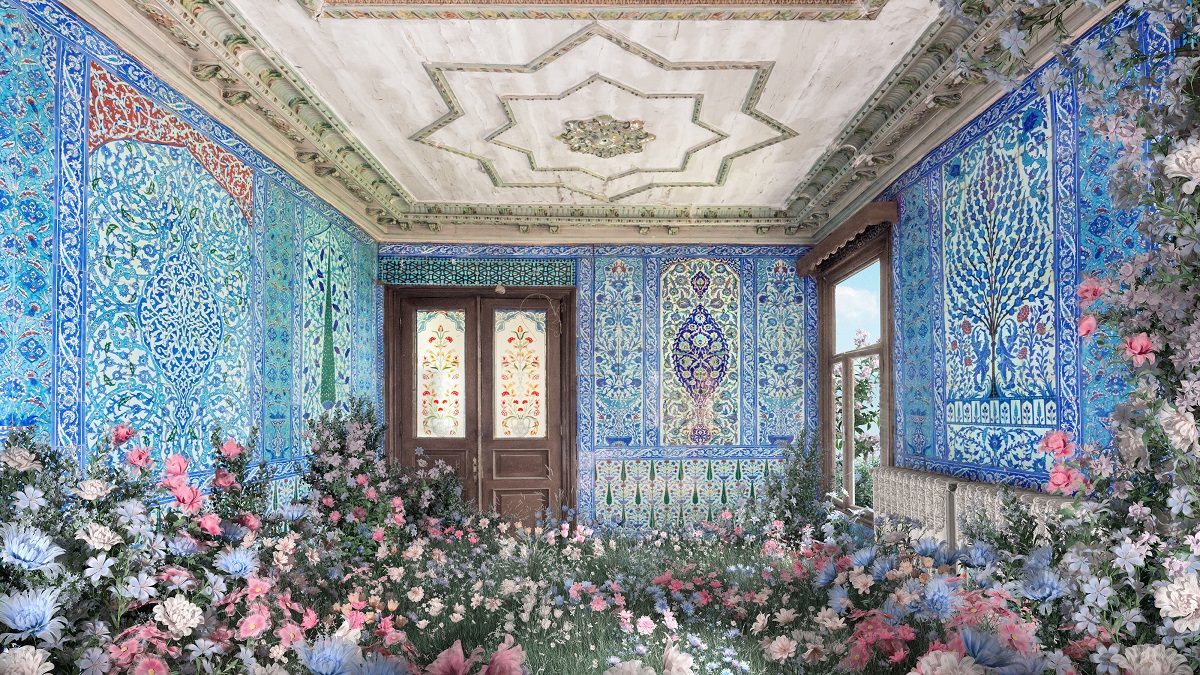
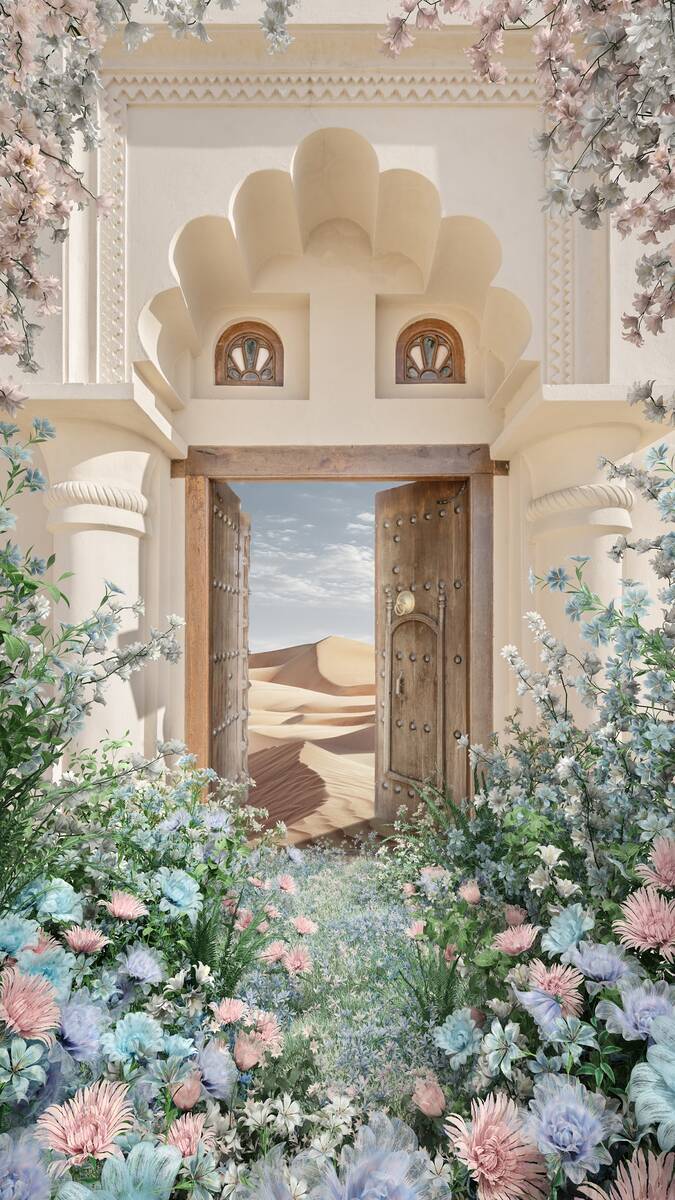
The series of digital artworks is part of the exhibition “The Wild Within,” featuring images of old structures in Beirut, Istanbul, and Abu Dhabi filled with wild flowers.
Two of the largest works, “Heartbeats” and “The Wish,” are displayed using Ventana, a microLED architectural display surface created by visual technology company Megapixel.
'Around Us' by Ryan Koopmans and Alice Wexell. (Supplied)
The former artwork depicts the entrance hall of Qasr Al-Watan, the UAE’s presidential palace in Abu Dhabi, while the latter reimagines the upper floors of the Emirates Palace Mandarin Oriental in Abu Dhabi.
“Each building we work with comes to us through a combination of research, travel, and intuition,” the artists told Arab News in a joint statement.
'Constellations' by Ryan Koopmans and Alice Wexell. (Supplied)
“We are drawn to structures that carry both emotional and historical resonance, often buildings that once embodied human ambition and now exist in a state of quiet transformation.”
Koopans and Wexell made sure to research the context of each building they choose to recreate, saying “an old villa in Jeddah or a former school in Sharjah each hold their own cultural memory, influencing everything from the lighting and atmosphere to the plants and flowers that we digitally sculpt and implement into the photographs.”
'Heart of Sharjah' by Ryan Koopmans and Alice Wexell. (Supplied)
The hypnotic works depict the interior of buildings in the region, with digitally rendered flowers carpeting the floor in a bid to “(reimage) these spaces (and) explore the relationship between nature, place, and time, while celebrating each site as a unique work of architecture with its own spirit and story,” the artists said.
Koopmans is of dual Canadian and Dutch heritage, while Wexell is Swedish and based in Stockholm, so it is noteworthy that both artists chose to explore the Middle East for their latest project.
'Blossom of the Ancestors' by Ryan Koopmans and Alice Wexell. (Supplied)
“In the Middle East especially, the architecture reflects a layered past that merges different styles and eras, while also expressing a sense of renewal and forward-looking energy, particularly in the region’s fantastic contemporary buildings. We are drawn to the symmetry, geometry and patterns that are found not only in nature itself, but in the architectural language of the region both past and present,” they said.
The series — featuring works such as “Adore You,” “Between Worlds,” and “Blossom of the Ancestors” — explores contrasts between the natural world and human-made forms, as well as the traditional and contemporary worlds.
“We are interested in how these elements coexist and merge into one another, creating a sense of hyperrealism that feels both familiar and imaginary. By merging photography with digital sculpture, the artworks question where the boundary lies between documentation and invention, and how technology can extend rather than replace our sense of the natural world.”
'Under the Rain of Light' by Ryan Koopmans and Alice Wexell. (Supplied)
Although the scale of the artworks ensures they leave the viewer entranced, it did pose challenges, according to the artists.
“Presented at a large scale, every texture in these artworks becomes visible, which can be demanding but is also incredibly rewarding. The magnified detail allows the visceral and atmospheric layers of the pieces to come through with greater impact,” they said, adding that each piece took “many months” to create.
“Ultimately, we want our collectors to experience a sense of wonder and contemplation, as if they are standing inside a dream that feels both entirely real yet unreal.”