

Famine risk stalks south of Khartoum, UN agency warns

1 / 2
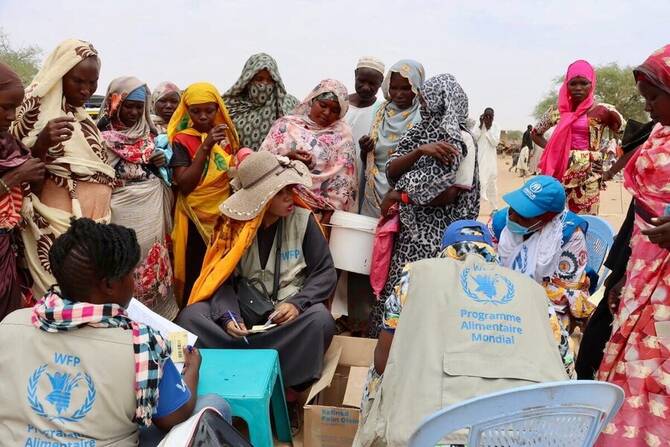
“The level of hunger and destitution and desperation that was found (is) severe and confirmed the risk of famine in those areas,” Laurent Bukera, WFP Country Director in Sudan. (WFP)
2 / 2
A destroyed tank is seen at a residential neighborhood as Sudan's army retakes ground and some displaced residents return to ravaged capital in the state of Khartoum Sudan March 26, 2025. (REUTERS)
Short Url
Updated 10 June 2025
Follow

Famine risk stalks south of Khartoum, UN agency warns

  • World Food Programme says international community must step up funding to support Sudan’s recovery
  • We saw widespread destruction, limited access to water, health care, and electricity, and a cholera outbreak. Life is returning in parts of Khartoum — but many neighborhoods remain abandoned, like a ghost city

KHARTOUM: Several areas south of the Sudanese capital Khartoum are at high risk of famine, the World Food Programme warned on Tuesday, calling for an immediate international response.
Laurent Bukera, WFP’s Sudan representative and country director, said the UN agency had found “severe” hunger levels in Jabal Awliya, a town around 40km south of Khartoum.
Bukera was speaking after returning from Khartoum State, where the WFP opened a new office in Omdurman, a part of greater Khartoum.
“The needs are immense,” he told a press briefing in Geneva, speaking from Port Sudan.
“We saw widespread destruction, limited access to water, health care, and electricity, and a cholera outbreak. In parts of the city, life is returning — but many neighborhoods remain abandoned, like a ghost city.
“Several areas in the south of the city are at high risk of famine,” he said.
“The international community must act now — by stepping up funding to stop famine in the hardest-hit areas and to invest in Sudan’s recovery.”
Sudan’s regular army and the paramilitary Rapid Support Forces have been locked in a battle for power since April 2023.
The RSF lost control of Khartoum in March.
Now that WFP has access to the area and is able to make regular aid deliveries, the agency said it was doing everything it could to bring the local population back from the brink of famine.
Bukera said “the level of hunger, destitution and desperation” found in Jabal Awliya was “severe, and basically confirmed the risk of famine.”
The war has killed tens of thousands of people and created the world’s largest hunger and displacement crises.
Bukera said that with people expected to return to heavily damaged areas like Khartoum, the pressure on already over-stretched resources would intensify.
“WFP is deeply concerned, and meeting basic needs — especially food — is critical and urgent,” he said.
Famine has been declared in five areas across Sudan, including three displacement camps near El-Fasher in the southwest.
It has been all but confirmed in El-Fasher itself, where aid agencies say a lack of access to data has prevented an official famine declaration.
Across the country, nearly 25 million people are suffering dire food insecurity.


Supporters of Tunisia’s Saied rally amid deepening political divisions

Updated 7 sec ago
Follow

Supporters of Tunisia’s Saied rally amid deepening political divisions

TUNIS: Tunisian President Kais Saied’s supporters rallied in the capital on Wednesday calling the opposition “traitors,” following mounting street protests in recent weeks that have highlighted widening political divisions.
The rival rallies come amid a deepening economic crisis marked by high inflation, shortages of some basic goods and poor public services, which have fueled public anger.
Rights groups have accused Saied of an unprecedented crackdown on the opposition, saying he is using the judiciary and police to stifle criticism. Saied rejects the accusations, saying he is cleansing the country of traitors and a corrupt elite.
Demonstrators gathered in central Tunis waving national flags and chanting slogans backing Saied, whom they credit with confronting corruption and entrenched political elites.
They accused Saied’s opponents of seeking to destabilize the country, describing them as “traitors.” They chanted “people want Saied again” and “we support the leadership and sovereignty.”
“We are here to rescue Tunisia from traitors and colonial lackeys,” protester Saleh Ghiloufi said.
Saied’s critics say arrests of opposition leaders, civil society groups and journalists underscore an authoritarian turn by the president since he took on extraordinary powers in 2021 to rule by decree.
The powerful UGTT union has called a nationwide strike next month.
A Tunisian court last week sentenced prominent opposition figure Abir Moussi to 12 years in prison, in what critics say is another step toward entrenching Saied’s one-man rule.
While an appeals court last month handed jail terms of up to 45 years to dozens of opposition leaders, business people and lawyers on charges of conspiracy to overthrow Saied.
Saied was elected in 2019 with an overwhelming mandate, but his consolidation of power has alarmed domestic opponents and international partners, who warn Tunisia is retreating from democratic governance.