


JEDDAH: As pilgrims complete the sacred rites of Hajj, many embark on a deeper spiritual journey by exploring historic Islamic sites across Saudi Arabia to connect with the roots of their faith.
In the holy city of Makkah, pilgrims visit Jabal Al-Nour, whose name means “Mountain of Light.” At its peak lies the Cave of Hira, where the first verses of the Qur’an were revealed through the Angel Jibreel.
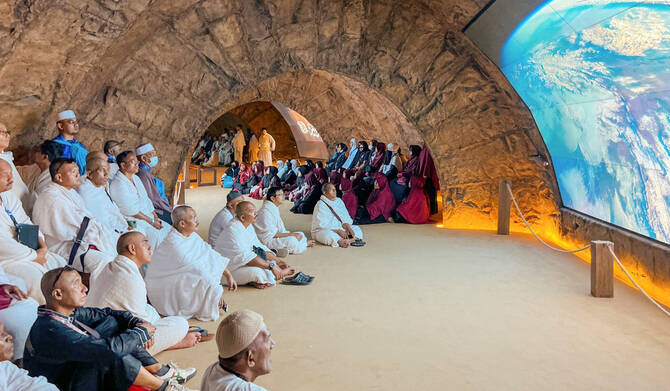
The mountain’s distinctive camel-hump shape makes it a striking landmark, especially with the nearby Hira Cultural District, where the Revelation Gallery offers pilgrims to learn the story of divine revelation and history.

Beyond the holy cities, other sacred destinations continue to attract pilgrims in search of spiritual enrichment. (Supplied/File photo)
Ahmed Khan, a private tour guide said: “There’s something unexplainable about standing where it all began. When I take pilgrims to Jabal al-Nour, many of them are moved to tears it’s not just a climb, but it’s a spiritual awakening.”
To the south lies Jabal Thawr, the mountain that cradled the Prophet and his companion Abu Bakr as-Siddiq in its cave during their migration to Madinah. The story of divine protection, where a spider’s web and a dove’s nest concealed their presence from their pursuers, resonates deeply with pilgrims.
Another frequently visited site is Jabal Abu Qubays, believed in some traditions to be the first mountain placed on Earth. As the closest peak to the Grand Mosque, it resonates with the early public da’wah and the great spiritual responsibility.
FASTFACTS
• Al-Qiblatain Mosque, where revelation changed the direction of prayer from Jerusalem to Makkah, remains a must-visit site for pilgrims.
• Programs like ‘Hala,’ launched by Al-Bait Guests Co., are curating journeys for pilgrims to explore with knowledgeable guides.
Nearby, the modest yet historically significant Al-Bay’ah Mosque marks the location of the Pledge of Aqabah, where the Ansar of Madinah pledged allegiance to the Prophet Muhammad.
Built during the Abbasid era, it symbolizes early Muslim unity and commitment to the new faith. A short distance away in Al-Hajun district is Jabal Al-Sayyidah, at the base of which lies the revered Al-Ma’la Cemetery, resting place of Khadijah, the Prophet’s beloved wife. Her grave remains a focal point of deep reverence.
“Pilgrims love visiting these places and it helps them to understand the sacrifices of the people who shaped Islam,” Khan added.
Madinah has its own timeless legacy. Al-Qiblatain Mosque, where revelation changed the direction of prayer from Jerusalem to Makkah and marked a defining shift in Muslim identity and remains a must-visit site for pilgrims.
Hussain Rauff, regional director of Madinah Hotels at Elaf Al-Taqwa, said: “We’re planning to organize guided tours across Madinah to help pilgrims explore the city’s rich Islamic heritage. It’s a meaningful way to extend their spiritual journey beyond the rituals of Hajj.”
Further west of the Prophet’s Mosque lies the cluster known as the Seven Mosques, each linked to events from the Battle of the Trench. Among them are Al-Fath Mosque and those named after figures such as Fatimah, Ali ibn Abi Talib, and Salman Al-Farsi. These mosques are rich in historical memory and serve as reminders of hardship during one of Islam’s critical battles.
Mount Uhud rises just north of Madinah city, its slopes reminds of the Battle of Uhud and the place where the Prophet’s uncle, Hamza ibn Abdul Muttalib, and 70 companions were martyred. Today, pilgrims pause at the Uhud Martyrs Cemetery indicating the modesty found in victory and the strength drawn from loss.
Equally powerful is a visit to Baqi’ Al-Gharqad Cemetery, the resting place of many of the Prophet’s family members and companions. Located near the Prophet’s Mosque, the cemetery has long served as a site for prayer and remembrance, offering pilgrims a moment of intimate connection with those who stood beside the Prophet during Islam’s formative years.
Beyond the holy cities, other destinations continue to attract pilgrims in search of spiritual enrichment. Northwest of Madinah lies Khaybar, the site of a pivotal military campaign that showcases both the strategic and ethical dimensions of the Prophet’s leadership. Its volcanic terrain and ancient fortifications tell stories etched in stone.
Fatima Al-Mutairi, a pilgrim from Kuwait: “I am planning to visit these places in Jeddah and Taif after my Hajj. I am planning to visit the Tomb of Hawa in Jeddah and in Taif, I look forward to visiting Masjid Abdullah ibn Abbas, to pay tribute to one of the great scholars whose work in Qur’anic interpretation and Hadith continues to inspire many seekers of knowledge.”
Recognizing the growing desire for such experiences, programs like “Hala,” launched by Al-Bait Guests Co., are curating immersive journeys for pilgrims to explore these sacred sites with knowledgeable guides and spiritual context.
Mohammed Al-Shahrani, experience officer in Hajj and Umrah sector said: “Our aim is to enrich the post-Hajj experience. We want pilgrims to understand that the journey of faith continues, and Saudi Arabia is opening its heritage for those who wish to walk in the footsteps of the Prophet.”


