MARAAT AL-NUMAN, Syria: A contractor digging into the earth where the rubble of a destroyed house had been cleared away in northern Syria stumbled across a surprise: the remains of an underground Byzantine tomb complex believed to be more than 1,500 years old.
The discovery emerged last month in the town of Maarat Al-Numan in Idlib province, which is strategically located on the route between the cities of Aleppo and Damascus. The community became a touchpoint in the nearly 14-year Syrian civil war that ended with the fall of former President Bashar Assad in a lightning rebel offensive in December.
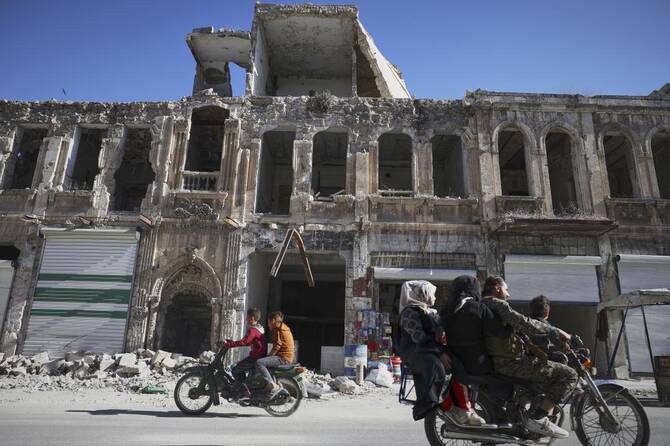
Assad’s forces seized the area back from opposition control in 2020. Houses were looted and demolished. Aerial images of the area show many houses still standing but without roofs.
Now residents are beginning to return and rebuild. In the course of a reconstruction project, stone openings were uncovered indicating the presence of ancient graves. Residents notified the directorate of antiquities, which dispatched a specialized team to inspect and secure the site.
Aboveground, it’s a residential neighborhood with rows of cinder-block buildings, many of them damaged in the war. Next to one of those buildings, a pit leads down to the openings of two burial chambers, each containing six stone tombs. The sign of the cross is etched into the top of one stone column.
“Based on the presence of the cross and the pottery and glass pieces that were found, this tomb dates back to the Byzantine era,” said Hassan Al-Ismail, director of antiquities in Idlib. He noted that the discovery adds to an already rich collection of archaeological sites in the area.
Idlib “has a third of the monuments of Syria, containing 800 archaeological sites in addition to an ancient city,” Al-Ismail said.
The Byzantine Empire, which began in the 4th century AD, was a continuation of the Roman empire with its capital in Constantinople — today’s Istanbul — and Christianity as its official religion.
Abandoned Byzantine-era settlements called Dead Cities stretch across rocky hills and plains in northwest Syria, their weathered limestone ruins featuring remnants of stone houses, basilicas, tombs and colonnaded streets.
In the past, the owners of sites where archaeological ruins were found sometimes covered them up, fearful that their property would be seized to preserve the ruins, said Ghiath Sheikh Diab, a resident of Maarat Al-Numan who witnessed the moment when the tomb complex was uncovered.
He said he hoped the new government will fairly compensate property owners in such cases and provide assistance to the displaced people who have returned to the area to find their homes destroyed.
The years of war led to significant damage to Syria’s archaeological sites, not only from bombing but from looting and unauthorized digging.
Some see in the ruins a sign of hope for economic renewal.
Another local resident, Abed Jaafar, came with his son to explore the newly discovered tombs and take pictures.
“In the old days, a lot of foreign tourists used to come to Maarat just to see the ruins,” he said. “We need to take care of the antiquities and restore them and return them to the way they were before … and this will help to bring back the tourism and the economy.”


![]()
![]()
![]()

Contractor in Syria uncovers a surprise beneath the rubble: an ancient tomb complex


Short Url
https://arab.news/8bu3h
Contractor in Syria uncovers a surprise beneath the rubble: an ancient tomb complex


Latest updates




© 2026 SAUDI RESEARCH & PUBLISHING COMPANY, All Rights Reserved And subject to Terms of Use Agreement.