

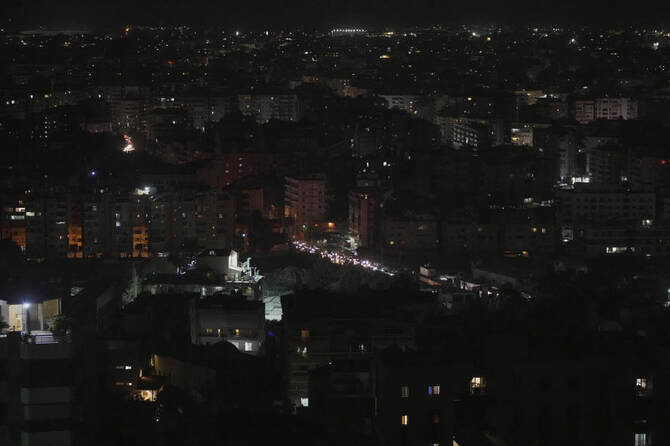

BEIRUT: Huge numbers of people fled Beirut’s southern suburbs on Thursday after the Israeli military issued an evacuation warning and said it was striking underground drone factories belonging to Hezbollah.
The streets around the area were seen jammed with traffic as residents tried to leave, with Lebanese media reporting Israeli warning strikes.
“You are located near facilities belonging to the terrorist organization Hezbollah,” said the warning from the Israeli army’s Arabic-language spokesman, Avichay Adraee.
“For your safety and the safety of your families, you are required to evacuate these buildings immediately and move away from them at a distance of no less than 300 meters.”
In a separate statement, the army said it would “soon carry out a strike on underground UAV (drone) production infrastructure sites that were deliberately established in the heart of (the) civilian population” in Beirut.
Israel and the Iranian-backed Hezbollah engaged in more than a year of hostilities that began with the outbreak of the Gaza war and culminated in an intense Israeli bombing campaign and ground incursion into southern Lebanon.
A November ceasefire sought to end the fighting — which left Hezbollah severely weakened — but Israel has continued to regularly carry out strikes in Lebanon’s south.
Strikes targeting Beirut’s southern suburbs, considered a Hezbollah stronghold, have been rare, however.
“Following Hezbollah’s extensive use of UAVs as a central component of its terrorist attacks on the state of Israel, the terrorist organization is operating to increase production of UAVs for the next war,” the army statement said, calling the activities “a blatant violation of the understandings between Israel and Lebanon.”
Under the truce, Hezbollah fighters were to withdraw north of the Litani river, about 30 kilometers from the border, and dismantle their military posts to the south.
Israel was to pull all its troops from Lebanon, but it has kept them in five positions it deems “strategic” along the frontier.
The Lebanese army has been deploying in the south and removing Hezbollah infrastructure there, with Prime Minister Nawaf Salam saying Thursday that it had dismantled “more than 500 military positions and arms depots” in the area.


