

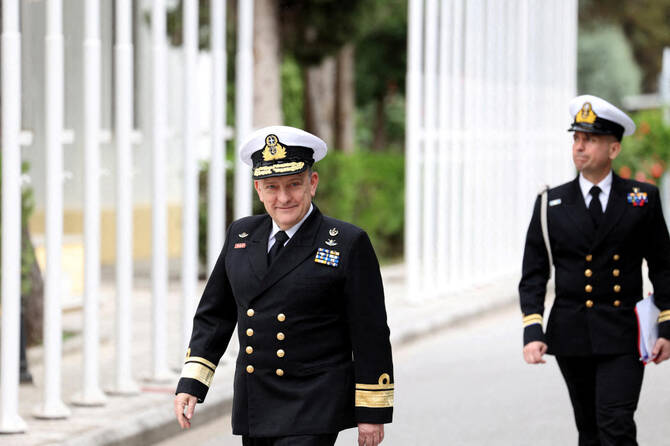

MADRID: Red Sea marine traffic has increased by 60 percent to 36-37 ships a day since August 2024, but is still short of volumes seen before Yemen’s Houthis began attacking ships in the region, according to the commander of the EU’s Aspides naval mission.
The number of merchant ships using the narrow Bab Al-Mandab strait increased after missile and drone attacks by the Houthis slowed and the US and the rebel group signed a ceasefire deal, Rear Admiral Vasileios Gryparis said in an interview in Madrid.
But shipping traffic, which reached a low of 20-23 ships daily in August last year, is still short of an average of 72-75 ships a day seen before the Houthis began attacks in the Red Sea in November in 2023 in support of Palestinians over Israel’s war in Gaza, said Gryparis.
The mission, which was established to safeguard navigation in the strategic trade route linking the Mediterranean with the Gulf of Asia through the Suez Canal, was extended in February when it was also tasked with tracking illegal arms shipments and monitoring vessels carrying sanctioned Russian oil.
The last attack on a merchant ship took place in November 2024 and the Houthis have also narrowed their objectives, saying their targets are Israeli ships and ships that have a connection with Israel or have docked at an Israeli port, Gryparis said.
“If you have a vessel that does not correspond to this criteria... there is a huge possibility — more than 99 percent — that you’re not going to be targeted by the Houthis,” Gryparis said.
Still, Gryparis said he could not guarantee that merchant ships won’t be attacked.
Some companies have been deterred from using the route because of the mission’s lack of ships, which can cause delays of as much as a week for those seeking to be escorted through the area, he said.
He said the mission has between two and three ships operating at one time and has requested the EU provide it with 10 ships to increase its capacity for protection.
The mission has provided close protection to 476 ships, shot down 18 drones, destroyed two remote-controlled boats used to attack ships and intercepted four ballistic missiles, he said.


