- The $4.8 billion project aims to enhance regional trade and logistics movement by connecting the three countries
- It is part of Pakistan’s efforts to position itself as a key transit hub, connecting landlocked Central Asia to the world
ISLAMABAD: Pakistan and Uzbekistan have agreed to formulate a joint strategy for the completion of the Uzbekistan-Afghanistan-Pakistan (UAP) railway project, Pakistani state media reported, amid Islamabad’s efforts to open new regional trade avenues.
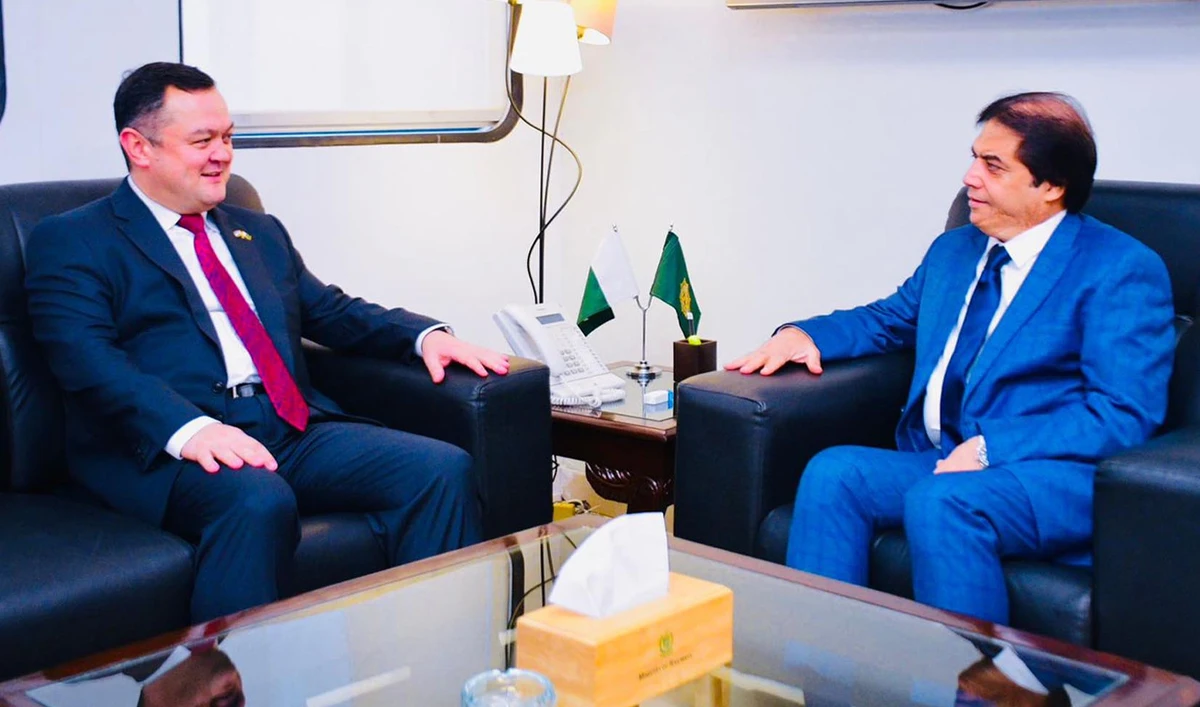
The development followed a meeting between Pakistan’s Railways Minister Hanif Abbasi and Uzbek Ambassador to Islamabad, during which the two figures held detailed discussions on the approximately 850-kilometer-long railway connectivity project, which includes a 647-kilometer rail track passing through Afghanistan.
The trilateral initiative was launched in 2021 to enhance regional connectivity by linking Central Asia with Pakistan’s southern ports of Gwadar and Karachi through Afghanistan. The project aims to improve trade access for landlocked countries and strengthen economic integration across the region.
“Upon completion of this project, Pakistan will gain the shortest and most efficient route to Central Asia, which will not only increase trade volumes but also strengthen the region’s economy on a solid footing,” Abbasi was quoted as saying by the APP news agency.
“This railway corridor will significantly reduce transit time and transportation costs, benefiting all stakeholders.”
Pakistan is seeking to leverage its strategic position as a key trade and transit hub to connect Central Asia with global markets and since last year, there has been a flurry of high-level visits, investment discussions and other economic engagements between Islamabad and Central Asian republics.
Abbasi highlighted that the corridor is expected to handle an annual freight capacity of 15 million tons, which could help boost exports and imports across the region, according to the report.
“This project will not only reinforce economic ties but will also play a pivotal role in promoting regional peace and stability,” he said.
On the occasion, Ambassador Tukhtaev acknowledged investment opportunities in Pakistan’s railway sector and emphasized the importance of collaborative efforts to foster economic prosperity and create employment for both peoples, according to the APP report.
Both officials also acknowledged the positive impact of the UAP project in promoting peace and stability in Afghanistan.
Last week, Pakistan’s Deputy Prime Minister Ishaq Dar also held a phone call with his Uzbek counterpart, Saidov Bakhtiyor Odilovich, to discuss steps to advance the UAP railway project, including the framework agreement and its signing mechanism.
Over the years, the project has faced significant challenges, including security concerns in Afghanistan, and the need to reconcile differing railway gauges across the three countries.
“Emphasizing the importance of the Uzbekistan-Afghanistan-Pakistan (UAP) Railway Line Project for regional connectivity, both leaders agreed to work closely for an early finalization of the framework agreement,” the Pakistani foreign office said.