

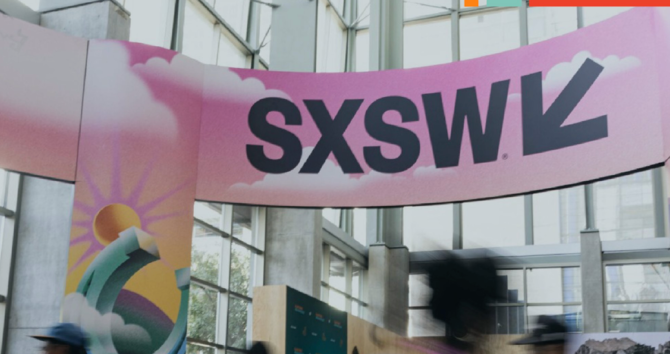

DUBAI: SXSW has taken off this week in London, with the Saudi Film Commission hosting a series of exciting cultural events.
Originating in Austin, Texas, this is the South by Southwest festival’s first edition in London — and notably, the Kingdom’s debut at the renowned indie film showcase, the Saudi Press Agency reported recently.
The Saudi Film Commission, in collaboration with SXSW, will present a curated selection of short films as a part of the “Saudi Film Nights” initiative.
Under the umbrella of Vision 2030, this program supports the Kingdom’s broader effort to diversify its economy, with particular emphasis on growing its entertainment sector.
The Kingdom’s pavilion, known as The Sadu House, will also spotlight contributions from the Music Commission, Culinary Arts Commission, and Fashion Commission, showcasing Saudi Arabia’s rich and diverse cultural landscape to a global audience.
In addition, the commission will host a panel discussion titled “Empowering the Film Industry in Saudi Arabia: From Vision to Reality.” The session will delve into cinema’s role in shaping national identity, preserving heritage, and advancing Saudi content as a powerful cultural tool.
Each day of the festival will feature a showcase of emerging Saudi talent.
On June 3, for example, SXSW attendees will experience a taste of Saudi hip-hop with performances by AZIZ.wav, SHANCOTY, and JEED — artists known for their unique blend of hip-hop flair, Afrobeat influences, and slow R&B tones.
On June 4, the Kingdom will shift gears and present its underground heavy music scene with performances by death metal bands Wasted Land, Sijeel, and Gimmix, marking a bold introduction of Saudi rock to the SXSW stage.
In addition to performances, festivalgoers can attend cultural panels featuring industry professionals from across the Arab world. Topics include female leadership, entrepreneurial ambition, and the evolution of Saudi Arabia’s film industry.
The opening panel on June 3 is titled “Vision 2030: Cultural Opportunities for Social and Economic Transformation,” which will explore the potential of Saudi Arabia’s cultural power.
Day two will feature a session “Fashion Future Platform: How Data Informs Investment Decisions,” offering a deep dive into the intersection of fashion and data-driven innovation.
Another session on day two, “WWD Female Empowerment – Challenges Facing Women Creatives in a Male-Dominated World,” will spotlight the obstacles and breakthroughs for women in the creative sector.
Finally, day three will have a panel “Sustainability – Challenges of Creating Green Fashion and Beauty in a Throwaway World,” which will underscore the need for sustainability in the industry.


