- PM appointed delegation to visit world capitals to advocate for Pakistan after latest military confrontation with India
- Military escalation between May 7-10 saw the two countries trade missile, drones and artillery fire until US brokered a ceasefire
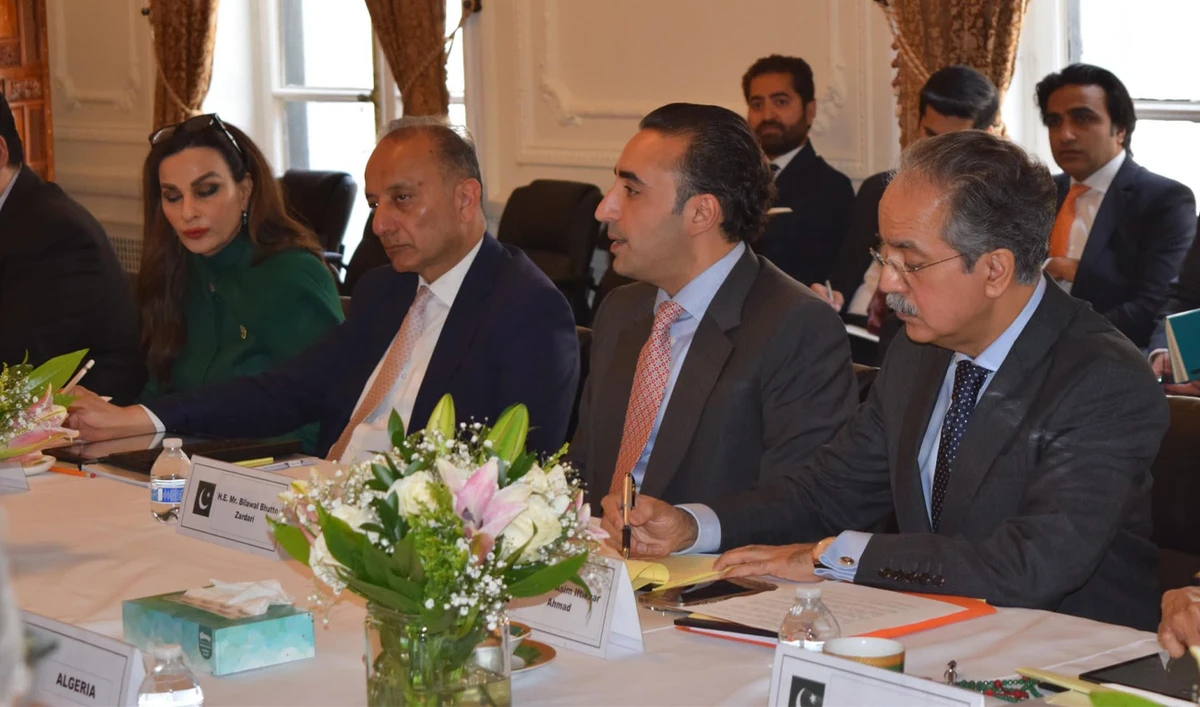
ISLAMABAD: A high-level Pakistani delegation, led by former foreign minister Bilawal Bhutto-Zardari, has met representatives of the United Nations Security Council’s elected member states and briefed them on last month’s conflict between India and Pakistan as well as New Delhi’s attempt to block Pakistan’s share of Indus waters, Pakistani state media reported on Monday.
Tensions between nuclear-armed Pakistan and India remain high since they struck a ceasefire on May 10 following the most intense military confrontation between them in decades. Both countries accuse the other of supporting militancy on each other’s soil — a charge both capitals deny.
The latest military escalation, in which the two countries traded missile, drones and artillery fire, was sparked after India accused Pakistan of supporting militants who killed over two dozen tourists in Indian-administered Kashmir on April 22. Islamabad denies involvement.
In its meeting with representatives of Denmark, Greece, Panama, Japan and other UNSC member states in New York, the Pakistani delegation highlighted that Islamabad’s response to Indian missile strikes was “measured, responsible and in accordance with the UN Charter,” the Radio Pakistan broadcaster reported.
“It briefed the UNSC elected members that [India’s] holding [of] Indus Waters Treaty in abeyance may lead to water shortage, food crisis and environmental disaster in Pakistan,” the report read.
“The delegation called on the members of the Security Council to move beyond conflict management and actively support conflict resolution in South Asia.”
India announced suspending the 1960 World Bank-brokered treaty, which ensures water for 80 percent of Pakistani farms, a day after the April 22 attack. Islamabad has called for a credible, international probe into the attack and described the Indian move to suspend the treaty as “act of war.”
Bhutto-Zardari told UNSC members that Indian allegations against Pakistan were without any “credible investigation or verifiable evidence,” and that New Delhi’s targeting of innocent civilians and suspension of Indus Waters Treaty was a threat to regional peace, according to the report.
The Pakistani delegates underscored Islamabad’s commitment to restraint and initiation of a comprehensive dialogue to address outstanding issues with India, particularly the Jammu and Kashmir dispute.
Bitter rivals India and Pakistan have fought three wars, including two of them over the disputed region of Kashmir, since gaining independence from British rule in 1947. Both claim the Himalayan territory in its entirety but rule it in part.
“The elected members of UN Security Council appreciated Pakistan’s outreach and welcomed its reaffirmation of commitment to peace and diplomacy,” the report said.
“They noted the significance of de-escalation, respect for international law, and the peaceful settlement of disputes emphasized that the UN Charter must guide state conduct, particularly in regions of high sensitivity such as South Asia. They acknowledged the risks posed by any further escalation and stressed the need to pursue diplomatic solutions.”
The Pakistani delegation, led by Bhutto-Zardari, will also visit Washington DC, London and Brussels to present Pakistan’s position on the conflict. Another delegation, led by Special Assistant to the Prime Minister Tariq Fatemi, will visit Moscow this week.
Pakistan’s foreign office earlier said the two delegations will “underscore the imperative for the international community to play its due role in promoting a lasting peace in South Asia.”