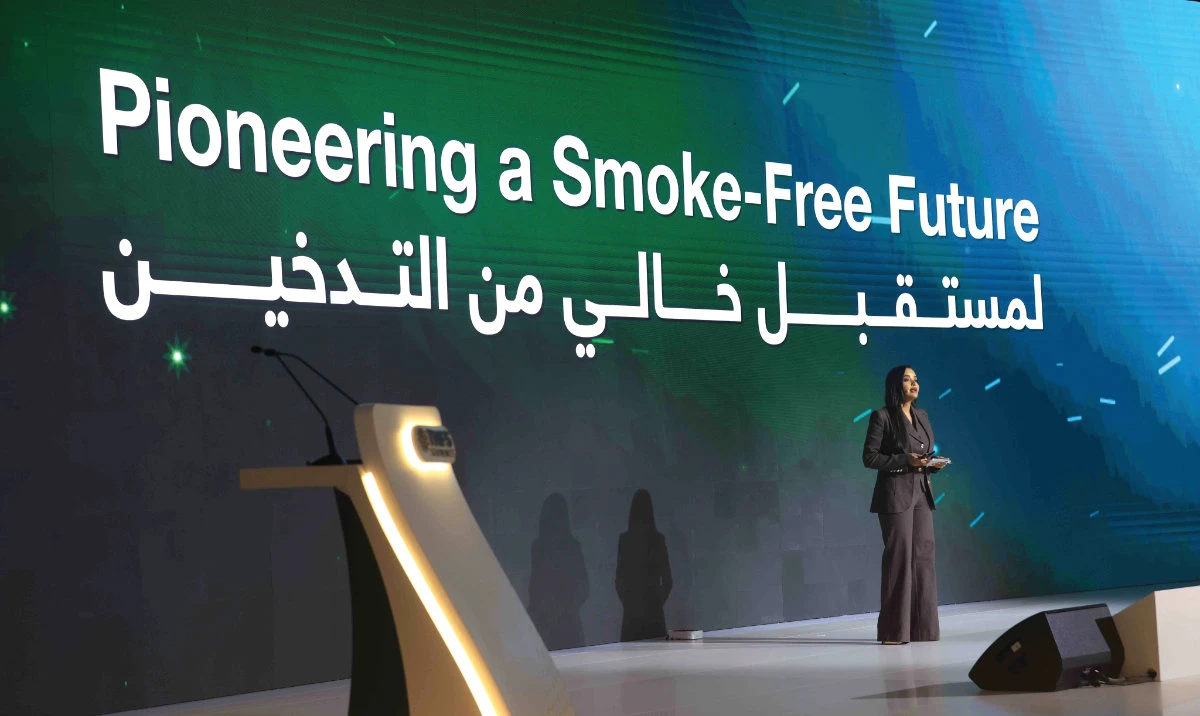
The TNFS Summit 2025 concluded on May 29 in Riyadh with the adoption of an ambitious vision for a future free from tobacco-related harm — one rooted in innovation, prevention, and regulatory integration. The summit served as a regional platform for dialogue and knowledge exchange around effective harm reduction policies and the encouragement of safer alternatives.
The summit was organized under the TNFS initiative, a strategic partnership between Badael (a Public Investment Fund company), the Quality of Life Program (a Vision 2030 program), and Smart Health as the summit’s scientific partner.
The event brought together more than 100 experts and decision-makers from within the Kingdom and abroad, representing health organizations, regulatory authorities, and leading academic institutions.
Summit sessions reviewed global models for tobacco control, including experiences from Sweden and the UK. Core themes aligned with Saudi Arabia’s national strategy included:
•Correcting public misconceptions about nicotine and its role as a lower-risk alternative to tobacco, as part of the solution, not the problem.
•Evaluating the impact of taxation as an effective tool to reduce tobacco consumption. • Showcasing scientific innovations in reduced-risk alternative products.
Official data from the General Authority for Statistics showed that the adult smoking rate in Saudi Arabia dropped from 17.5 percent to 12.4 percent within one year. This decline is attributed to the implementation of comprehensive regulatory policies, tax increases, and the availability of lower-risk alternatives.
Participants emphasized that TNFS is a true transformation platform, one that moves beyond awareness toward real impact on policy and societal behavior — reinforcing the Kingdom’s position as a regional model to follow. Organizers announced that the summit would serve as the first in a series of specialized events in this field.
During the summit, Tolga Sezer, CEO of Badael, said: “We believe harm reduction is the pathway to a smoke-free future. TNFS marks a powerful starting point for Saudi Arabia’s national efforts to tackle tobacco use, driven by science, innovation, and supportive legislation.”
Salman Al-Khattaf, adviser to the CEO of the Quality of Life Program, added: “Health is not a choice but a foundation for a dignified life and a productive society. TNFS supports community health and promotes positive lifestyle choices in line with the Kingdom’s goals and bold vision.” He emphasized that success in tobacco harm reduction depends on connecting scientific evidence with practical, applicable policies, a core aim of the TNFS partnership.
Dr. Sara Al-Rashoud, research adviser at Smart Health, noted that the TNFS initiative reflects a shared commitment across sectors to reducing smoking and achieving a smoke-free Saudi Arabia, especially with nearly 4.8 million adult smokers currently in the Kingdom.
Dr. Christopher Russell, a UK-based behavioral scientist specializing in tobacco and nicotine use, estimated that smoking causes approximately 14,200 premature deaths annually in Saudi Arabia. He also predicted that the global end of smoking could be achieved within the next 40 years.
Dr. Konstantinos Farsalinos shared successful international harm reduction models, highlighting Sweden’s achievement in reducing smoking rates from 15 percent to 5 percent over 15 years. This shift contributed to a 41 percent drop in cancer incidence and a 39.6 percent decrease in tobacco-related deaths. He called these outcomes a strategic opportunity for the region.
In the session titled “Tobacco Harm Reduction in the Middle East,” Dr. Abdulrahman Al-Qudhib, a Saudi family physician specializing in noncommunicable diseases and tobacco harm reduction, warned about persistently high smoking rates in countries such as Jordan and Lebanon.
Public health expert Dr. Mohammad Yaman noted that 85 percent of smokers relapse within months, according to Mayo Clinic studies. He therefore considered the TNFS initiative an important step toward reducing smoking, calling for the model to be expanded and for greater regional collaboration.
In closing, participants affirmed that the TNFS Summit 2025 marks a pivotal step in the Kingdom’s journey toward a society free from tobacco-related harm. It represents the convergence of political will and scientific knowledge, and strengthens Saudi Arabia’s position as a leading model in adopting harm reduction policies and advancing quality of life.