

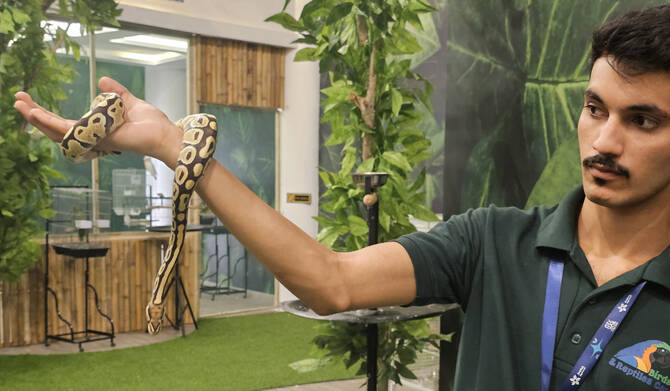

JEDDAH: Nature lovers are heading to the Birds and Reptiles Cave, part of Jeddah Season, at City Walk for a wild experience.
The exhibit, which runs until June 14, presents visitors with an array of exotic animals, from vibrant, free-flying birds to reptiles housed in carefully crafted enclosures. Visitors can touch, feed, and observe tame species under the supervision of experts and handlers.

Visitors can touch, feed, and observe tame species under the supervision of experts and handlers. (AN photo)
More than 50 rare and exotic bird species from Indonesia, Australia, Africa, and South America are part of the experience this year.
Mohammed Bukhari, one of the exhibit’s wildlife experts, said, “We offer a unique experience that weaves together the magic and diversity of nature’s wildlife within an entertaining and consumer-friendly environment.”
FASTFACT
More than 50 rare and exotic bird species from Indonesia, Australia, Africa, and South America are part of the Birds and Reptiles Cave.
He emphasized the cave’s broad appeal, noting that it caters to both wildlife enthusiasts and casual visitors. “Parents are increasingly bringing their kids to connect with nature and experience wildlife,” Bukhari added. “From schoolchildren to the elderly, everyone gets rejuvenated and energized after spending some time exploring nature with such birds and reptiles.”

Visitors can touch, feed, and observe tame species under the supervision of experts and handlers. (Supplied)
Hamdaan Al Buadaani from Taif, who visited the cave with his son, said: “My son was very happy to see birds flying over his head, holding little snakes in his hand, touching the big and small turtles and getting up close with macaws, owls, kangaroo and monkeys.”
Adel Al-Mansouri, who visited with his family, praised the cave as a great outing for children. “It is an ideal place to view reptiles and birds,” he said. “There is a good variety of birds and reptiles and my kids were so happy to touch and play with birds.”


