Pakistan extends airspace ban on Indian aircraft until June 24 amid ongoing tensions

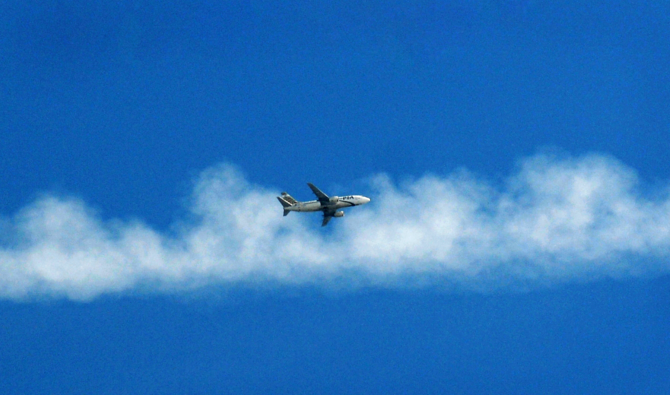
A Pakistani airplane flies over Islamabad on January 23, 2009. (AFP/ FILE)
Short Url
Updated 23 May 2025
Follow

Pakistan extends airspace ban on Indian aircraft until June 24 amid ongoing tensions

  • The restriction was originally imposed on April 24 after an attack in Kashmir killed 26 tourists
  • The airspace closure impacted Indian airlines, particularly on long-haul international routes

ISLAMABAD: Pakistan has extended its ban on Indian aircraft using its airspace until June 24, the Pakistan Airports Authority (PAA) announced on Friday, amid continued bilateral tensions following recent military clashes this month.

The restriction was first imposed on April 24, only two days after an attack in Indian-administered Kashmir that killed 26 people. India blamed Pakistan for the attack despite Islamabad’s denials. The administration in New Delhi also downgraded bilateral diplomatic ties and took other steps like suspending visas for Pakistanis and shutting border crossings.

In response, Pakistan took its own measures, including the closure of its airspace to Indian aircraft, including commercial and military flights.

“The ban on Indian aircraft flying through Pakistani airspace has been extended until 4:59 AM on June 24, 2025,” the PAA said.

“All aircraft that are Indian-registered, operated, owned or leased will remain subject to the ban,” it added.

The airspace closure has significantly impacted Indian airlines, particularly on long-haul international routes.

Air India, which operates numerous flights to Europe and North America, has been forced to reroute flights, leading to increased fuel consumption, longer flight times, and additional operational costs.

The airline estimates that the ban could result in approximately $600 million in additional expenses over a year and has sought compensation from the Indian government.

Despite a ceasefire agreement announced on May 10, which has held according to Pakistani Deputy Prime Minister Ishaq Dar, the extension of the airspace ban indicates ongoing diplomatic strains.

The situation was further exacerbated by a recent school bus bombing in Pakistan that killed four children, an incident Islamabad has blamed on New Delhi. However, the Indian authorities have denied the charge.


Amnesty urges Pakistan to halt deportations of Afghan refugees

Updated 4 sec ago
Follow

Amnesty urges Pakistan to halt deportations of Afghan refugees

  • Rights group’s letter to PM Sharif warns deportations violate non-refoulement, expose Afghans to abuse
  • Pakistan says it has hosted Afghans for decades with respect, denies mistreatment during repatriation

ISLAMABAD: Amnesty International has urged Pakistan to stop the detention and deportation of Afghan refugees, warning that mass expulsions could expose many to serious human rights violations, according to an open letter the group’s South Asia office posted on X on Friday.

The letter, dated Jan. 1, was addressed to Prime Minister Shehbaz Sharif and comes as Pakistan presses ahead with a multi-phase campaign to repatriate undocumented foreign nationals, most of whom are Afghans who fled decades of war and persecution.

“Amnesty International calls on the Pakistani authorities to halt the deportation of Afghan refugees and ensure that individuals with international protection needs are safeguarded as per international human rights law,” the organization said, warning that the policy violated the principle of non-refoulement, which prohibits returning people to countries where they risk serious abuse.

Amnesty said Pakistan had provided sanctuary to Afghan nationals for decades, but its policy has shifted sharply since the launch of the “Illegal Foreigners Repatriation Plan” in September 2023, describing it as potentially “one of the largest forcible returns of refugees in modern history,” which it said was marked by a lack of transparency, due process and accountability.

The rights group cited data from the United Nations High Commissioner for Refugees, saying arrests and detentions of Afghan refugees had increased tenfold last year, with more than 115,000 cases recorded. It said detainees often had little access to legal representation or family members, and that children were among those arrested.

According to the International Organization for Migration, nearly 1.5 million Afghans have returned since the deportation drive began, with almost half of those returns taking place in 2025 alone. Amnesty said deportations were frequently carried out swiftly, with limits imposed on the money and belongings refugees could take with them.

The group also warned that journalists, human rights defenders, women dissidents and former government officials were being deported despite heightened risks under Taliban rule in Afghanistan, where Amnesty has documented extrajudicial killings, arbitrary detention, torture and severe restrictions on women and girls.

Pakistan has not issued a response to the letter.

However, officials in Islamabad have previously said Pakistan has hosted Afghan nationals for decades with respect, sharing its resources despite limited international support. The Pakistan Foreign Office said last year that mechanisms were in place to ensure no one was mistreated or harassed during the repatriation process.

Pakistan has also claimed that Afghan nationals have remained involved in militancy and crime, though the mass expulsions are widely seen as an attempt to pressure Afghanistan’s Taliban authorities to curb cross-border militant attacks by armed factions targeting Pakistani forces, particularly in Khyber Pakhtunkhwa and Balochistan.

International organizations, including the UN refugee agency, have also urged Pakistan in the past to halt forced deportations and ensure that any returns are voluntary, gradual and dignified.