

Pakistan extends airspace ban on Indian aircraft until June 24 amid ongoing tensions

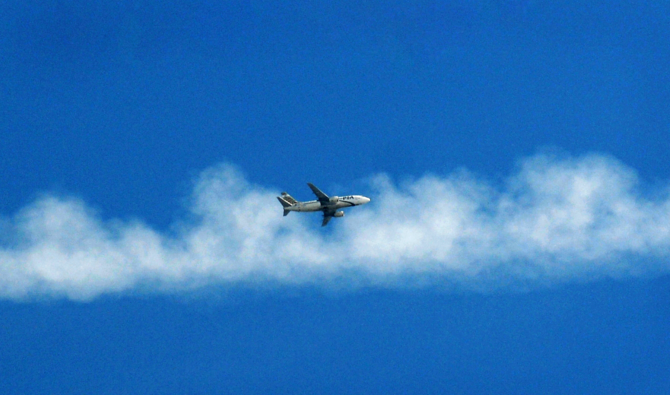
A Pakistani airplane flies over Islamabad on January 23, 2009. (AFP/ FILE)
Short Url
Updated 23 May 2025
Follow

Pakistan extends airspace ban on Indian aircraft until June 24 amid ongoing tensions

  • The restriction was originally imposed on April 24 after an attack in Kashmir killed 26 tourists
  • The airspace closure impacted Indian airlines, particularly on long-haul international routes

ISLAMABAD: Pakistan has extended its ban on Indian aircraft using its airspace until June 24, the Pakistan Airports Authority (PAA) announced on Friday, amid continued bilateral tensions following recent military clashes this month.

The restriction was first imposed on April 24, only two days after an attack in Indian-administered Kashmir that killed 26 people. India blamed Pakistan for the attack despite Islamabad’s denials. The administration in New Delhi also downgraded bilateral diplomatic ties and took other steps like suspending visas for Pakistanis and shutting border crossings.

In response, Pakistan took its own measures, including the closure of its airspace to Indian aircraft, including commercial and military flights.

“The ban on Indian aircraft flying through Pakistani airspace has been extended until 4:59 AM on June 24, 2025,” the PAA said.

“All aircraft that are Indian-registered, operated, owned or leased will remain subject to the ban,” it added.

The airspace closure has significantly impacted Indian airlines, particularly on long-haul international routes.

Air India, which operates numerous flights to Europe and North America, has been forced to reroute flights, leading to increased fuel consumption, longer flight times, and additional operational costs.

The airline estimates that the ban could result in approximately $600 million in additional expenses over a year and has sought compensation from the Indian government.

Despite a ceasefire agreement announced on May 10, which has held according to Pakistani Deputy Prime Minister Ishaq Dar, the extension of the airspace ban indicates ongoing diplomatic strains.

The situation was further exacerbated by a recent school bus bombing in Pakistan that killed four children, an incident Islamabad has blamed on New Delhi. However, the Indian authorities have denied the charge.


Islamic military coalition, Pakistan to deepen cooperation to combat ‘terrorism’ — Pakistani military

Updated 02 February 2026
Follow

Islamic military coalition, Pakistan to deepen cooperation to combat ‘terrorism’ — Pakistani military

  • Islamic Military Counter Terrorism Coalition is a 43-member alliance that includes Pakistan, Saudi Arabia, Egypt, Jordan, UAE and other nations
  • The Pakistani military statement comes after a meeting between IMCTC secretary-general and the chief of Pakistani defense forces in Rawalpindi

ISLAMABAD: Pakistan and the Islamic Military Counter Terrorism Coalition (IMCTC) have reaffirmed their commitment to deepening cooperation, including intelligence sharing and capacity building, to jointly combat “terrorism” and “extremism,” the Pakistani military said on Monday.

The IMCTC is a 43-member military alliance that was formed on Saudi Arabia’s initiative in Dec. 2015 to consolidate Muslim countries’ efforts in countering “terrorism.”

A 17-member IMCTC delegation is visiting Pakistan from Feb. 2-6 to conduct a training at National University of Sciences and Technology on “Re-integration and Rehabilitation of Extremist Elements,” according to the Pakistani military.

On Monday, IMCTC Secretary-General Maj. Gen. Mohammed bin Saeed Al-Moghedi held a meeting with Chief of Pakistani Defense Forces Field Marshal Asim Munir to discuss cooperation among IMCTC member states.

“During the meeting, matters of mutual interest were discussed, with particular emphasis on regional security dynamics and enhanced cooperation in counter-terrorism efforts,” the Inter-Services Public Relations (ISPR), the Pakistani military’s media wing, said in a statement.

“Both sides reaffirmed their shared commitment to combating terrorism and extremism through collaborative strategies, intelligence sharing, and capacity building among member states.”

The IMCTC features Pakistan, Saudi Arabia, Türkiye, Afghanistan, Egypt, Jordan, Qatar, Palestine, UAE, Bangladesh and other nations. In 2017, Pakistan’s former army chief Gen. (retd) Raheel Sharif was appointed as the IMCTC commander-in-chief.

During discussions with Major General Al-Moghedi, Field Marshal Munir appreciated the role of IMCTC in fostering stability and promoting coordinated counterterrorism initiatives across the Islamic world, according to the ISPR.

The IMCTC secretary-general acknowledged Pakistan’s significant contributions and sacrifices in the fight against militancy and lauded the professionalism of Pakistan’s armed forces.

“The meeting underscored the resolve of both sides to further strengthen institutional collaboration for peace, stability, and security in the region,” the ISPR added.

Pakistan enjoys cordial ties with most Muslim countries around the world, particularly Gulf Cooperation Council countries. In Sept. 2025, Pakistan signed a landmark defense pact with Saudi Arabia according to which an act of aggression against one country will be treated as an act of aggression against both.