KARACHI: Pakistan’s leading fashion designer, Amir Adnan, says he is eager to open stores and manufacturing facilities in the Arab world, praising Saudi Arabia’s evolving openness and deep cultural sophistication.
In an interview with Arab News this week, he hailed the Arab world’s appreciation for tradition and detail and expressed a desire to re-enter the Middle East market with a more immersive presence.
Adnan shared his observations about the Middle East at a time when Saudi Arabia is undergoing a cultural transformation under Crown Prince Mohammed bin Salman’s Vision 2030.
The initiative has opened the Kingdom to global music acts, fashion events, cinema and high-profile platforms like Riyadh Season and the Red Sea International Film Festival, as part of efforts to position it as a regional hub for arts and tourism.
“The Arab world is brilliant, and I’m so happy that it is opening up,” the Pakistani designer, who has previously operated stores in Dubai, said. “Given the opportunity, I would love to go and open up stores over there and have a whole setup over there. We would love to have an office.”
Born in Lahore to a bureaucrat father and a mother from Dhaka’s royal Nawab family, Adnan launched his eponymous brand in 1990 and is credited with modernizing the traditional sherwani. His designs have shaped Pakistani formalwear for more than three decades.
Reflecting on his experience of doing business in the United Arab Emirates, he said Arabs had a distinct appreciation for craftsmanship.
“They appreciated every stitch, every cut, every patch, every fabric, every color combination... they’re very keen observers.”
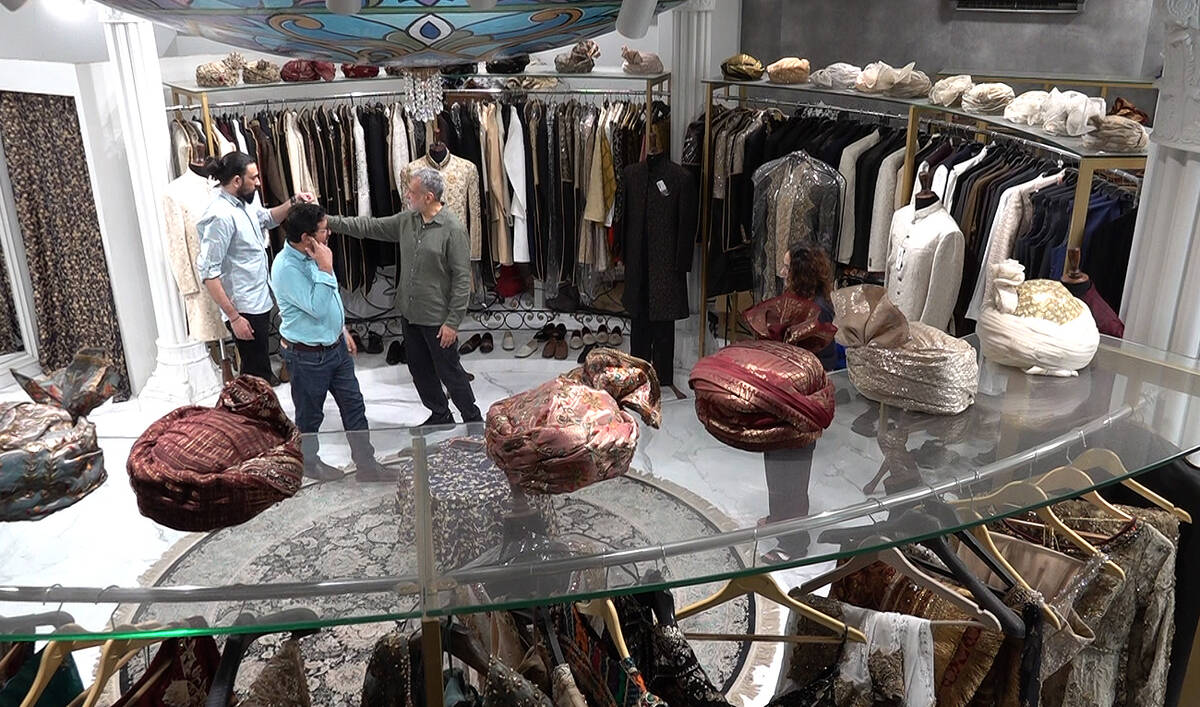
Renowned Pakistani fashion designer Amir Adnan gives a tour of his studio during an interview with Arab News in Karachi on May 21, 2025. (AN Photo)
He also appreciated the historical and intellectual legacy of the Arab world.
“They introduced medicine. They had the first hospital. They gave us algebra, calculus [and] astronomy. So, where did that come from? It’s their sophistication.”
The Pakistani designer, who studied at Karachi’s Institute of Business Administration, said that despite globalization, Arabs remain deeply rooted in their culture.
“If they had given away their culture and, you know, become totally somebody else, I would not feel so good about them. But I love the Arab people because they hold on and they respect their culture.”
Adnan said the fusion of Pakistani craftsmanship with Arab tastes could lead to meaningful collaborations, ranging from fashion to social development.
“They love our fabrics. They love our stitches. They love our handicraft. All we need to do is just convert our garments to blend into their culture,” he said. “I would go there and mix my ability to suit their requirements.”
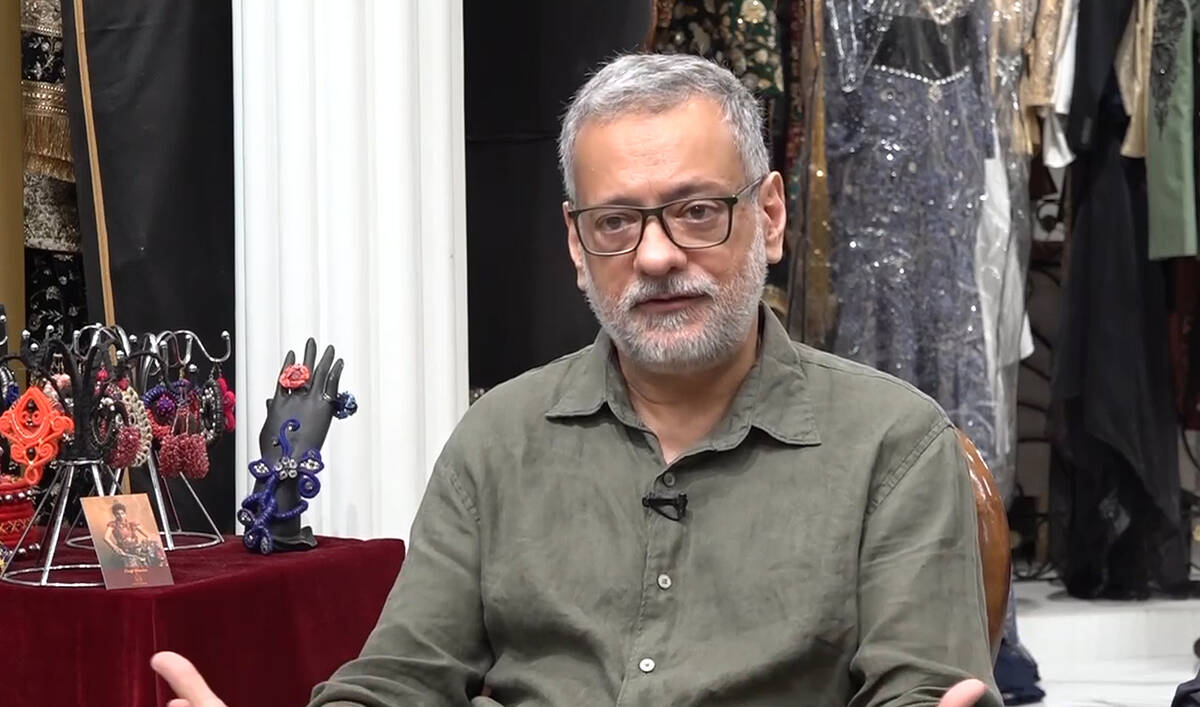
Renowned Pakistani fashion designer Amir Adnan speaks with Arab News at his studio in Karachi on May 21, 2025. (AN Photo)
Beyond commerce, he also envisions joint creative workshops and cultural exchanges.
“We would like to work with their artisans, learn their skills and teach them ours,” he said.
The Pakistani designer believes that fashion should be seen beyond economics.
“Besides just the work and the economics of it, it is also liberation of mind,” he said. “In fact, we’ll be able to incorporate a lot of their craft and their skills into our mainstream work.”
Looking ahead, Adnan said he hopes to establish a full-fledged base in the Kingdom.
“Hopefully, one day, we’d be able to do that — set up an office over there and a whole workshop over there and even start manufacturing there… and take care of all the Arab world.”