



KARACHI: Pakistan urged the international community on Wednesday to condemn what it called India’s use of “terrorism” as a foreign policy tool, after a vehicle-borne improvised explosive device targeted a school bus in the southwestern Balochistan province, killing at least three children and injuring 39 others, including eight critically.
Balochistan, Pakistan’s largest province by landmass and rich in mineral resources, has long faced an insurgency led by separatist groups who accuse Islamabad of exploiting local resources while neglecting the population. The government denies the claims, citing investments in health, education and infrastructure.
In recent months, the insurgency has intensified, with groups like the Balochistan Liberation Army (BLA) carrying out high-casualty attacks on civilians and security forces, including taking hostages at a passenger train. Pakistan says it has evidence linking India to these attacks, though New Delhi has denied involvement and distanced itself from the Khuzdar school bombing.
However, Islamabad described the attack as a “sequel” to India’s missile and drone strikes earlier this month, accusing New Delhi of deploying militant proxies to destabilize the country, as Prime Minister Shehbaz Sharif and Field Marshal Asim Munir visited the region to meet injured children in hospital.
“These terrorist groups — masquerading under ethnic pretenses — are not only being exploited by India as instruments of state policy, but also stand as a stain on the honor and values of the Baloch and Pashtun people, who have long rejected violence and extremism,” said a statement issued by the PM Office after Sharif’s visit to Quetta.
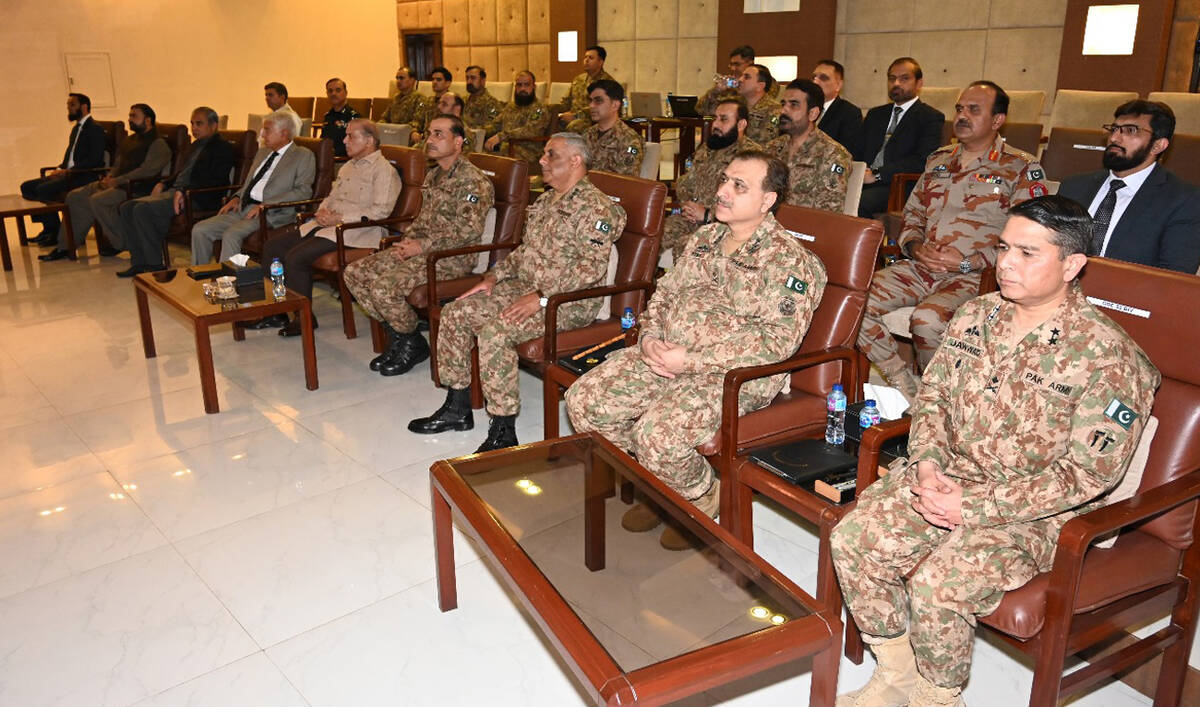
Pakistan Prime Minister Shehbaz Sharif and Field Marshal Asim Munir being briefed on the Khuzdar school bus attack, in Quetta on May 21, 2025. (Photo courtesy: Handout/PMO)
“India’s reliance on such morally indefensible tactics, particularly the deliberate targeting of children, demands urgent attention from the international community,” it added. “The use of terrorism as a tool of foreign policy must be unequivocally condemned and confronted.”
The prime minister and the accompanying delegation was briefed by Balochistan’s Chief Minister Sardar Sarfraz Bugti and local military officials on the attack, which also killed two soldiers and injured 53 people in total.
The official statement said Pakistan’s security forces and law enforcement agencies “will relentlessly pursue all those involved in this barbaric act,” vowing to bring “the architects, abettors and enablers of this crime” to justice.
It added the incident had exposed India’s “cunning role” to the world, revealing how it orchestrated militant violence while simultaneously portraying itself as a victim.
India’s Ministry of External Affairs earlier in the day rejected Pakistan’s allegations, describing them as Islamabad’s attempt to deflect responsibility for its own failings and internal issues.
The latest attack follows a brief military standoff between the two countries earlier this month, which ended in a ceasefire on May 10.
While hostilities along the border have subsided, both sides continue to trade diplomatic barbs, accusing each other of sponsoring terrorism and destabilizing the region.
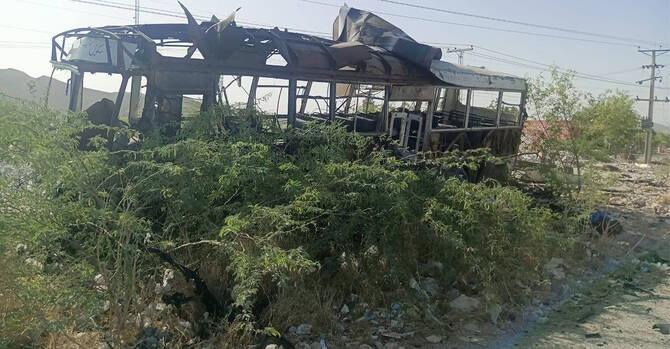
School bus targeted in a suicide blast in pictured in Pakistan's southwestern Khuzdar district on May 21, 2025. (Jawad Yousafzai)
The attack in Khuzdar, which targeted children en route to an army-run school, was condemned by US Chargé d’Affaires Natalie Baker and UNICEF in separate statements.
It was also reminiscent of one of the deadliest militant attacks in Pakistan’s history when over 130 children were killed in a military school in the northern city of Peshawar in 2014. That attack was claimed by the Pakistani Taliban group.


