

In Pakistan, people don’t run with bulls, they race them in spectacular style

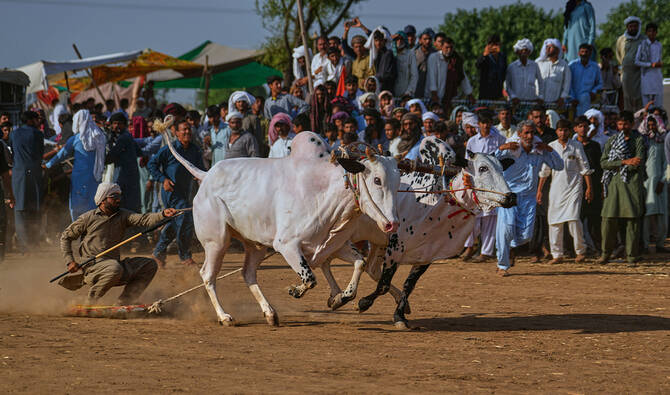
A jockey (left) controls a pair of bull during a traditional bull race competition, in Malal, a village of Attock district in Pakistan on May 15, 2025. (AP)
Short Url
Updated 21 May 2025
Follow

In Pakistan, people don’t run with bulls, they race them in spectacular style

  • Bull racing, Punjabi style, captures the raw energy of village life and is a world away from floodlit Pakistani cricket and hockey stadiums
  • Bull racing has deep roots in Attock district of Punjab province where is more than just a sport but part of region’s living heritage

MALAL, Pakistan: Bulls are yoked together by thick wooden frames in a sun-scorched field of rural Pakistan, while behind them, holding onto nothing more than ropes and his honor, is a man on a plank.

Hundreds of spectators whoop and cheer as the animals begin to hurtle down a track, whipping up a storm of dust and imminent danger.

This is bull racing, Punjabi style.

The traditional sport captures the raw energy of village life and is a world away from the floodlit cricket and hockey stadiums found in many Pakistani cities.
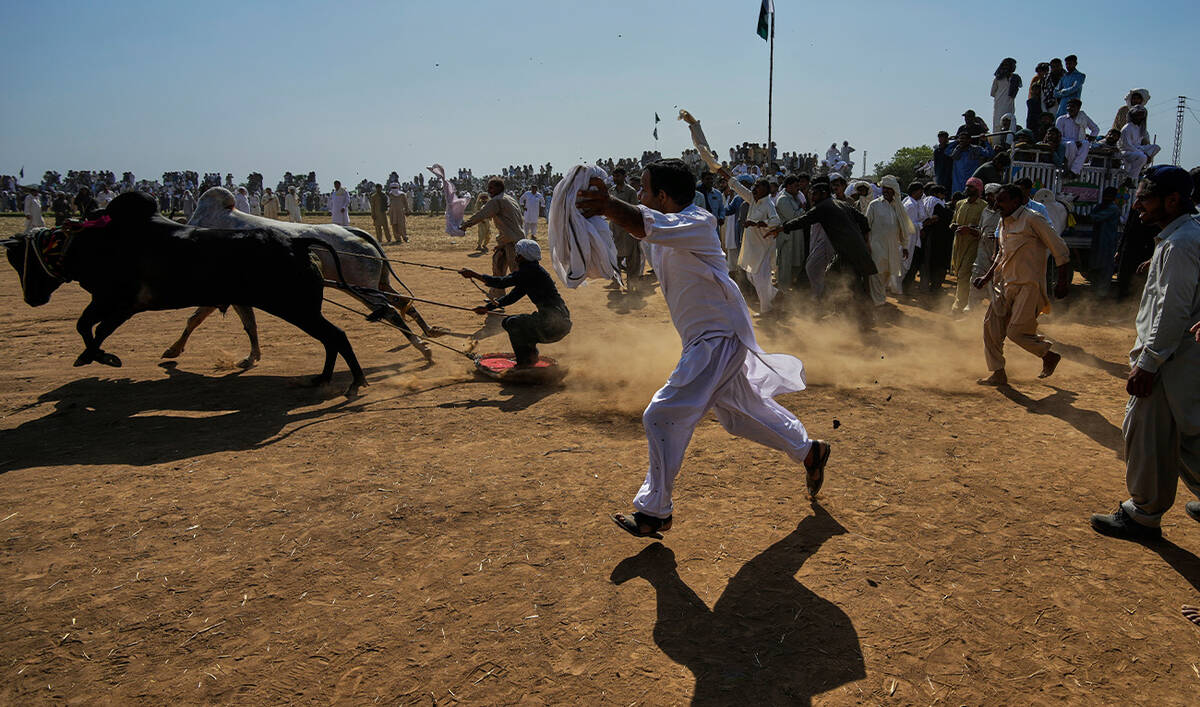


Members of a team shout next to a pair of bull start running during a traditional bull race competition, in Malal, a village of Attock district, in Pakistan on May 15, 2025.

Bull racing has deep roots in the Attock district of eastern Punjab province. It is more than just a sport there, it is a part of the region’s living heritage.

In the village of Malal, one of bull racing’s most vibrant hubs, hundreds of people gather every year to witness the spectacle. Jockeys crouch behind the animals on a plank, gripping onto some reins and relying on experience and instinct to triumph.

But there’s always a chance for chaos as it’s common for the bulls to throw the jockey off his platform and drag him through the dirt.

“This isn’t just entertainment, it’s tradition,” said Sardar Haseeb, whose family has been holding races for generations. “We take pride in our animals. Farmers and landowners raise their bulls year round just for this moment. People are willing to pay high prices for a winning bull. It becomes a symbol of pride.”
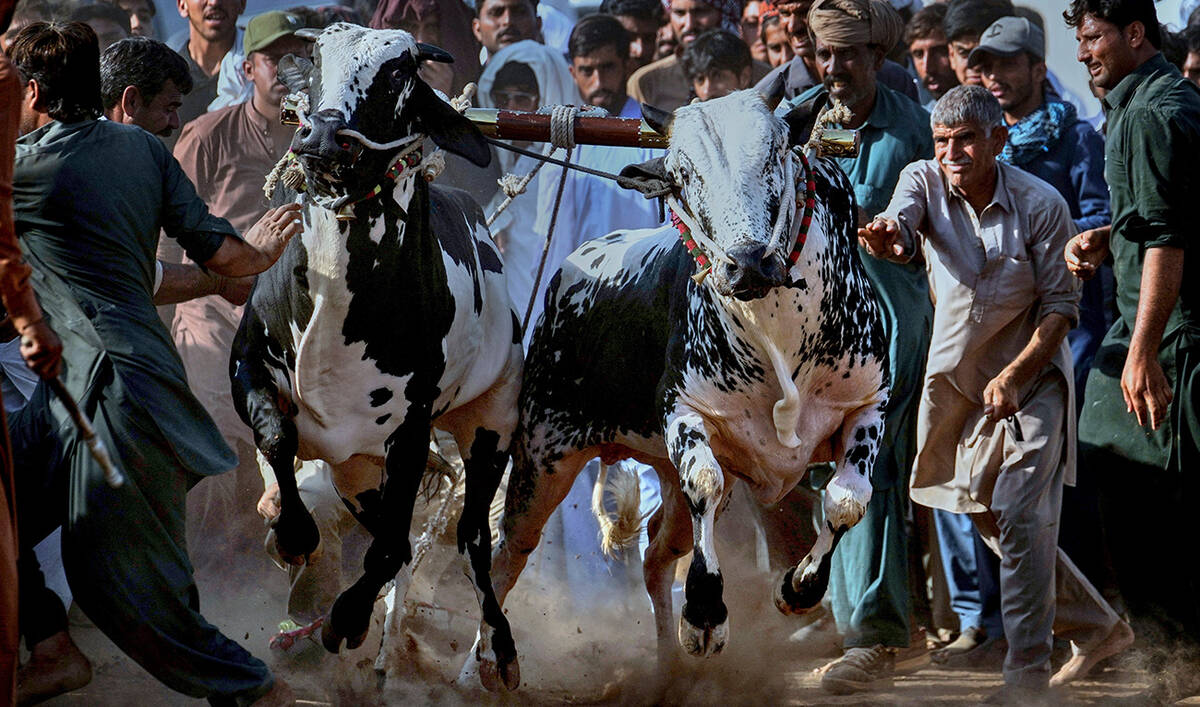


Members of a team shout and push a pair of bull start running during a traditional bull race competition, in Malal, a village of Attock district, in Pakistan on May 15, 2025.

The bull race creates a festive atmosphere, complete with dancing and banknotes thrown into the air — a celebratory practice normally seen at weddings.

The scent of freshly fried sweets rises from hot pans to lure the crowds. Stallholders prepare roasted chickpeas and other delicacies. The hustle and bustle becomes a source of income for enterprising locals, who benefit from the cultural event.

More than 100 bulls competed in the event that Haseeb hosted, with people traveling from across Pakistan to be part of the race.

Among the competitors was farmer Muhammad Ramzan.

“My bull came in fifth place and I’m thrilled,” he said. “It left 95 others behind.”


If India doesn’t want handshakes, Pakistan has no desire for it either— PCB

Updated 29 December 2025
Follow

If India doesn’t want handshakes, Pakistan has no desire for it either— PCB

  • Indian cricketers have refused to shake hands with their Pakistani counterparts in recent matches
  • Pakistan’s senior men’s cricket team willl next face India on Feb. 15 in T20 World Cup group clash

ISLAMABAD: Pakistan Cricket Board (PCB) Chairman Mohsin Naqvi recently criticized the Indian cricket team’s “no-handshake” policy, saying Pakistani cricketers will also refrain from the friendly gesture if it persists. 

The Indian cricket team has refused to shake hands with their Pakistani counterparts in recent matches between the two sides. This policy made headlines worldwide in September when the two sides met for the Asia Cup 2025 in three cricket matches, with the Indian team refusing to shake hands with Pakistani team members each time. 

India’s new policy to not shake hands with Pakistani cricketers took place months after the two nuclear-armed neighbors clashed in a four-day military conflict in May. Washington eventually intervened and brokered a ceasefire on May 10 after four days of conflict.

“If they do not want to do handshakes, then we also have no desire for it either,” Naqvi told reporters at a press conference on Sunday. 

The PCB chairman, who is also Pakistan’s interior minister, said cricket matters related to India will be decided on an “equal footing.”

“It won’t happen that they do one thing and we beg them in return,” Naqvi said. “This won’t happen.” 

Pakistan’s Under-19 squad this month defeated India in a one-sided final for the U-19 Asia Cup tournament in Dubai. 

Pakistan’s senior men’s cricket team is set to face India in Sri Lanka on Feb. 15 in a group stage clash for the ICC T20 World Cup 2026.