DAMASCUS: Syria on Saturday announced the formation of a national commission for missing persons and another for transitional justice, more than five months after the ouster of longtime ruler Bashar Assad.
Syria’s new authorities have pledged justice for victims of atrocities committed under Assad’s rule, and a five-year transitional constitution signed in March provided for the formation of a transitional justice commission.
The fate of tens of thousands of detainees and others who went missing remains one of the most harrowing legacies of Syria’s conflict, which erupted in 2011 when Assad’s forces brutally repressed anti-government protests, triggering more than a decade of war.
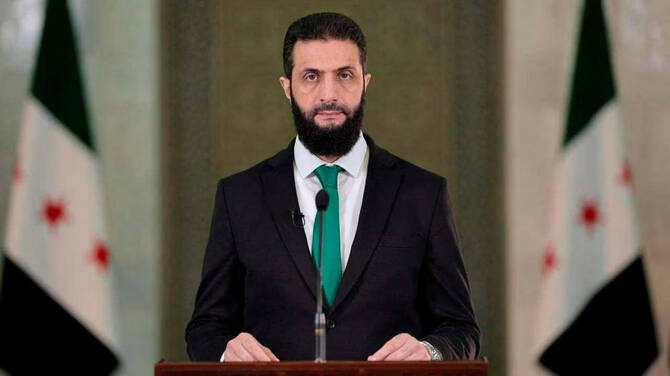
A decree signed by interim President Ahmed Al-Sharaa and released by the presidency announced the formation of an independent “national commission for missing persons.”
The body is tasked with “researching and uncovering the fate of the missing and forcibly disappeared, documenting cases, establishing a national database and providing legal and humanitarian support to their families.”
A separate decree announced the formation of a national commission for transitional justice to “uncover the truth about the grave violations caused by the former regime.”
That commission should hold those responsible to account “in coordination with the relevant authorities, remedy the harm to victims, and firmly establish the principles of non-recurrence and national reconciliation,” according to the announcement.
The decree noted “the need to achieve transitional justice as a fundamental pillar for building a state of law, guaranteeing victims’ rights and achieving comprehensive national reconciliation.”
Both bodies will have “financial and administrative independence” and act over all of Syrian territory, according to the decrees signed by Sharaa.
In December, an Islamist-led coalition toppled Assad after five decades of his family’s iron-fisted rule and nearly 14 years of brutal war that killed more than half a million people and displaced millions more.
Tens of thousands of people were detained and tortured in the country’s jails, while Assad has been accused of using chemical weapons against his own people.
Rights groups, activists and the international community have repeatedly emphasized the importance of transitional justice in the war-torn country.
In March, Sharaa signed into force a constitutional declaration for a five-year transitional period.
It stipulated that during that period, a “transitional justice commission” would be formed to “determine the means for accountability, establish the facts, and provide justice to victims and survivors” of the former government’s misdeeds.
This week, prominent Syrian human rights lawyer Mazen Darwish told AFP that lasting peace in Syria depended on the country building a strong judicial system giving justice to the victims of all crimes committed during the Assad era.


![]()

Syria announces commissions for missing persons, transitional justice
Short Url
https://arab.news/y2gud
Syria announces commissions for missing persons, transitional justice
- A decree signed by interim President Ahmed Al-Sharaa and released by the presidency announced the formation of an independent “national commission for missing persons”


Latest updates


© 2026 SAUDI RESEARCH & PUBLISHING COMPANY, All Rights Reserved And subject to Terms of Use Agreement.