

Pakistan launches second phase of Hajj flight operations

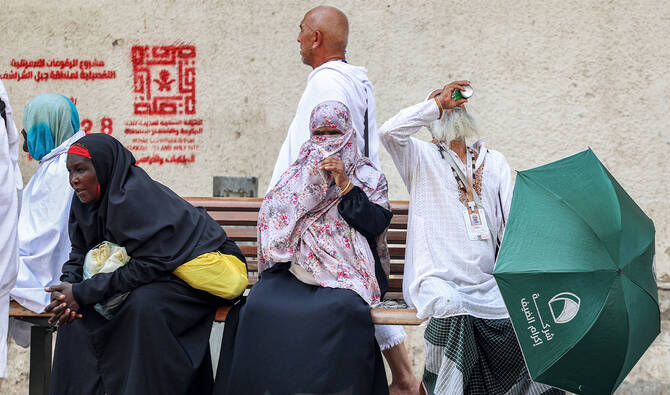
A departing Muslim pilgrim has a drink from a man as he sits next to other women in Saudi Arabia's holy city of Makkah on June 20, 2024. (AFP/File)
Short Url
Updated 15 May 2025
Follow

Pakistan launches second phase of Hajj flight operations

  • Over 89,000 pilgrims to travel under government scheme during 33-day-long Hajj flight operations
  • Pilgrims will travel to Makkah and Madinah via 342 flights, last one to depart Pakistan on May 31

ISLAMABAD: Pakistan has launched the second phase of Pakistan Hajj flight operations for pilgrims traveling under the government-sponsored scheme, state broadcaster Radio Pakistan reported on Thursday.

Over 89,000 pilgrims will travel under the government’s scheme during Pakistan’s 33-day-long Hajj flight operations, which started on April 29. Pilgrims will travel to Makkah and Madinah via 342 flights in total, with the last one departing from Pakistan on May 31.

On Wednesday, as the second phase of operations started, Minister for Religious Affairs and Interfaith Harmony Sardar Muhammad Yousaf received 305 pilgrims at Jeddah airport. They had arrived directly from Islamabad under the Makkah Route Initiative.

“Almost 46,000 pilgrims will arrive in Makkah via Jeddah by the 31st of this month,” Radio Pakistan reported. “They will then proceed to Madinah after performing Hajj.”

The Makkah Route Initiative is designed to streamline immigration processes by enabling pilgrims to complete official travel formalities at their departure airports. Initially tested in Islamabad in 2019, the program was later expanded to Karachi, benefitting tens of thousands of Pakistani travelers. This saves pilgrims several hours upon arrival in the Kingdom, as they can simply enter the country without having to go through immigration again. 

Around 50,500 Pakistani pilgrims will travel to Saudi Arabia under the initiative this year. The scheme was launched in 2019 by the Saudi Ministry of Hajj and Umrah and has been implemented in five countries: Pakistan, Malaysia, Indonesia, Morocco and Bangladesh.

This year’s annual pilgrimage will take place in June, with nearly 89,000 Pakistanis expected to perform Hajj under the government scheme and over 23,620 Pakistanis through private tour operators.


Pakistani president arrives in Iraq to deepen trade, energy cooperation

Updated 20 December 2025
Follow

Pakistani president arrives in Iraq to deepen trade, energy cooperation

  • Visit follows recent high-level contacts as Islamabad seeks to expand limited commercial ties with Baghdad
  • Talks are expected to cover investment, manpower and facilitation of Pakistani pilgrims visiting holy sites in Iraq

ISLAMABAD: President Asif Ali Zardari arrived in Iraq on Saturday on an official visit aimed at expanding cooperation in trade, energy and investment, as Pakistan seeks to deepen ties with Baghdad after years of limited engagement.

Pakistan and Iraq established diplomatic relations in 1947 and have traditionally maintained cordial ties, though commercial links remain modest, with officials and business groups identifying scope for cooperation in construction services, pharmaceuticals, manpower and agricultural exports.

“President Asif Ali Zardari arrived in Baghdad on a four-day official visit to Iraq,” his office said in a post on X. “He was received by Culture Minister Dr. Ahmed Fakkak Al-Badrani. During the visit, meetings with senior Iraqi leadership are expected to advance cooperation and further strengthen Pakistan-Iraq relations.”

Zardari’s visit follows a series of recent high-level contacts between the two countries, reflecting efforts to broaden bilateral engagement beyond traditional diplomatic ties and explore collaboration across economic, political and people-to-people domains.

According to Pakistan’s foreign office, the president is expected to hold meetings with Iraq’s senior leadership to discuss cooperation in various areas such as trade and investment, energy, technology, education and manpower.

He is also expected to discuss regional and international issues with Iraqi officials.

Earlier this month, Pakistan’s Interior Minister Mohsin Naqvi met his Iraqi counterpart, Abdul Ameer Al-Shammari, on the sidelines of meetings in Brussels, where both sides agreed to enhance cooperation on security and facilitate travel for Pakistani Shia pilgrims to Najaf and Karbala.

The two officials discussed measures to ensure the smoother movement of these pilgrims and their compliance with visa regulations.