

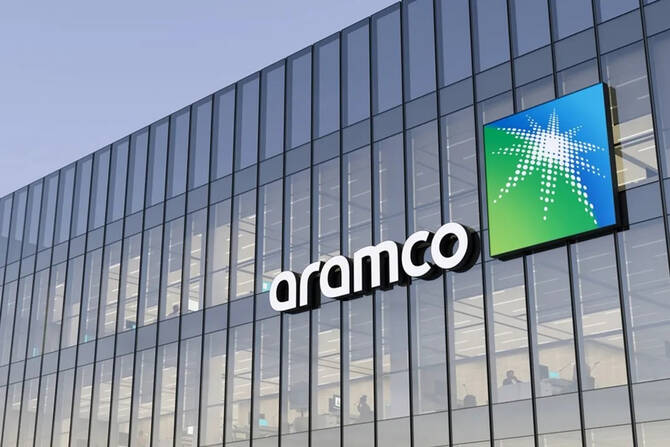
Aramco signs 34 agreements worth $90bn with US firms to boost innovation, growth

The deals span a wide array of sectors including liquefied natural gas, chemicals, and fuels, as well as AI and emission-reduction technologies. File
Short Url
Updated 15 May 2025
Follow

Aramco signs 34 agreements worth $90bn with US firms to boost innovation, growth

RIYADH: Saudi energy giant Aramco signed 34 agreements and memorandums of understanding worth approximately $90 billion with major US companies, as it seeks to advance its long-term strategy and strengthen innovation.

Signed on the sidelines of the Saudi-US Investment Forum, the agreements span a wide array of sectors including liquefied natural gas, chemicals, and fuels, as well as artificial intelligence and emission-reduction technologies. 

The forum was held on the occasion of the US President Donald Trump’s state visit to the Kingdom.

In a statement, the energy company’s president and CEO, Amin Nasser, said the announcements “show the breadth and depth of Aramco’s long history of partnerships with US companies since the first discovery of oil in the Kingdom more than 90 years ago.” 

He added: “Our US-related activities have evolved over the decades, and now include multidisciplinary R&D, the Motiva refinery in Port Arthur, startup investments, potential collaborations in LNG, and ongoing procurement.”

In the downstream sector, Aramco inked deals with Honeywell UOP and Motiva for technology licensing and an aromatics project at the Port Arthur refinery, respectively.

It also signed agreements with Afton Chemical to develop chemical fuel additives, and with ExxonMobil to evaluate a major upgrade to the SAMREF refinery, potentially transforming it into a world-class integrated petrochemical complex.

For upstream developments, Aramco’s deals included a memorandum with Sempra Infrastructure linked to the Port Arthur LNG 2 project, a collaboration with Woodside Energy to explore global opportunities including lower-carbon ammonia, and a final agreement with NextDecade for the long-term purchase of 1.2 million tonnes per annum of LNG from the Rio Grande LNG Facility.

Technology and innovation were at the heart of several agreements. A strategic framework was signed with Amazon Web Services to cooperate on digital transformation and lower-carbon initiatives.

With NVIDIA, Aramco agreed to establish advanced industrial AI infrastructure, an AI Hub, and training programs. Qualcomm also signed an MoU with Aramco Digital to explore connectivity solutions using Aramco’s 450 MHz 5G network.

Aramco’s procurement arm reinforced its links with major US service and equipment providers, including SLB, Baker Hughes, Halliburton, and Emerson, while partnerships in asset management and finance were inked with PIMCO, State Street, and Wellington, as well as BlackRock, Goldman Sachs, and Morgan Stanley, among others.

Additional agreements included a plan with Guardian Glass to localize specialty glass manufacturing in the Kingdom.

These deals reflect Aramco’s commitment to fostering industrial development, technological advancement, and long-term partnerships that align with its strategic vision and the Kingdom’s broader economic diversification goals.


Education spending surges 251% as students return from autumn break: SAMA

Updated 12 December 2025
Follow

Education spending surges 251% as students return from autumn break: SAMA

RIYADH: Education spending in Saudi Arabia surged 251.3 percent in the week ending Dec. 6, reflecting the sharp uptick in purchases as students returned from the autumn break.

According to the latest data from the Saudi Central Bank, expenditure in the sector reached SR218.73 million ($58.2 million), with the number of transactions increasing by 61 percent to 233,000.

Despite this surge, overall point-of-sale spending fell 4.3 percent to SR14.45 billion, while the number of transactions dipped 1.7 percent to 236.18 million week on week.

The week saw mixed changes between the sectors. Spending on freight transport, postal and courier services saw the second-biggest uptick at 33.3 percent to SR60.93 million, followed by medical services, which saw an 8.1 percent increase to SR505.35 million.

Expenditure on apparel and clothing saw a decrease of 16.3 percent, followed by a 2 percent reduction in spending on telecommunication.

Jewelry outlays witnessed an 8.1 percent decline to reach SR325.90 million. Data revealed decreases across many other sectors, led by hotels, which saw the largest dip at 24.5 percent to reach SR335.98 million. 

Spending on car rentals in the Kingdom fell by 12.6 percent, while airlines saw a 3.7 percent increase to SR46.28 million.

Expenditure on food and beverages saw a 1.7 percent increase to SR2.35 billion, claiming the largest share of the POS. Restaurants and cafes retained the second position despite a 12.6 percent dip to SR1.66 billion.

Saudi Arabia’s key urban centers mirrored the national decline. Riyadh, which accounted for the largest share of total POS spending, saw a 3.9 percent dip to SR4.89 billion, down from SR5.08 billion the previous week.

The number of transactions in the capital settled at 74.16 million, down 1.4 percent week on week.

In Jeddah, transaction values decreased by 5.9 percent to SR1.91 billion, while Dammam reported a 0.8 percent surge to SR713.71 million.

POS data, tracked weekly by SAMA, provides an indicator of consumer spending trends and the ongoing growth of digital payments in Saudi Arabia. 

The data also highlights the expanding reach of POS infrastructure, extending beyond major retail hubs to smaller cities and service sectors, supporting broader digital inclusion initiatives. 

The growth of digital payment technologies aligns with the Kingdom’s Vision 2030 objectives, promoting electronic transactions and contributing to the nation’s broader digital economy.