



ISLAMABAD: The brief conflict between India and Pakistan last week may have left no clear victor, but Islamabad’s generals are taking a win, riding a wave of approval on social media to burnish their recently tarnished image.
Much of the praise for the military, which had faced increasing criticism over its involvement in politics, has been driven by young people online, with nearly two-thirds of Pakistan’s 240 million people younger than 30.
The last major conflict between the nuclear-armed rivals was in 1999 and confined to the disputed region of Kashmir, so young Pakistanis have been more accustomed to seeing the neighboring countries clash on the cricket pitch, said digital rights activist Nighat Dad.
But from the start of Indian strikes on Wednesday, “for the first time, they were able to listen to the shots, the blasts, the drone strikes and they witnessed drones flying over their very own houses” in major cities, including the capital, she told AFP.
She said it sparked “an emotionally charged sentiment that someone who is our neighbor, who has been blaming us for terrorist attacks in their country for decades attacks us.”
New Delhi launched strikes after accusing Pakistan of backing a deadly attack in Indian-administered Kashmir in April, a charge repeatedly denied by Islamabad
By retaliating, Pakistan’s “army cooked Bollywood in front of the whole world,” joked one social media user, claiming the military exploits outshone Indian blockbusters.
“Even Indians would fall for (our) generals,” another said, as social media has been flooded with images of romanticized soldiers and pilots surrounded by hearts.
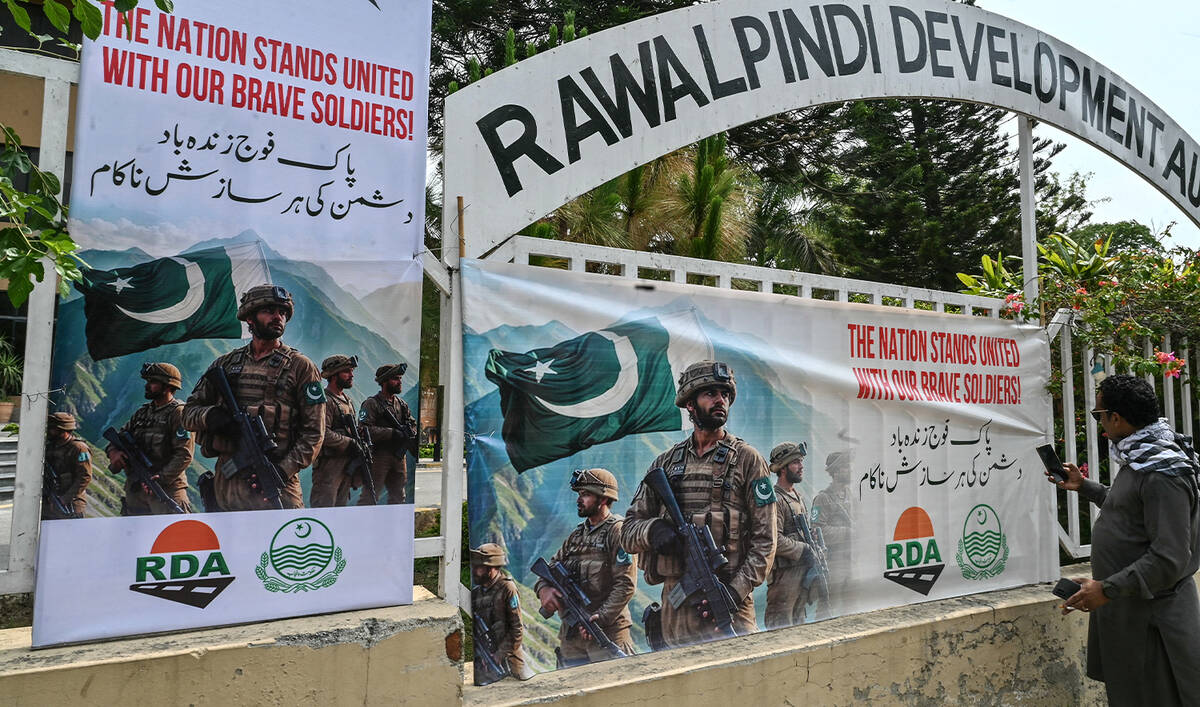
A man uses his mobile phone while standing in front of banners supporting country's soldiers in Rawalpindi on May 9, 2025. (AFP)
The social network X had been blocked in Pakistan for over a year before coming back online just as hostilities flared, with the army praising the efforts of young “cyber and information warriors.”
The platform went down in Pakistan during the 2024 general elections as anti-military sentiment had begun to spread in the country where analysts say the armed forces have long been considered untouchable and the institution pulling the strings.
Former prime minister Imran Khan and hundreds of his supporters were jailed after riots against the army on May 9, 2023.
This year, on May 10, India and Pakistan agreed to a ceasefire, and it will now be commemorated in Pakistan as the day of “the battle for justice.”
“We are all behind our army,” proclaim posters put up on streets across the country by both the state and private citizens.
But the honeymoon with the army may not last.
Already, Khan’s party, which, along with all the others, has voted for anti-India resolutions in the Senate, is calling for a return to “the real fight.”
That battle is for the release of their champion, who sees the criminal accusations against him as a means by those in power to sideline him.
For more than half of its 78-year history, Pakistan has been directly ruled by the military.
Today, the army is still seen as a kingmaker, even though it claims to have stepped away from politics.
Army chief General Asim Munir, who had long drawn criticism from the opposition, stayed out of the spotlight during the conflict with India, with only the army and government spokespeople speaking publicly.
One high-ranking officer in particular seems to have won the hearts of Pakistanis online: Air Vice Marshal Aurangzeb Ahmed, spokesperson for the Air Force, who revelled in the victories of his pilots, with Pakistan having claimed to have downed three French Rafale jets belonging to India.
A European military source considered it “highly unlikely” that three Rafales were destroyed, but said it is “credible” that one may have been.
The “Rafale is a very potent aircraft... if employed well,” quipped Ahmed during a press conference.
The clip quickly spread on social media, with users hailing a “David versus Goliath victory” of their military, which has far less funding, manpower and equipment than the armed forces of India.
“Young Pakistanis used the memes culture, using Indian misinformation as a joke and humor,” with India in response blocking dozens of accounts belonging to Pakistani public figures on X and YouTube, said Dad.
Under the guise of humor, these memes became a way to spread opinions, information and support, she added.
These same people might have reacted strongly online to a Supreme Court decision to allow Pakistani military courts to try civilians — but announced the same day as the start of the confrontation between Islamabad and New Delhi, it went relatively unnoticed.
“The crisis bolstered the army,” said researcher Michael Kugelman.
“It was able to rally the country around it in the face of Indian attacks and to play the role of protector that is such an important part of the military’s identity and legitimacy.”


