UK veterans break silence on ‘barbaric’ killings in Iraq, Afghanistan

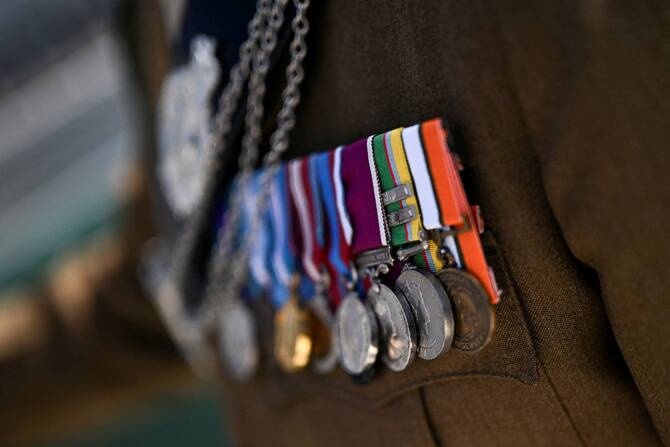
The two units at the center of the reports are the British Army’s Special Air Service and Royal Navy’s Special Boat Service, the country’s top special forces units. (AFP)
Short Url
Updated 12 May 2025
Follow

UK veterans break silence on ‘barbaric’ killings in Iraq, Afghanistan

  • Unlawful executions ‘became routine,’ ex-special forces members tell BBC
  • Veteran: ‘Everyone knew. There was implicit approval for what was happening’

LONDON: British special forces allegedly carried out a pattern of war crimes going back more than a decade to the Iraq and Afghanistan wars, former members have told the BBC.

Breaking years of silence to provide eyewitness accounts to the “Panorama” investigative program, multiple veterans reported that their colleagues had killed people in their sleep, executed detainees — including children — and planted weapons to justify the murders.

The two units at the center of the reports are the British Army’s Special Air Service and Royal Navy’s Special Boat Service, the country’s top special forces units.

One SAS veteran who served in Afghanistan said: “They handcuffed a young boy and shot him. He was clearly a child, not even close to fighting age.”

The eyewitness accounts relate to allegations of war crimes that took place more than a decade ago, far longer than the scope of a public inquiry into the allegations now being carried out in the UK, which is examining a three-year period.

The SAS veteran told “Panorama” that the execution of detainees by British special forces “became routine.”

Soldiers would “search someone, handcuff them, then shoot them,” before “planting a pistol” by the body, he added.

British and international law only permits deliberate killing when enemy combatants pose a direct threat to the lives of troops or other people.

An SBS veteran told the program that some troops suffered from a “mob mentality,” causing them to behave “barbarically.”

He added: “I saw the quietest guys switch, show serious psychopathic traits. They were lawless. They felt untouchable.”

The “Panorama” investigation includes witness testimony from more than 30 people who served with or alongside British special forces in Iraq and Afghanistan.

Another SAS veteran said: “Sometimes we’d check we’d identified the target, confirm their ID, then shoot them. Often the squadron would just go and kill all the men they found there.”

Killing became “an addictive thing to do,” another SAS Afghanistan veteran said, adding that some soldiers in the elite regiment were “intoxicated by that feeling.”

He said: “On some operations, the troops would go into guesthouse-type buildings and kill everyone there.

“They’d go in and shoot everyone sleeping there, on entry. It’s not justified, killing people in their sleep.”

One veteran recalled an execution in Iraq, saying: “It was pretty clear from what I could glean that he posed no threat, he wasn’t armed. It’s disgraceful. There’s no professionalism in that.”

Awareness of the alleged war crimes was not confined to individual units or teams, veterans told “Panorama.”

Within the command structure of the British special forces, “everyone knew” what was taking place, one veteran said.

“I’m not taking away from personal responsibility, but everyone knew,” he added. “There was implicit approval for what was happening.”

In order to cover up the killings, some SAS and SBS members went as far as carrying “drop weapons,” such as Kalashnikovs, to plant at the scene of executions.

These would be photographed alongside the dead and included in post-operational reports, which were often falsified.

One veteran said: “We understood how to write up serious incident reviews so they wouldn’t trigger a referral to the military police.

“If it looked like a shooting could represent a breach of the rules of conflict, you’d get a phone call from the legal adviser or one of the staff officers in HQ.

“They’d pick you up on it and help you to clarify the language. ‘Do you remember someone making a sudden move?’ ‘Oh yeah, I do now.’ That sort of thing. It was built into the way we operated.”

The investigation also revealed that David Cameron, UK prime minister at the time of the alleged war crimes, was repeatedly warned about the killings by then-Afghan President Hamid Karzai.

He “consistently, repeatedly mentioned this issue,” former Afghan National Security Adviser Dr. Rangin Dadfar Spanta told the program.

Gen. Douglas Lute, a former US ambassador to NATO, said Karzai was “so consistent with his complaints about night raids, civilian casualties and detentions that there was no senior Western diplomat or military leader who would have missed the fact that this was a major irritant for him.”

In response to the gathering of new witness testimony by “Panorama,” the UK’s Ministry of Defense said it is “fully committed” to supporting the public inquiry into the alleged war crimes. It urged all veterans with knowledge relating to the allegations to come forward.


US allows oil majors to broadly operate in Venezuela, new energy investments

Updated 14 February 2026
Follow

US allows oil majors to broadly operate in Venezuela, new energy investments

  • Treasury Department issues general license allowing Chevron, BP, Eni, Shell and Repsol to operate oil and gas operations in Venezuela
  • Move is the most significant relaxation of sanctions on Venezuela since US forces captured and removed President Nicolas Maduro

WASHINGTON: The US ​eased sanctions on Venezuela’s energy sector on Friday, issuing two general licenses that allow global energy companies to operate oil and gas projects in the OPEC member and for other companies to negotiate contracts to bring in fresh investments. The move was the most significant relaxation of sanctions on Venezuela since US forces captured and removed President Nicolas Maduro last month.
The Treasury Department’s Office of Foreign Assets Control issued a general license allowing Chevron, BP, Eni, Shell and Repsol to operate oil and gas operations in Venezuela. Those companies still have offices in the country and stakes in projects, and are among the main partners of state-run ‌company PDVSA.
The authorization ‌for the oil majors’ operations requires payments for royalties and Venezuelan ​taxes ‌to ⁠go through ​the US-controlled ⁠Foreign Government Deposit Fund.
The other license allows companies around the world to enter contracts with PDVSA for new investments in Venezuelan oil and gas. The contracts are contingent on separate permits from OFAC.
The authorization does not allow transactions with companies in Russia, Iran, or China or entities owned or controlled by joint ventures with people in those countries.
The licenses “invite American and other aligned companies to play a constructive role in supporting economic recovery and responsible investment, ” the US State Department said in a release. Additional authorizations may be issued “as necessary,” it said.
A spokesperson for Chevron, ⁠the only US oil firm currently operating in Venezuela, said the company welcomed ‌the new licenses.
“The new General Licenses, coupled with recent changes ‌in Venezuela’s Hydrocarbons Law, are important steps toward enabling the further development ​of Venezuela’s resources for its people and for advancing ‌regional energy security,” the spokesperson said in a statement.
Eni said it is assessing the opportunities in ‌Venezuela that the authorization opens up.

Oil law reform

The US licenses follow a sweeping reform of Venezuela’s main oil law approved last month, which grants autonomy for foreign oil and gas producers to operate, export and cash sale proceeds under existing joint ventures with PDVSA or through a new production-sharing contract model.
The US has had sanctions on Venezuela since ‌2019 when President Donald Trump imposed them during his first administration. Trump is now seeking $100 billion in investments by energy companies in Venezuela’s oil and gas sector. ⁠US Energy Secretary Chris Wright ⁠said on Thursday, during his second day of a trip to Venezuela, that oil sales from the country since Maduro’s capture have hit $1 billion and would hit another $5 billion in months.
Wright said the US will control the proceeds from the sales until Venezuela stands up a “representative government.” Since last month, the Treasury issued several other general licenses to facilitate oil exports, storage, imports and sales from Venezuela. It also authorized the provision of US goods, technology, software or services for the exploration, development or production of oil and gas in Venezuela.
The Venezuelan government expropriated assets of Exxon Mobil and ConocoPhillips in 2007 under then-President Hugo Chavez. The Trump administration is trying to get those companies to invest in Venezuela as well. At a meeting at the White House with Trump last month, Exxon Mobil CEO Darren Woods said Venezuela was “uninvestable” at ​the moment.
Wright said on Thursday that Exxon, ​which no longer has an office in Venezuela, is in talks with the government there and gathering data about the oil sector. Exxon did not immediately comment.