

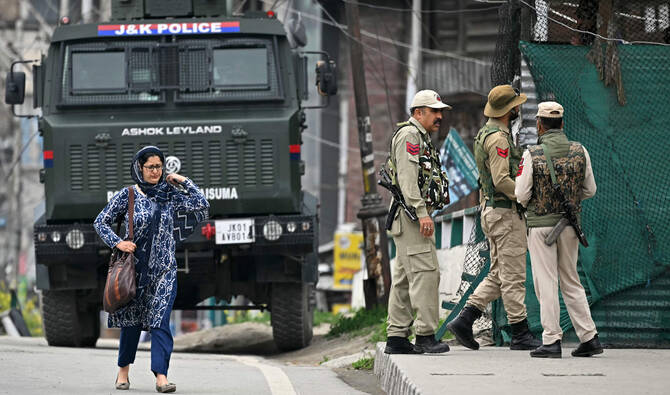

ISLAMABAD: Pakistan’s Interior Minister Mohsin Naqvi met on Friday the United States (US) Chargé d’Affaires Natalie Baker for the second time in the last 48 hours to discuss escalating tensions between Pakistan and India, Pakistani state media reported, following a series of incursions by the archfoes this week.
Tensions escalated between Pakistan and India after New Delhi blamed an attack in Indian-administered Kashmir, which killed 26 tourists on April 22, on Pakistan. Islamabad denied the claim and called for a credible, international investigation to ascertain facts about the assault that killed 26 tourists.
After initially exchanging diplomatic barbs, India on Wednesday conducted missile strikes in multiple Pakistani cities and killed 31 people, according to Pakistani officials. Pakistan says it has downed five Indian fighter jets and 29 Israel-made drones, launched from India, this week in retaliation to Indian strikes.
New Delhi said it destroyed a Pakistani air defense system in Lahore in response to an air attack. It was difficult to independently verify the claims made by the nuclear-armed arch-foes as the ongoing conflict alarmed the world powers, including China, US and the United Kingdom who all have urged restraint.
“India has brazenly violated all international norms by attempting to target civilian populations using drones,” Naqvi was quoted by the APP news agency as telling the US diplomat. “The region is dangerously close to a conflict, and Pakistan will never allow its security to be compromised.”
Pakistan and India accused each other of launching drone attacks and Islamabad’s defense minister said on Thursday, the second day of major clashes, that further retaliation was “increasingly certain.” Two days of fighting has killed nearly four dozen people on both sides.
Naqvi’s meeting with baker was also attended by US political counselor Zack Harkinrider, according to the report. It came hours after Tammy Bruce said the US had been engaged with both governments and urged India and Pakistan to work toward a “responsible solution” to the issue, which has led to the worst fighting between the two neighbors in decades.
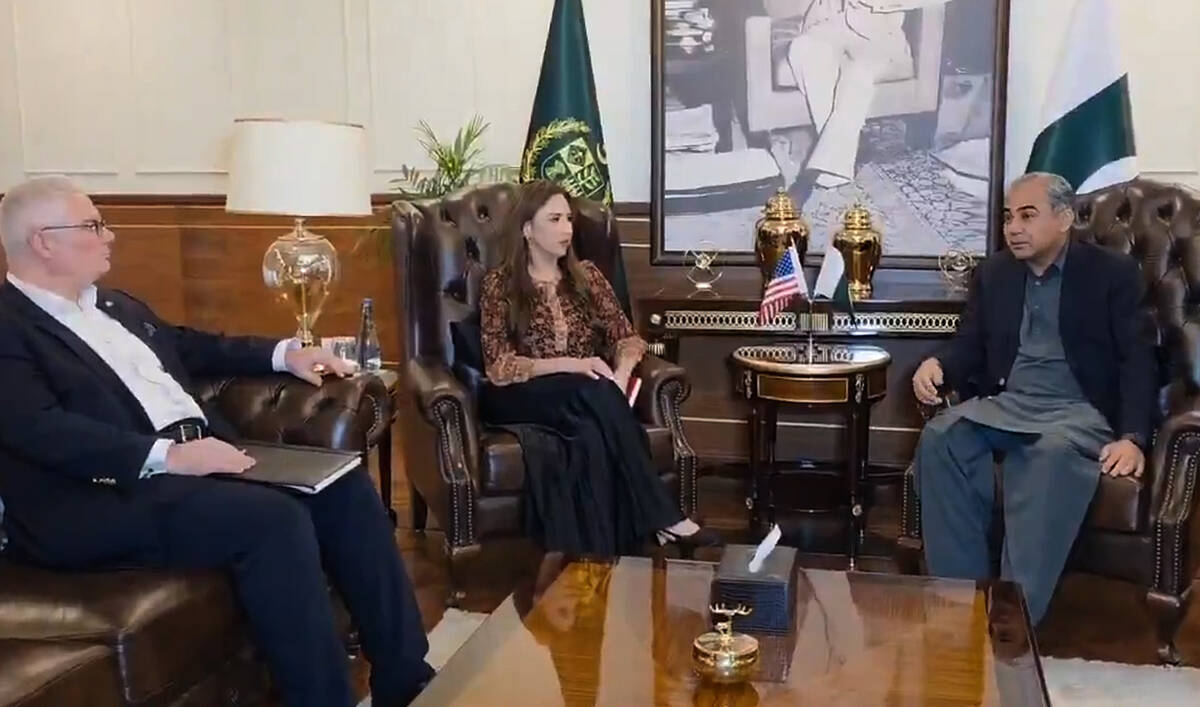
US Chargé d’Affaires Natalie Baker (2R) gestures during a meeting with Pakistan Interior Minsiter Mohsin Naqvi in Islamabad on May 9, 2025. (Screengrab)
“There’s a lot already on the record when it comes to our reaction to what’s been happening here,” Bruce said.
“So, there’s some discussion that Pakistan wants an independent investigation as to what has happened regarding the terrorist attack, and, of course, what we say to that is we want the perpetrators to be held accountable and are supportive of any efforts to that end.”
India is an important partner for Washington, which aims to counter China’s rising influence, while Pakistan remains a US ally despite its diminished importance after Washington’s withdrawal from neighboring Afghanistan in 2021.
Analysts and some former officials have said the US involvement to achieve diplomatic goals in Russia’s war in Ukraine and Israel’s war in Gaza may make Washington leave India and Pakistan on their own in the early days of their tensions, without much direct pressure from the US government.
On Thursday, US Vice President JD Vance said India and Pakistan should de-escalate tensions, but he added that the US could not control the nuclear-armed neighbors and a war between them would be “none of our business.”
“We want this thing to de-escalate as quickly as possible. We can’t control these countries, though,” Vance said in an interview on Fox News.
“What we can do is try to encourage these folks to de-escalate a little bit, but we’re not going to get involved in the middle of war that’s fundamentally none of our business and has nothing to do with America’s ability to control it.”
The escalation began soon after the April 22 attack in Kashmir, reviving the decades-old rivalry between the two neighbors who have fought multiple wars, including two over Kashmir, since their independence from British rule in 1947.
“Our hope and our expectation is that this is not going to spiral into a broader regional war or, God forbid, a nuclear conflict,” Vance said.
Washington has held regular talks with both in recent days, including on Thursday when Secretary of State Marco Rubio held calls with Pakistan’s prime minister and India’s foreign minister while urging them to de-escalate and have direct dialogue.
US President Donald Trump has called rising tensions a shame and said he hoped the two countries will stop now after going “tit-for-tat.”
“This administration has made itself clear, that war, the military, more violence is not a solution,” Bruce added. “Diplomacy is a solution, new ideas to stop generational violence and problems.”


