MADRID: The massive power outage that hit the Iberian peninsula on April 28 has reignited a debate in Spain over the country’s plan to phase out its nuclear reactors as it generates more power with renewable energy.
As people wait for answers about what caused the historic power cut, which abruptly disrupted tens of millions of lives, some are questioning the wisdom of decommissioning nuclear reactors that provide a stable, if controversial, form of energy compared to renewables, whose output can be intermittent.
Spanish Prime Minister Pedro Sánchez has rejected such criticism, asking for patience while the government investigates what caused the grid’s disconnection. He said that his government would not “deviate a single millimeter” from its energy transition plans.
Here’s what to know about the energy debate:
What is nuclear power and why is it controversial?
Nuclear power is a zero-carbon energy source formed from nuclear fission, when the nuclei of atoms are split into two or several parts, releasing energy.
It accounts for about 10 percent of electricity generation worldwide, according to the International Energy Association.
Many countries consider nuclear power critical to reaching their net-zero goals. But while nuclear reactors do not emit planet-warming greenhouse gases like gas- or coal-fired power plants, they produce radioactive waste that even advanced economies have struggled to dispose.
Why does Spain want to decommission its nuclear reactors?
Spain generated nearly 57 percent of its electricity in 2024 from renewable energy sources like wind, hydropower and solar, according to Red Eléctrica, the country’s grid operator. About 20 percent came from nuclear power plants.
In 2019, Sánchez’s government approved a plan to decommission the country’s remaining nuclear reactors between 2027 and 2035 as it expands its share of renewable energy even further. The country aims to generate 81 percent of its electricity by 2030 from renewable sources.
Sánchez on Wednesday said that the four nuclear facilities that were online the day of the blackout did not help re-power the grid.
Batteries and other methods help regulate changes in electricity supply from wind and solar.
Why is Spain’s renewables push being questioned now?
While the cause of the sudden outage on April 28 is still unknown, the event has raised questions about the technical challenges facing electricity grids running on high levels of solar and wind.
Solar and wind provided roughly 70 percent of the electricity on the grid moments before Spain lost 15 gigawatts of electricity — about 60 percent of its supply — in just five seconds.
Electricity grids were designed for a different era, according to Gilles Thonet, deputy secretary general of the International Electrotechnical Commission, an industry group.
“Traditionally, power flowed in one direction: from large coal, gas or nuclear plants to homes and businesses,” Thonet said. “These plants provided not only electricity, but also stability. Their spinning turbines acted like shock absorbers, smoothing out fluctuations in supply and demand.”
In the days following the blackout, Google searches in Spain for “nuclear” spiked, according to data from Google Trends.
Spain’s nuclear lobby group Foro Nuclear said this week that the government should rethink its plan to decommission its nuclear reactors after the outage. Ignacio Araluce, its president, said the nuclear plants online before the outage “provide firmness and stability.”
Would more nuclear power have prevented a blackout?
Others say it is too soon to draw conclusions about what role nuclear energy should play.
“We do not know the cause of the oscillations,” said Pedro Fresco, director general of Avaesen, an association of renewable energy and clean technology firms in Valencia. “Therefore, we do not know what would have allowed them to be controlled.”
Spain’s grid operator last week narrowed down the source of the outage to two separate incidents in which substations in southwestern Spain failed.
Environment Minister Sara Aagesen said earlier this week that the grid had initially withstood another power generation outage in southern Spain 19 seconds before the blackout.
Sánchez in his speech to Parliament said there was “no empirical evidence” to show that more nuclear power on the grid could have prevented a blackout or allowed the country to get back online faster. In fact, the four nuclear facilities online on April 28 before the blackout were taken offline after the outage as part of emergency protocol to avoid overheating.
He said that nuclear energy “has not been shown to be an effective solution in situations like what we experienced on April 28,” and called the debate surrounding his government’s nuclear phase-out plan “a gigantic manipulation.”
Gas and hydropower, as well as electricity transfers from Morocco and France, were used to get the country’s grid back online.

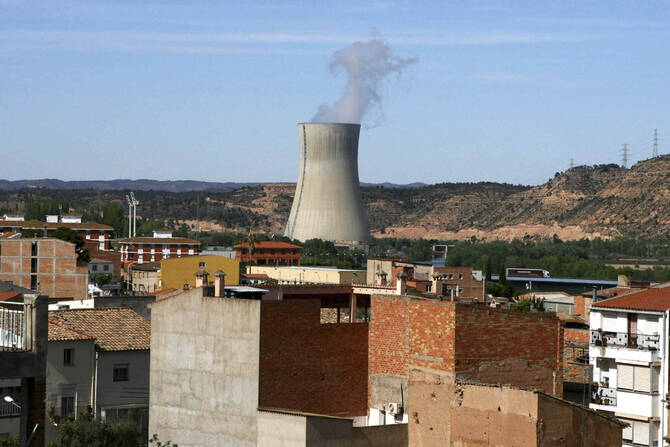
After Spain’s blackout, questions about renewable energy are back
https://arab.news/pym2d
After Spain’s blackout, questions about renewable energy are back
- The European Union’s fourth-largest economy generated 56 percent of its electricity last year from renewables
- Spanish Prime Minister Pedro Sánchez has stressed that his government would not deviate from its energy transition plans
New York declares January Muslim American Heritage Month
JEDDAH: The Muslim Council of Elders welcomed the announcement by the State of New York in the United States designating January as a month to celebrate Islamic heritage, noting that the step reflects a deep appreciation for the civilizational, cultural and humanitarian contributions of Muslims, and their role in enriching societies and promoting the values of diversity and coexistence.
In a statement, the council said the announcement embodies a growing awareness of the importance of recognizing cultural and religious diversity as a source of strength for societies, and contributes to fostering a culture of mutual respect and building bridges of understanding among followers of different religions and cultures.
Accordingly, Gov. Kathy Hochul on Jan. 2 issued the first-ever proclamation declaring January as Muslim American Heritage Month across New York State. She also directed 16 state landmarks to be illuminated in green in observance of the month and in celebration of the heritage and culture of Muslim Americans.
“Home to the largest Muslim American population in the nation, New York is proud to join in this month-long celebration, recognizing the values, faith and traditions of our Muslim American communities,” Hochul said. “New York remains committed to being a beacon of hope, tolerance, and inclusivity that celebrates the diversity of its Muslim American population and protects them from Islamophobia, hate, bias, and harm.”
For the first time in state history, January has been proclaimed Muslim American Heritage Month. The designation recognizes the significant contributions Muslim Americans have made throughout history in fields including the arts, sciences, mathematics, technology, literature, music, medicine and philosophy, and encourages New Yorkers to better appreciate and understand the rich cultures, histories and principles of the Muslim American community.
New York City Mayor Zohran Mamdani said: “While I was proud to be sworn in as our city’s first Muslim mayor yesterday, Muslims have been part of New York for centuries. We have built small businesses, raised our families, pursued every profession, enriched our culture and cuisine, and been a part of what makes our city what it is today. I am grateful for Governor Hochul’s leadership in recognizing these many contributions and ensuring that every January, Muslim New Yorkers can see ourselves reflected and recognized in a city and state that is also our home.”
16 landmarks will be illuminated in green in honor of Muslim American Heritage Month including One World Trade Center, the Gov. Mario M. Cuomo Bridge, Kosciuszko Bridge, the H. Carl McCall SUNY Building, the State Education Building, the Alfred E. Smith State Office Building, Empire State Plaza, the State Fairgrounds Main Gate and Expo Center, the Franklin D. Roosevelt Mid-Hudson Bridge, Grand Central Terminal’s Pershing Square Viaduct, Albany International Airport Gateway, the MTA LIRR East End Gateway at Penn Station, the Fairport Lift Bridge over the Erie Canal, Moynihan Train Hall, the Roosevelt Island Lighthouse and Niagara Falls.
New York City Councilmember Shahana Hanif said: “As the first Muslim woman elected in New York State, I applaud Governor Hochul’s designation of January as Muslim American Heritage Month. My Muslim identity is inseparable from being Brooklyn-born and raised. From Brooklyn to Buffalo, Muslim New Yorkers reflect the extraordinary diversity, resilience, and contributions that define our state. This recognition is more than symbolic—it affirms that New York’s history and future cannot be told without its Muslim communities, and I am proud to be a Muslim New Yorker.”
New York City Councilmember Yusef Salaam said: “For the first time, New York is proclaiming January as Muslim American Heritage Month and lighting state landmarks green to honor the state’s vibrant Muslim community — and I thank the Governor and the many Muslim advocates who fought to make this recognition a reality. This acknowledgment affirms our deep roots and lasting contributions to the fabric of New York.”
Imam Mansoor Rafiq Umar of the Muslim Community of Bethlehem said: “As a Muslim born in the great state of New York, I carry with me the confidence of ‘One nation under God’ to the same tune as passionate believers of all faiths across America. Honoring the heritage of our people is truly a significant statement by our Governor, Kathy Hochul, that we are a part of the fabric of our nation that undergirds the common threads of goodwill. We are blessed to live in a state with balance in recognizing its diverse demographics, and an administration that engages its people without indulging in otherism. To all those honoring Muslim-American Heritage Month, we stand together, green lights a-lit on every monument, saluting our past giants, honoring our present stewards, and lifting the future leaders yet to come.”
Emgage Metro NY Senior Advisor Dr. Debbie Almontaser said: “As a longtime educator and one who believes in diversity, equity and inclusion, I commend and thank Governor Hochul for inaugurating January as Muslim American Heritage Month in the State of New York. This has been a lifetime dream where every Muslim child will feel acknowledged, heard and valued by their government.”
Muslim Public Affairs Council of Western New York inaugural president Dr. Khalid J. Qazi said: “The declaration of Muslim American Heritage Month affirms New York’s enduring commitment to diversity, dignity, and inclusion. It honors the rich history, faith, and profound contributions of generations of Muslim New Yorkers whose leadership, service, and innovation strengthen our communities, enrich the fabric of our state and celebrates our shared humanity.”


