



ISLAMABAD: Prime Minister Shehbaz Sharif warned India on Wednesday that it would have to “pay the price” for launching missile strikes inside Pakistan’s territory that killed 31 civilians overnight, reiterating that Islamabad has the right to respond to India’s military aggression.
Sharif’s statement followed the sharpest military escalation in more than two decades between the nuclear-armed rivals. The Indian government said it struck nine Pakistani “terrorist infrastructure” sites involved in planning a deadly attack in Indian-administered Kashmir on April 22. The assault took place on the tourist hill station of Pahalgam in the part of Kashmir governed by India, with 26 men killed.
The Pakistani military said six locations across its territory — Ahmedpur East, Muridke, Sialkot, Shakargarh in the eastern province of Punjab and Kotli and Muzaffarabad in Azad Kashmir — were targeted. Azad Kashmir is the part of the disputed Kashmir valley that is administered by Pakistan. In response, Pakistan military spokesperson Lt. Gen. Ahmed Sharif Chaudhry had said five Indian planes and one combat drone that had attacked Pakistan were shot down, naming three Rafales and an MiG-29 and Su-57 each.
Pakistan has vowed that it has the right to respond to India’s military strikes as per international law. Sharif said earlier on Wednesday that the country’s top national security body had authorized its armed forces to take “corresponding actions” in response to Indian strikes.
“For the blatant mistake that India made last night, it will now have to pay the price,” Sharif said in his televised address to the nation. “Perhaps they thought that we would retreat, but they forgot that by the grace of Allah, this is a nation of brave people whose determination is made of steel.”
He termed it India’s “delusion” to think that its strikes could distract Pakistan from its war to eliminate “terrorism.”
“God willing, we will take this war [against ‘terrorism’] to its logical conclusion,” he added.
The Pakistani prime minister said the India’s attack was “baseless and unjustified,” saying that Islamabad had offered India a neutral, transparent, and credible investigation into the Pahalgam attack. He noted that Islamabad’s offer was supported by the international community.
However, India chose aggression, violating international law and global norms, he said.
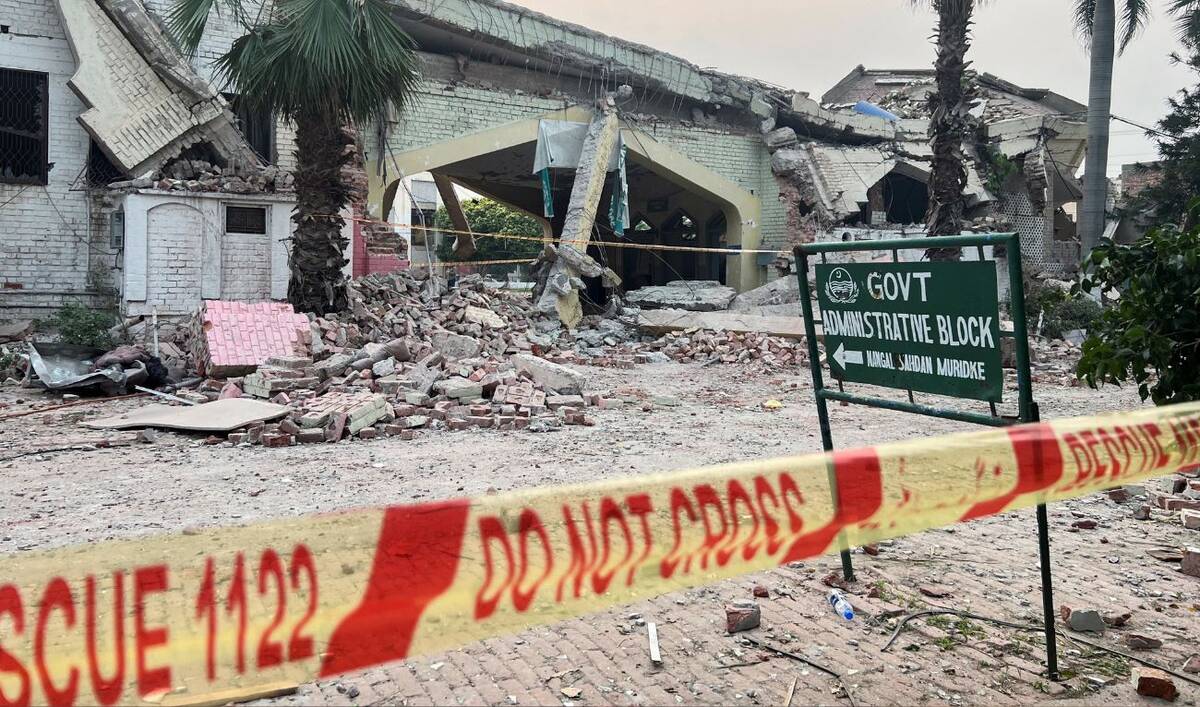
A damaged portion of an administration block at the Government Health and Education complex, after it was hit by an Indian strike, in Muridke near Lahore, Pakistan May 7, 2025. (REUTERS)
Pakistan’s foreign ministry earlier said it had summoned India’s Chargé d’Affaires “to receive Pakistan’s strong protest over the unprovoked Indian strikes.”
“The Indian side was warned that such reckless behavior poses a serious threat to regional peace and stability,” the foreign office said.
DEATH TOLL SURGES TO 31
Speaking to reporters at a news conference, Pakistan military’s spokesperson Lt. Gen. Ahmed Sharif Chaudhry said the death toll from Indian attacks on Wednesday night have surged from 26 to 31 while 57 people have been injured.
“The main reason for the rise in the martyrs and number of injured is due to India’s unprovoked shelling at the Line of Control and ceasefire violations,” Chaudhary said.
The military spokesperson warned that Pakistan’s quest for peace should never be mistaken for its weakness.
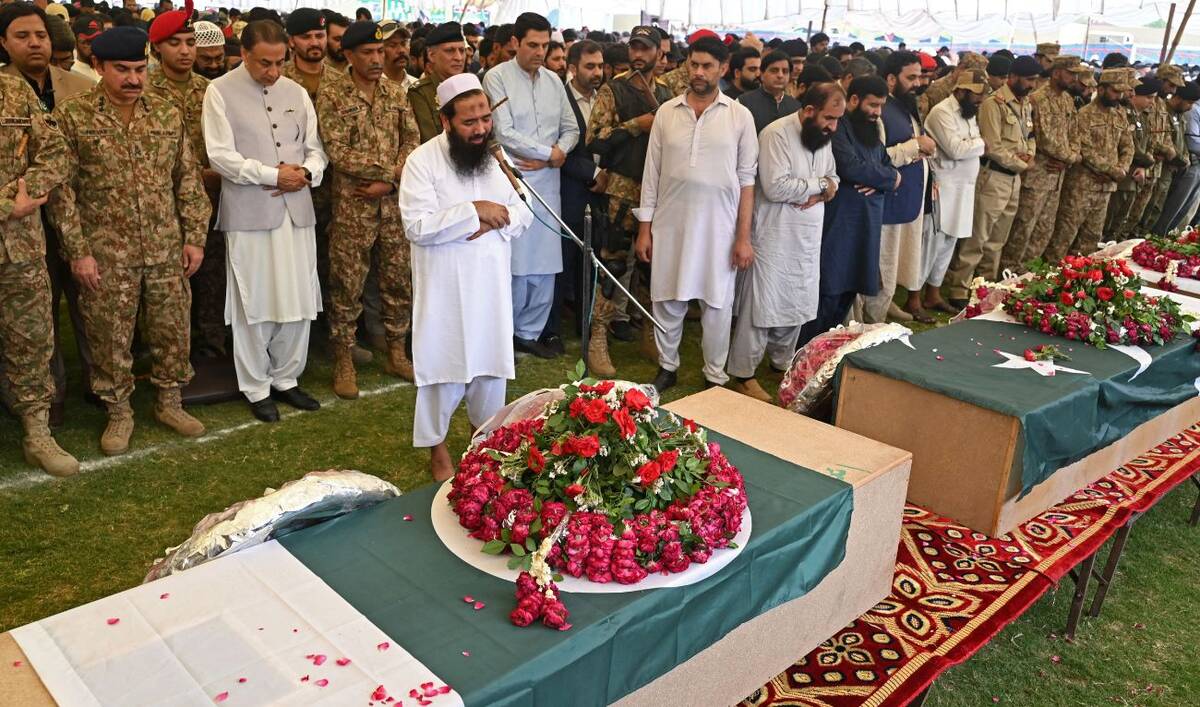
Pakistan's senior military and civil officials, along with residents, attend the funeral of Indian strike victims in Muridke, about 30 kms from Lahore, on May 7, 2025. (AFP)
“Because to protect its people, to protect its land, the armed forces of Pakistan will never compromise,” he said.
Chaudhary concluded his press conference by assuring the masses that Pakistan’s armed forces would hold India accountable for casualties as a result of the Indian strikes.
“TERRORIST CAMPS”
In New Delhi, two Indian military spokespersons told a briefing Indian forces had attacked facilities linked to militant groups Jaish-e-Mohammed and Lashkar-e-Taiba. Pakistani officials say India only hit civilian infrastructure.
The strikes targeted “terrorist camps” that served as recruitment centers, launchpads, and indoctrination centers, and housed weapons and training facilities, the Indian spokespersons said.
They said Indian forces used niche technology weapons and carefully chose warheads to avoid collateral damage to civilians and civilian infrastructure, but did not elaborate on the specifics or methods used in the strikes.
“Intelligence and monitoring of Pakistan-based terror modules showed that further attacks against India were impending, therefore it was necessary to take pre-emptive and precautionary strikes,” Indian Foreign Secretary Vikram Misri, the top official in its external affairs ministry, told the briefing.
The joint briefing by the Indian military and foreign ministry listed past attacks in India blamed on Pakistan, with Misri saying Pakistan had not done anything to “terrorist infrastructure” after the Pahalgam attack, which triggered the latest standoff.
Pakistan had denied involvement in the attack and Prime Minister Shehbaz Sharif had offered to be part of any credible and transparent investigation.
Kashmir has been disputed between India and Pakistan since 1947. Both rule it in part and claim it in full and have fought two of their three wars over the Himalayan region. India accuses Pakistan of arming and training militants involved in a separatist insurgency in its part of Kashmir since 1989, which Islamabad denies, saying it offers only moral and diplomatic support to the Kashmiri people in their struggle for self-determination.
The current confrontation is reminiscent of the last major military standoff between the two nations in 2019, when an Indian airstrike in the northwestern town of Balakot was followed by Pakistani retaliatory action, including the downing of an Indian fighter jet and the capture of its pilot, who was later released in a gesture of goodwill.
On Wednesday morning, the South Asian neighbors also exchanged intense shelling and heavy gunfire across much of their de facto border called the Line of Control, which divides disputed Kashmir between them.
The shelling across the frontier in Kashmir killed 10 civilians and injured 48 in the Indian part of the region, police there told media. At least six people were killed on the Pakistani side, Reuters reported, quoting officials.
Four local government sources in Indian-administered Kashmir told Reuters three fighter jets had crashed in separate areas of the Himalayan region during the night. Indian defense ministry officials have not officially confirmed the report.
– With inputs from Reuters


