PIR CHANASI, Muzaffarabad: Tensions between India and Pakistan have impacted tourism in Pakistan-administered Kashmir, with local business owners reporting a sharp decline in visitor arrivals on Sunday (May 4) due to safety concerns and restrictions on movement enforced by Pakistani authorities.
The latest crisis between the nuclear-armed neighbors was sparked by a deadly attack on tourists in the disputed Kashmir region last week that saw suspected militants kill at least 26 people. India has accused Pakistan of involvement in the attack, which Islamabad denies. Pakistan has said it has “credible intelligence” that India intends to launch military action.
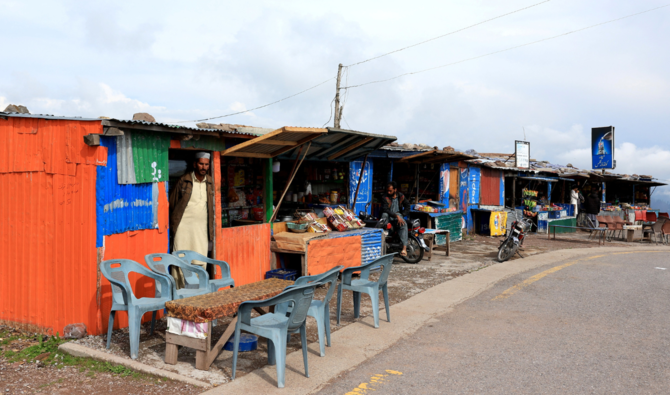
The Pir Chinasi area in Muzaffarabad district, a popular hilltop tourist destination not far from the border with India-administered Kashmir, has seen a dramatic drop in footfall, leaving hotels empty and businesses struggling.
“Due to tensions between India and Pakistan, the roads have been closed here since the border is nearby,” Mohammad Saghir, a local restaurant owner, said. “Because of this, only a few tourists are coming here.”
However, Syed Yasir Ali, a tourist from Islamabad, said he believes the area is still “a safe place” and “very peaceful.”
Despite Ali’s positive reassurances, Abrar Ahmed Butt, a spokesperson for the All Kashmir Hotel Association, local hotels and guesthouses have experienced “zero occupancy” over the past eight days due to road closures and restrictions on movement being enforced by local authorities. With no end in sight for the current hostilities, Butt said he is “hoping for the best”, but very supportive of Pakistani authorities, even if it means preventing tourists from traveling to the Muzaffarabad area.
“National security is our top priority. As patriots, we love our country. When our country is secure, business and other aspects will follow suit. With faith, we trust things will improve,” said Butt.

Fear and uncertainty grip Azad Kashmir’s tourism sector as India-Pakistan tensions soar
https://arab.news/mgf99
Fear and uncertainty grip Azad Kashmir’s tourism sector as India-Pakistan tensions soar
- Guesthouses in Azad Kashmir experiencing “zero occupancy” due to safety concerns and restrictions, says hotel association
- Tensions between Delhi, Islamabad have surged since last month when militant attack killed 26 in Indian-administered Kashmir
Pakistan says durable South Asia peace 'impossible' until Kashmir dispute is resolved
- Pakistan marks Feb. 5 as Kashmir Solidarity Day to support right of self-determination for people of disputed Kashmir
- Himalayan territory remains disputed between India and Pakistan, with both claiming it in full but administering only parts
ISLAMABAD: President Asif Ali Zardari said on Thursday that durable peace in South Asia will be impossible to achieve unless the Kashmir dispute between India and Pakistan is resolved, urging the international community to stop India from its alleged human rights violations in the territory.
Pakistan marks Feb. 5 every year as Kashmir Solidarity Day to support the right of self-determination for the people of Kashmir. The Himalayan territory has remained contested between nuclear-armed neighbors India and Pakistan, with both claiming it in full but administering only parts of it. Various groups across Pakistan mark the day with rallies and hold seminars on Feb. 5, which is a public holiday, to express their solidarity with the people of Kashmir.
The two countries have fought two out of three wars since 1947 over the disputed territory. On Aug. 5, 2019, India unilaterally revoked the special constitutional status of Jammu and Kashmir that it administers, stripping it of the limited autonomy it enjoyed. The development was followed by Pakistan’s decision to downgrade its diplomatic ties with New Delhi.
"The dangerous military escalation initiated by India in May 2025 serves as a stark reminder that true and durable peace in South Asia remains impossible unless the core dispute of Jammu and Kashmir is resolved," Zardari was quoted as saying by his office.
Tensions between Islamabad and New Delhi persist after both countries engaged in the worst fighting between them in decades in May 2025. The conflict stemmed from India's accusations that Pakistan had supported an attack in Indian-administered Kashmir that left several tourists dead. Islamabad denied the allegations and called for a credible probe into the matter.
Zardari urged the international community to persuade India to stop its alleged rights violations in Kashmir and allow "unfettered access" to rights observers in the territory.
Pakistan accuses India of jailing Kashmiri leaders, subjecting the media to restrictions in the Himalayan territory and oppressing the people of Kashmir. India has always denied these allegations and accused Islamabad of stoking militancy in the region.
Meanwhile, Prime Minister Shehbaz Sharif in his message on Kashmir Day, said India's actions on Aug. 5, 2019, were in violation of the UN Charter and also constitute a "blatant disregard" of relevant UN Security Council resolutions.
"Today, on Kashmir Solidarity Day, I assure my Kashmiri brothers and sisters that Pakistan will continue to extend its full moral, diplomatic, and political support to the Kashmiri people’s struggle for freedom until they realize their right to self-determination through the promised free and impartial plebiscite under the auspices of the United Nations," Sharif said.


