

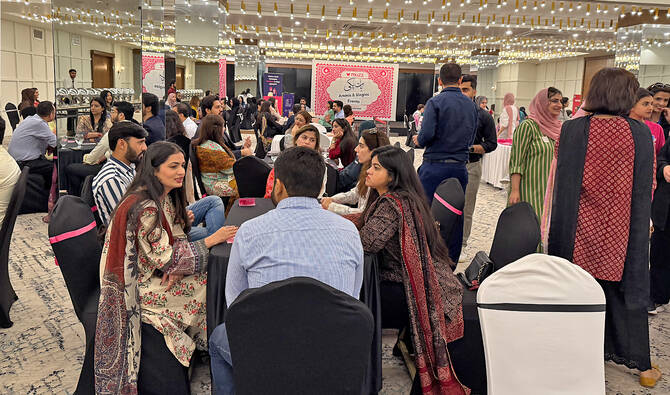

ISLAMABAD: In a country where conservative social norms often discourage casual dating, nearly 190 Pakistanis gathered in Islamabad on Saturday for a rare singles meet-up offering a more open, yet culturally respectful, route to finding a life partner.
Organized by Muzz, the world’s largest Muslim marriage app with over 15 million members, the event launched a series of matchmaking gatherings across Pakistan under the banner “Baat Pakki,” an Urdu phrase used when families agree to a marriage match. Muzz told Arab News it has over 2 million users in Pakistan.
A chaperone was mandatory for every participant, reflecting cultural sensitivities and ensuring seriousness.
“The goal of the event today was to help people of mixed ages to be able to meet each other,” Shahzad Younas, CEO of Muzz, told Arab News.
“The job of the team here … is to help people mingle and make sure that hopefully by the end of the event, everyone has talked to everyone who’s potentially compatible with them,” he added.
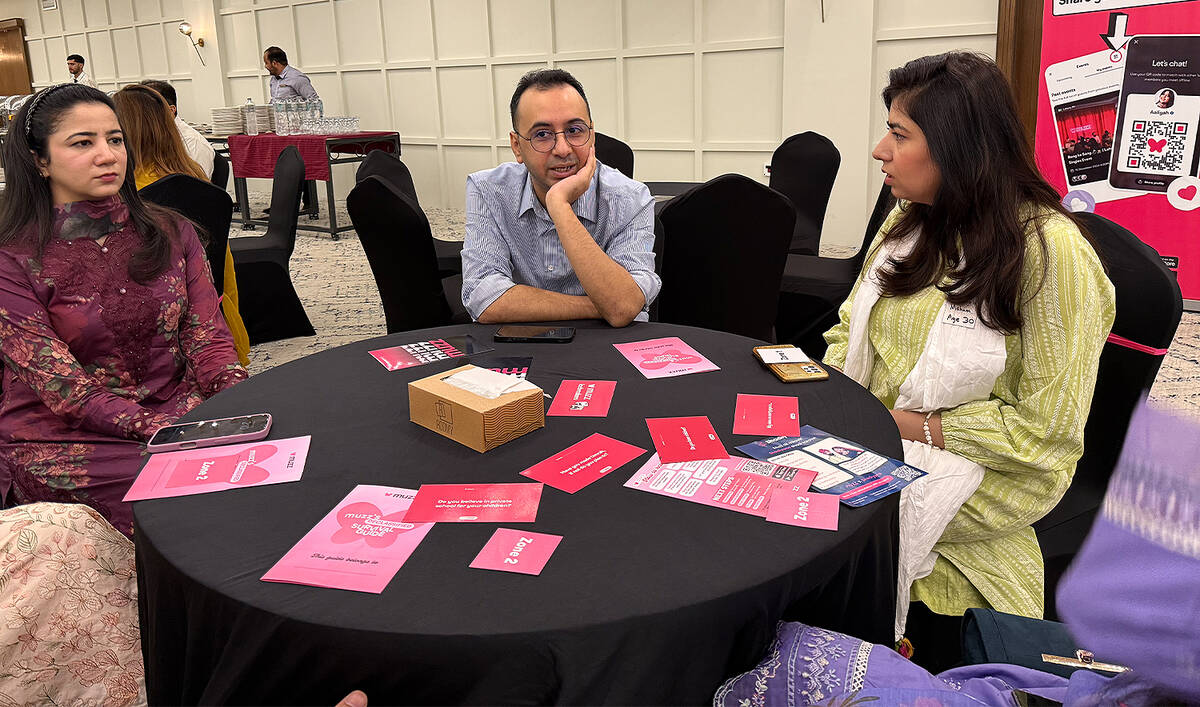
Singles talk to each other at the Muzz “Baat Pakki” event in Islamabad, Pakistan, on May 3, 2025. (AN photo)
Attendees were divided into three age groups — 22 to 30, 30 to 40 and 40-plus — with an adjoining lounge for family members. Icebreaker questions and Muzz staff helped start conversations at each table.
Singles first met within their age group before being introduced to others, aiming for broad interaction during the four-hour gathering.
The event was unique in a country where marriages are traditionally arranged by families or through professional matchmakers known as “Rishta Aunties,” who connect prospective families but rarely allow singles to meet independently before a match is proposed.
“Involving parents makes the process more transparent,” said Nazleen Javed, 65, who attended with her daughter. “Matchmakers are fake. See if you are coming with mother, your lie gets caught. A mother cannot lie, and the blessings of parents are different.”
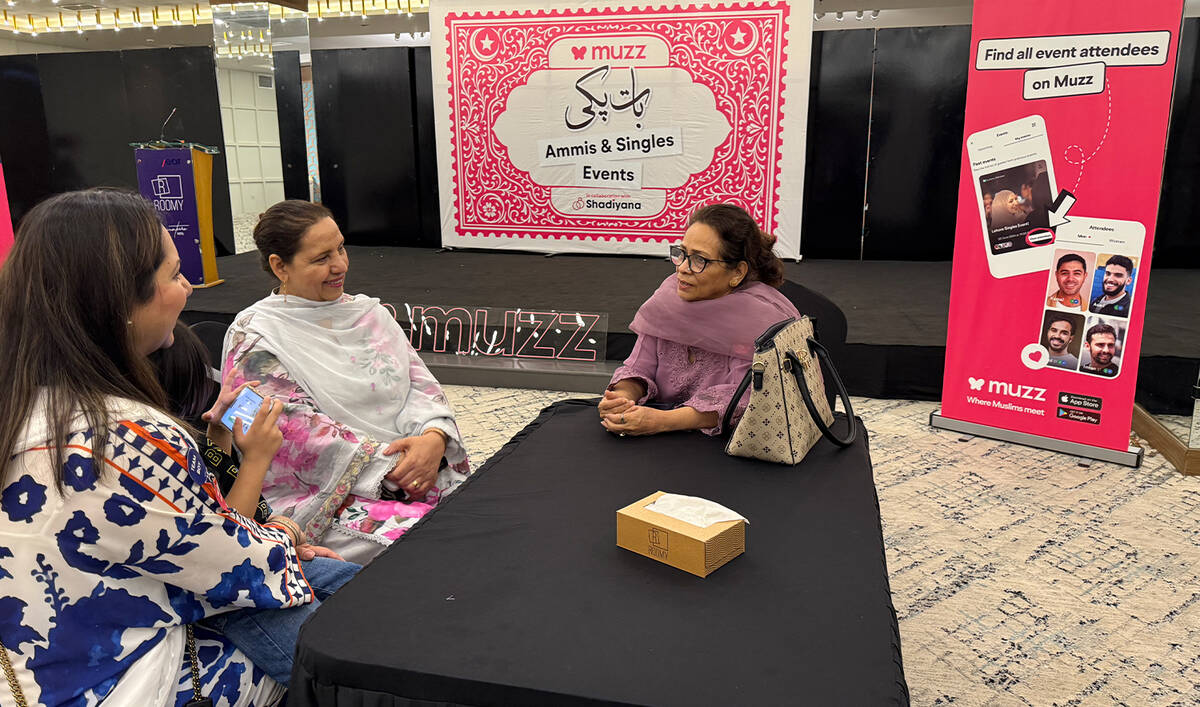
Mothers talk to each other at the Muzz “Baat Pakki” event in Islamabad, Pakistan, on May 3, 2025. (AN photo)
Others valued the chance to break away from rigid traditions.
“This way is better because you can see, talk and get a feel of the person,” said Noreen Khan, who came with her son. “Children have to spend their lives together. They should have some freedom to meet and speak to each other.”
Maheen, 27, said she had long been uncomfortable with conventional arranged marriage practices.
“I am not fond of the traditional way [of matchmaking] wherein the boy’s family visits your house and you, holding the tray, enter the room and they are looking at you, picking out faults,” she said.
“You [should be able to] talk to each other one-on-one, face-to-face, without the fear of rejection,” she continued. “That’s why I am here.”
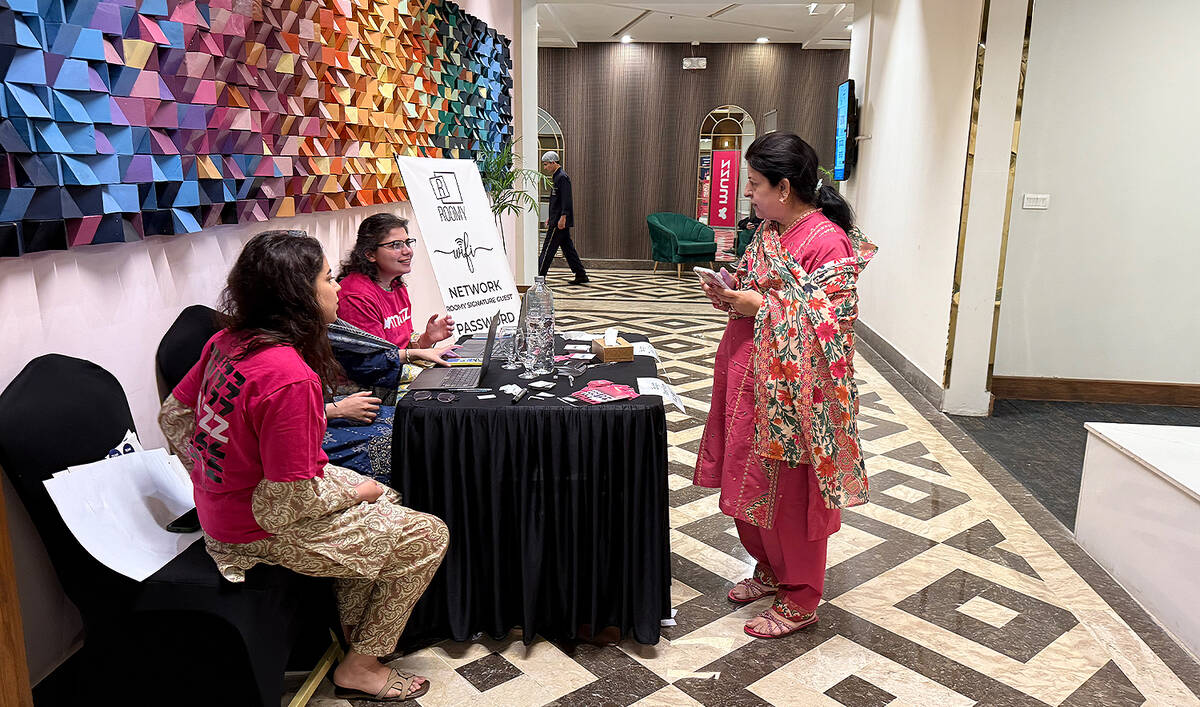
A mothers talks to Muzz team at the “Baat Pakki” event in Islamabad, Pakistan, on May 3, 2025. (AN photo)
Fariha Khan, 36, who works in the NGO sector in Peshawar, appreciated the diversity of participants.
“People from different cities and castes met here. That hesitation around differences was reduced today.”
Saad Waheed, 28, a mechanical engineer, admitted feeling uneasy at first after arriving at the event.
“I was a little bit hesitant … because I needed a chaperone and it felt very strange to me,” he said. “But in the long run, it makes sense. It means that everyone that’s here is serious about what they have signed up for.”
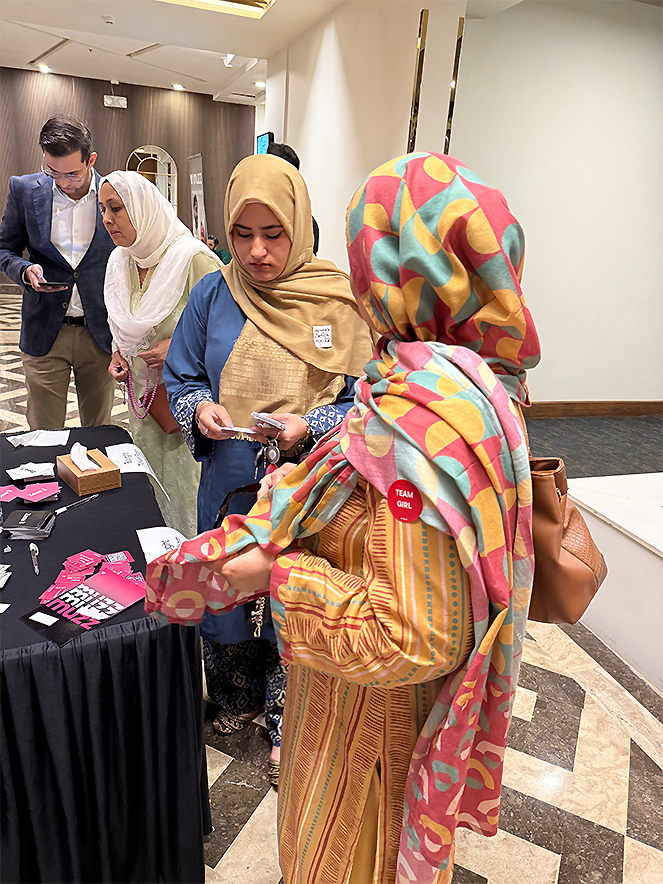
Singles and parents are pictured at the at the Muzz “Baat Pakki” event in Islamabad, Pakistan, on May 3, 2025. (AN photo)
Waheed also maintained matrimonial apps often felt impersonal to him.
“Single events like these offer a chance to make friends, which is a more natural way of meeting a partner.”
Nayab Nazir, Muzz’s marketing lead for Pakistan, said participants can later review the profiles of those they met through the app.
“I go back home, and if I have liked, let’s say, five people at the event, I can actually go and look at all those five profiles and connect directly instead of having a third person in between.”
Founded in 2015, Muzz has increasingly adapted its approach for Pakistan’s cultural context.
“We actually found that by inviting the mums it just helped make sure everyone was more serious,” Younas, the company’s CEO, said.
“It helps reduce the taboo of going to a singles event effectively,” he added. “A lot of mums can meet each other. They can see lots of people in one place in just a few hours.”


