
HARASTA, Syria: The United Nations special envoy for the Syrian Arab Republic condemned Saturday an intense wave of Israeli airstrikes as Israel said its forces were on the ground in Syria to protect the Druze minority sect following days of clashes with Syrian pro-government gunmen.
The late Friday airstrikes were reported in different parts of the capital, Damascus, and its suburbs, as well as southern and central Syria, local Syrian media reported. They came hours after Israel’s air force struck near Syria’s presidential palace after warning Syrian authorities not to march toward villages inhabited by Syrian Druze.
Israel’s military spokesperson Avichay Adraee wrote on X the strikes targeted a military post and anti-aircraft units. He also said the Israeli troops in Southern Syria were “to prevent any hostile force from entering the area or Druze villages” and that five Syrian Druze wounded in the fighting were transported for treatment in Israel.
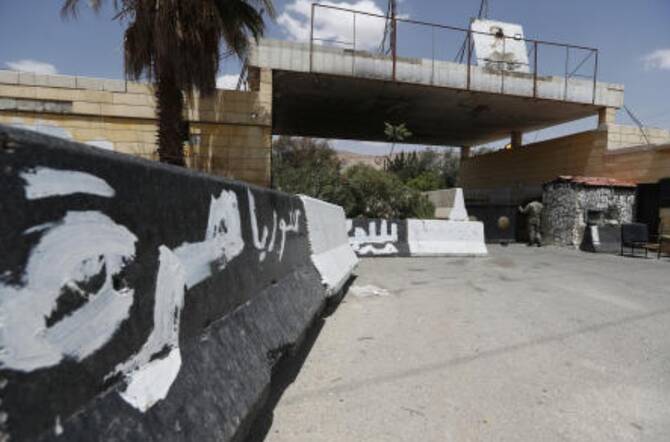
Syria’s state news agency, SANA, reported Saturday that four were wounded in central Syria, and that the airstrikes hit the eastern Damascus suburb of Harasta as well as the southern province of Daraa and the central province of Hama.
UN Special Envoy for Syria, Geir O. Pedersen, denounced the strikes on X.
“I strongly condemn Israel’s continued and escalating violations of Syria’s sovereignty, including multiple airstrikes in Damascus and other cities,” Pedersen wrote Saturday, calling for an immediate cease of attacks and for Israel to stop “endangering Syrian civilians and to respect international law and Syria’s sovereignty, unity, territorial integrity, and independence.”
Four days of clashes between pro-government gunmen and Druze fighters have left nearly 100 people dead and raised fears of deadly sectarian violence.
The clashes are the worst between forces loyal to the government and Druze fighters since the early December fall of President Bashar Assad, whose family ruled Syria with an iron grip for more than five decades.
Israel has its own Druze community and officials have said they would protect the Druze of Syria and warned Islamic militant groups from entering predominantly Druze areas. Israeli forces have carried out hundreds of airstrikes since Assad’s fall and captured a buffer zone along the Golan Heights.
The Druze religious sect is a minority group that began as a 10th-century offshoot of Ismailism, a branch of Shiite Islam. More than half of the roughly 1 million Druze worldwide live in Syria.
Most of the other Druze live in Lebanon and Israel, including in the Golan Heights, which Israel captured from Syria in the 1967 Mideast War and annexed in 1981. In Syria, they largely live in the southern Sweida province and some suburbs of Damascus, mainly in Jaramana and Ashrafiyat Sahnaya to the south.