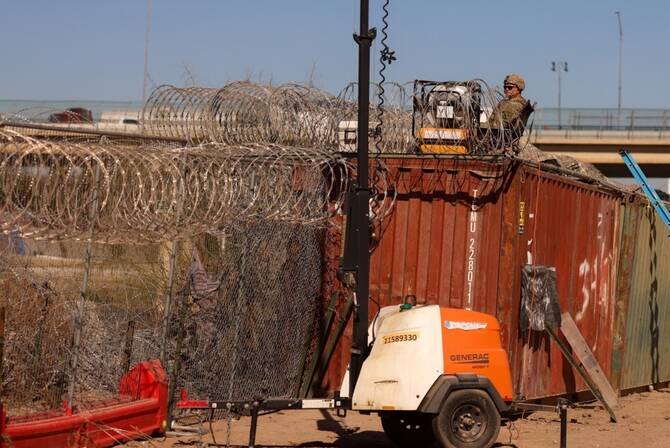
WASHINGTON: The US military has created a second military zone along the border with Mexico, adding an area in Texas where troops can temporarily detain migrants or trespassers to one designated in New Mexico last month.
President Donald Trump has launched an aggressive immigration enforcement campaign since taking office, increasing troops at the southern border and pledging to deport millions of immigrants in the United States illegally.
The Trump administration in April said it designated a 60-foot-wide, 170-mile-long (18 meter by 270 km) strip along the base of New Mexico as a “National Defense Area.”
Late on Thursday, the US military said it had established the “Texas National Defense Area” in a 63-mile-long strip running east from the Texas-New Mexico border in El Paso.
US Customs and Border Protection maintains jurisdiction over illegal border crossings in the area and troops would hand over migrants they detained to US Border Patrol or other civilian law enforcement, according to the Defense Department.
So far, 82 migrants have been charged for crossing into the New Mexico military zone, according to the state’s US Attorney’s Office. US troops have not detained any of them and they were dealt with by CBP officials.
The zone is intended to allow the Trump administration to use troops to detain migrants without invoking the 1807 Insurrection Act that empowers a president to deploy the US military to suppress events like civil disorder.
Around 11,900 troops are currently on the border. The number of migrants caught crossing illegally in March fell to the lowest level ever recorded, according to government data.
Texas Governor Gregg Abbott, a Republican, on Thursday posted pictures of razor wire barrier construction on the border, saying “Texas continues to work with the Trump Administration to stop illegal immigration.”
Since 2021 Abbott has deployed the state’s National Guard and police to border security.
New Mexico Governor Michelle Lujan Grisham has opposed what she called a “deportation buffer zone” in her state.
In a March social media post the Democrat called it “a waste of resources and military personnel, especially when migrant crossings are at the lowest in decades.”


![]()

US military creates new military zone along border with Mexico
Short Url
https://arab.news/j4ky2
US military creates new military zone along border with Mexico
- The US military said it had established the “Texas National Defense Area” in a 63-mile-long strip running east from the Texas-New Mexico border in El Paso


Latest updates




© 2026 SAUDI RESEARCH & PUBLISHING COMPANY, All Rights Reserved And subject to Terms of Use Agreement.