SWAT: Along the banks of the Swat River in northwest Pakistan, dozens of men spend their days hunched over sieves, washing mud and stones in the hope of discovering a fragment of green that could transform their lives.
Among them is 55-year-old Javeed Khan from Buner, who has spent the past six years buying sacks of debris from contractors operating near the region’s famed emerald mines, which he and others then sift through in search of gemstone particles.
The picturesque Swat valley is known internationally for producing high-quality emeralds, with reserves of approximately 70 million carats, prized for their deep color and clarity — though few of the men searching here have ever held one in their hands.
Armed with little more than a wooden sieve, a small knife and a can of water, the prospectors pour river water over sacks of stone and sand, rubbing and inspecting the contents under the sun.
“In the past, [these sacks] used to be cheap and had more particles,” said Khan as he scrubbed away at a fresh batch. “Now, it needs good fortune. Some are lucky enough to find [emeralds], and some poor go home empty-handed.”
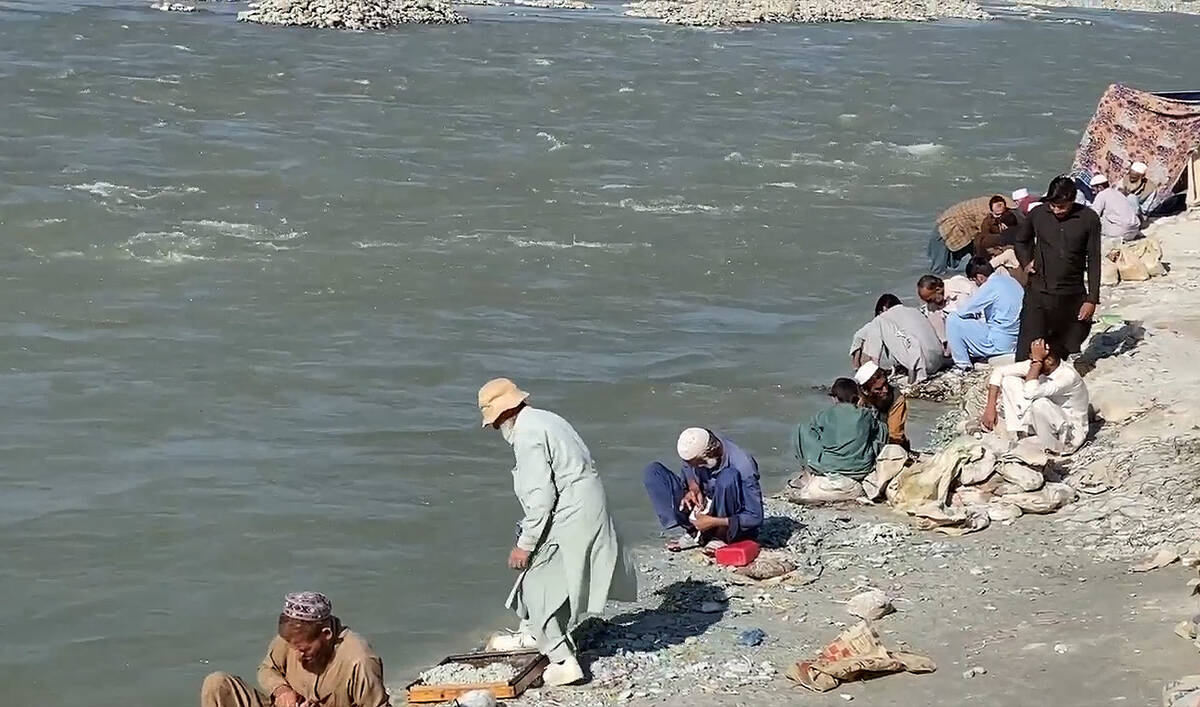
Men sift sand alongside Swat river in search of rare emerald in Swat, Pakistan on April 27, 2025. (AN Photo)
The sacks of debris, leftovers from mining operations, are sold for anywhere between Rs100 ($0.36) and Rs2,000 ($7.12), depending on how promising the contents look.
For most people, it’s a gamble that doesn’t pay off.
“I have not found something of a hefty amount,” said Khan. “The most I ever made [in a single day] was around Rs30,000 [$107] to Rs40,000 [$142].”
Even that kind of meagre luck comes once in a while, he added. Some prospectors made a modest living. Others lost everything.
Muhammad Ali, 50, from Miandam, has been trying his luck for six months but was now finally walking away from this work.
“I haven’t found a single thing to this day,” said Ali, who recently sold his livestock to fund his search for emerald fragments. “This is my last day at this work. I am giving up.”
The desire to chase emeralds was like throwing one’s money into the famed Swat River, he added.
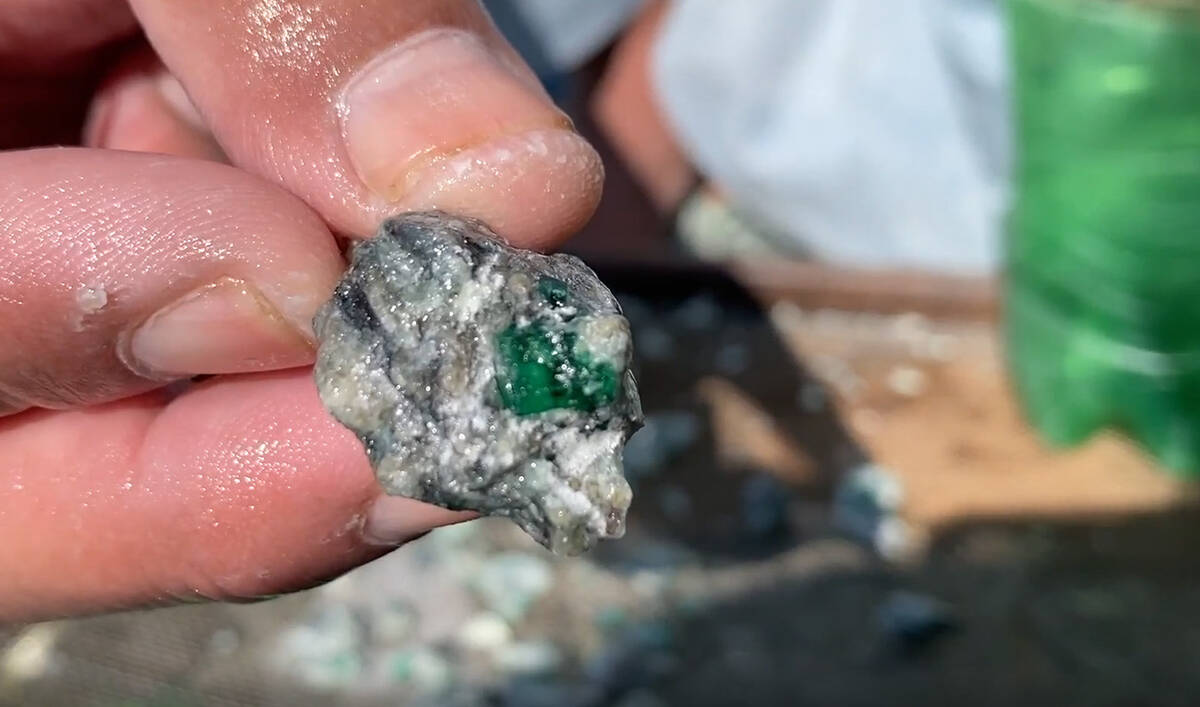
A man holds uncut emerald found in sand for a picture taken on 27 April, 2025, in Swat, Pakistan. (AN Photo)
At the other end of the trade are contractors like Noor-ur-Rahman, 33, from Shangla, who manages a mine near Mingora city, a main town in Swat.
“The workers come and see the debris,” he said. “If they find any signs of emeralds, like green particles or color in the sand, they buy it. Some [contractors] sell the debris cheap, and some sell it expensive. When we give a sack at Rs100, we call that a doubtful one.”
The business of emerald picking has grown beyond the riverbank, with Qaisar Sultan, president of the Swat Gemstones Merchants Association, estimating that thousands of people were now involved in the work of cleaning and sorting mine debris.
“The debris is also taken by women and children to homes,” he said, “where they clean it and try to collect emeralds.”