Eurovision lifts ban on Palestinian flags as scrutiny of Israel’s participation grows

The Eurovision Song Contest is scheduled to take place in May 2025 in Basel, Switzerland, following the country’s victory in 2024 with Nemo’s song “The Code.” (AFP/File Photo)
Short Url
Updated 02 May 2025
Follow

Eurovision lifts ban on Palestinian flags as scrutiny of Israel’s participation grows

  • Fans will now be allowed to bring and display any flag that does not contain racist content, hate symbols
  • Iceland, Spain and Slovenia have all raised concerns about Israel’s participation at this year’s contest

LONDON: Organizers of the Eurovision Song Contest have lifted a ban on Palestinian flags for audience members, but maintained restrictions for participating artists, as pressure over Israel’s inclusion in this year’s event increased.

The change, confirmed by Danish broadcaster DR, marks a shift from the European Broadcasting Union’s longstanding rule prohibiting flags from non-competing countries and territories. That policy led to Palestinian flags being banned in previous years.

According to updated guidelines obtained by DR, fans will now be allowed to bring and display any flag that does not contain “racist and/or discriminatory content,” or symbols thought to incite hatred, violence, or linked to banned organizations.

In a statement to CNN, the EBU said the update seeks to “strike a balance to ensure that our audiences and artists can express their enthusiasm and identities,” while offering greater clarity for national delegations.

However, the relaxed policy applies only to the audience. Participating artists will still be restricted to displaying official national flags in all official Eurovision spaces, including the stage, green room, and Eurovision Village. Artists may show only the flag of the country they represent.

The revised policy comes amid growing criticism of Israel’s participation in this year’s contest to be held in Basel, Switzerland, with semifinals on May 13 and 15 and the final on May 17.

Officials in countries including Slovenia, Spain and Iceland have questioned Israel’s inclusion.

Icelandic Foreign Minister Porgerour Katrin Gunnarsdottir told a local outlet she found it “strange and actually unnatural that Israel is allowed to participate,” accusing the country of committing “war crimes” and “ethnic cleansing” in Gaza.

Despite these objections, the EBU has confirmed that Israel’s entry meets the competition’s rules. As with last year, large-scale protests are expected in Basel against Israel’s participation.

Despite pressure from pro-Israel organizations, Swiss authorities said demonstrations are permitted in principle, including those opposing Israel’s presence, provided they comply with public safety regulations.


To infinity and beyond: Grendizer’s 50 years of inspiring Arabs

Updated 27 December 2025
Follow

To infinity and beyond: Grendizer’s 50 years of inspiring Arabs

  • ⁠ ⁠50 years after its creation, the Grendizer anime series continues to capture Arab imagination
  • ⁠ ⁠⁠Arab News Japan speaks to creator Go Nagai, Middle Eastern fans and retells the story behind the UFO Robot tasked with protecting our planet

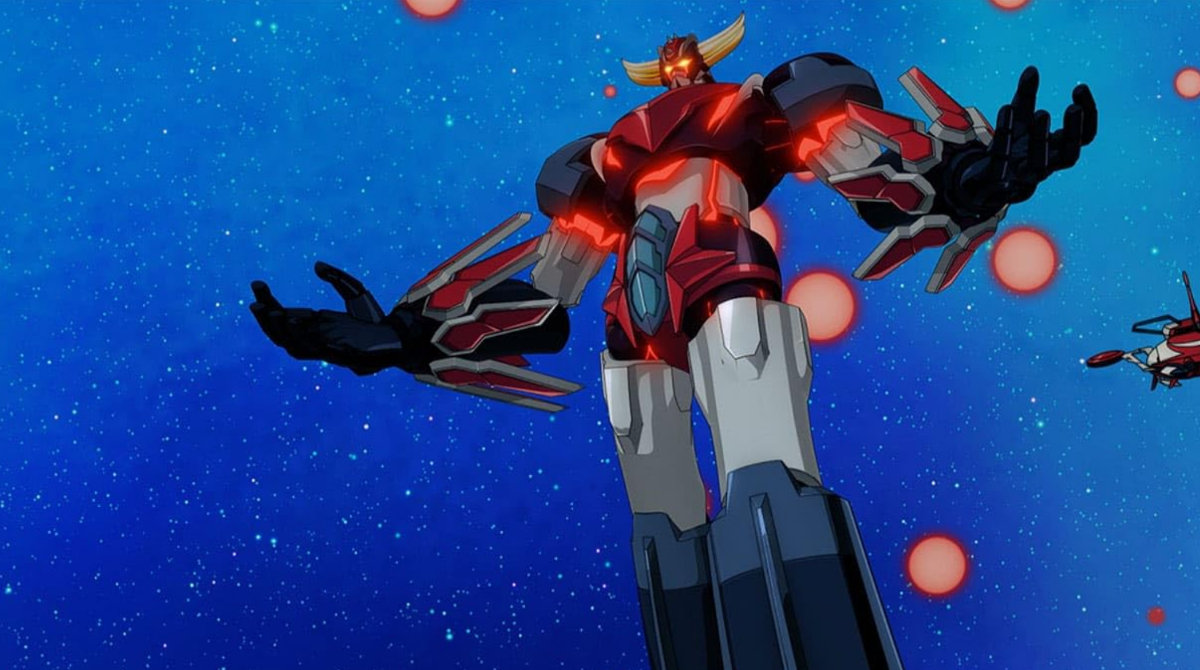
LONDON: Few cultural imports have crossed borders as unexpectedly, or as powerfully, as Grendizer, the Japanese giant robot that half a century ago became a childhood hero across the Arab world, nowhere more so than in Saudi Arabia.

Created in Japan in the mid-1970s by manga artist Go Nagai, Grendizer was part of the “mecha” tradition of giant robots. The genre was shaped by Japan’s experience during the Second World War, and explored themes of invasion, resistance and loss through the medium of science fiction.

But while the series enjoyed moderate success in Japan, its true legacy was established thousands of kilometers away in the Middle East.

By the early 1980s, “Grendizer” had spread across the Middle East, inspiring fandoms in Saudi Arabia, Kuwait, Iraq and beyond. (Supplied)

The anime “UFO Robot Grendizer” arrived on television in the region in 1979, dubbed into Arabic and initially broadcast in Lebanon during the Lebanese civil war. The story it told of the heroic Duke Fleed, a displaced prince whose planet had been destroyed by alien invaders, struck a chord with children growing up amid regional conflict and occupation by Israel.

Its themes of defending one’s homeland, standing up to aggression and protecting the innocent were painfully relevant in the region, transforming the series from mere entertainment into a kind of emotional refuge.

Much of the show’s impact came from its successful Arabization. The powerful Arabic dubbing and emotionally charged voice-acting, especially by Lebanese actor Jihad El-Atrash as Duke Fleed, lent the show a moral gravity unmatched by other cartoons of the era.

While the series enjoyed moderate success in Japan, its true legacy was established thousands of kilometers away in the Middle East. (Supplied)

The theme song for the series, performed by Sami Clark, became an anthem that the Lebanese singer continued to perform at concerts and festivals right up until his death in 2022.

By the early 1980s, “Grendizer” had spread across the Middle East, inspiring fandoms in Saudi Arabia, Kuwait, Iraq and beyond. For many, it was not only their first exposure to anime, it also delivered lessons on values such as justice and honor.

Grendizer was so influential in the region that it became the subject of scholarly research, which in addition to recognizing the ways in which the plight of the show’s characters resonated with the audience in the Middle East, also linked the show’s popularity to generational memories of displacement, particularly the Palestinian Nakba.

By the early 1980s, “Grendizer” had spread across the Middle East, inspiring fandoms in Saudi Arabia, Kuwait, Iraq and beyond. (Supplied)

Half a century later, “Grendizer” remains culturally alive and relevant in the region. In Saudi Arabia, which embraced the original version of the show wholeheartedly, Manga Productions is now introducing a new generation of fans to a modernized version of the character, through a video game, The Feast of The Wolves, which is available in Arabic and eight other languages on platforms including PlayStation, Xbox and Nintendo Switch, and a new Arabic-language anime series, “Grendizer U,” which was broadcast last year.

Fifty years after the debut of the show, “Grendizer” is back — although to a generation of fans of the original series, their shelves still full of merchandise and memorabilia, it never really went away.


Grendizer at 50
The anime that conquered Arab hearts and minds
Enter
keywords