

Saudi Arabia’s real GDP grows 2.7% in Q1: GASTAT 

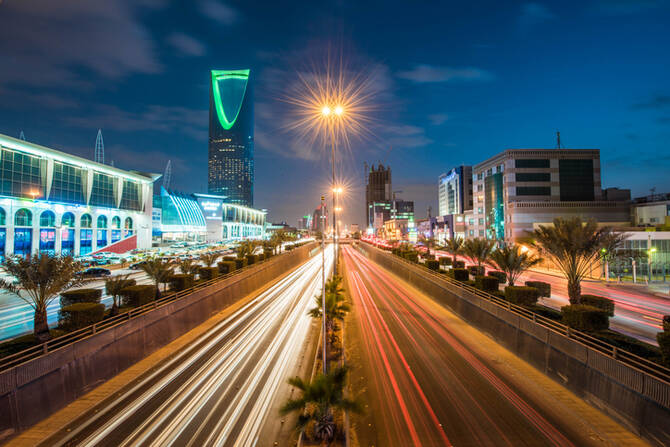
Saudi Arabia’s GDP growth also aligns with the broader Middle East trends. Getty
Short Url
Updated 01 May 2025
Follow

Saudi Arabia’s real GDP grows 2.7% in Q1: GASTAT 

RIYADH: Saudi Arabia’s economy saw annual growth of 2.7 percent in the first quarter of 2025, driven by strong momentum in non-oil activities as the Kingdom continues efforts to diversify away from hydrocarbons. 

According to flash estimates released by the General Authority for Statistics, non-oil activities expanded 4.2 percent during the first three months of the year, extending their growth streak to 17 consecutive quarters. Government services rose 3.2 percent, while oil-related activities contracted 1.4 percent. 

Saudi Arabia’s growth in the non-oil sector aligns with the goals outlined in the Vision 2030 program, which aims to diversify the country’s economy by reducing reliance on crude revenues. 

This comes as the International Monetary Fund, in its latest economic outlook, noted that short-term growth in the Middle East will be driven by the expansion of the non-oil sector, projecting the region’s economy to grow by 2.6 percent in 2025 and 3.4 percent in 2026. 

In a release, GASTAT stated it has conducted “a comprehensive revision of GDP estimates as part of its efforts to achieve high levels of alignment with international standards and data quality.” 

It added: “Nominal and real GDP (annually and quarterly) time series have been revised accordingly.”  

Commenting on the comprehensive revision of GDP estimates, Saudi Arabia’s Minister of Economy and Planning and Chairman of GASTAT Faisal Al-Ibrahim said that it is a strategic step that reflects the Kingdom’s commitment to improving the quality of its economic data, Saudi Press Agency reported. 

He added that the revision will also enhance the transparency in measuring the performance of the national economy.

“This update comes within the framework of continuous efforts to develop statistical methodologies in line with international best practices, pointing out that the positive impact of this update will contribute to improving the accuracy of measuring the size of the Saudi economy and its components,” said Al-Ibrahim. 

The minister added that the revision is aimed at reflecting the contribution of additional economic activities within the Kingdom which include fintech, the creative economy, logistics, sports and entertainment. 

Al-Ibrahim further said that the contribution of non-oil activities to the Kingdom’s GDP has reached 53.2 percent, an increase of 5.7 percent over previous estimates. 

On a quarterly basis, seasonally adjusted GDP rose 0.9 percent, with government activities jumping 4.9 percent and non-oil output increasing 1.0 percent. Oil sector GDP dropped 1.2 percent amid ongoing production cuts under the OPEC+ agreement. 

Saudi Arabia’s GDP growth also aligns with the broader Middle East trend, where other countries are steadily diversifying their economies. 

Qatar’s full-year GDP for 2024 grew by 1.7 percent, driven by a 1.9 percent rise in non-hydrocarbon activities. The UAE’s central bank projects 4 percent GDP growth in 2024, while Bahrain reported year-on-year expansion of 2.1 percent in the third quarter. 

Saudi Arabia is ramping up efforts to enhance its data infrastructure, drive digital transformation, and harness artificial intelligence and advanced technologies to boost the efficiency and accuracy of its statistical operations. 

Speaking at the first Saudi Statistics Forum held earlier this week, Fahad Al-Dossari, president of GASTAT, reiterated the authority’s commitment to supporting decision-makers by continuously developing the statistical system to meet national and international standards. 

“Statistics are no longer merely supportive tools; today, they are at the heart of development work and a critical enabler of sustainable development, ensuring efficient spending, enhancing service quality, and supporting economic and social growth,” Al-Dossari said during the event in Riyadh. 


RLC Global Forum highlights role of Saudi youth in retail digital shift 

Updated 04 February 2026
Follow

RLC Global Forum highlights role of Saudi youth in retail digital shift 

RIYADH: Saudi Arabia’s young and highly digital population is reshaping how the Kingdom’s retail sector adopts new technologies and artificial intelligence, advancing faster than many global competitors, industry leaders told Arab News. 

Speaking on the sidelines of the RLC Global Forum in Riyadh, executives told Arab News that the intersection of a youthful population and strong investment in AI is driving a shift in the industry’s priorities. 

From understanding consumer behavior to leveraging the Kingdom’s growing status as a global AI leader, Saudi Arabia is becoming as a unique destination for the retail sector to thrive, learn, and evolve in the digital sphere. 

Abdullah Al-Tamimi, CEO of commercial real estate company Hamat Holding, told Arab News that the firm is keen to analyze and understand consumer behavior, with a particular focus on the younger generation as a key part of that insight. 

“Actually, it’s a big part of our day-to-day operation,” he said, adding that the company invests heavily in understanding customer needs and behavior and works to correct any missteps. 

Al-Tamimi emphasized paying close attention to small details, noting that younger consumers are especially sensitive to the overall experience and “deserve that we work around the clock in order to improve it.” 

He added that this focus “can be a competitive advantage for Saudi Arabia as well.” 

Al-Tamimi said that as the younger generation grows accustomed to new technology shaping retail customer experiences, Hamat Holding is leveraging AI to enhance them further. 

“We started a couple of initiatives improving digitalization,” he said, adding that the company sees digital tools as a way to enhance its work by automating day-to-day operations and allowing teams to focus on bigger-picture and more complex tasks. 

While the firm has expanded its use of technology, he stressed it has not replaced human workers, emphasizing the continued importance of human capital for creativity and interaction. “AI is a big part of our strategy,” Al-Tamimi added. 

Amit Keswani Manghnani, chief omnichannel and AI officer at luxury goods retailer and distributor Chalhoub Group, told Arab News that bridging a younger customer base with continuous digital development is key to advancing the Kingdom’s retail strategies. 

On Saudi Arabia’s demographics, he said: “We look at 2030 as really building products which serve especially the younger population, which is growing and very digitally savvy.” 

Manghnani underscored the unique characteristics of the Kingdom’s retail market as a tool for developing effective products and customer experiences. 

“So it’s very digitally savvy, much more than in other markets,” he said, noting that e-commerce penetration is rising not only through online purchases but also via digital catalogs that drive in-store visits. 

Manghnani said investment is focused on making products more digitally accessible and easier to use, while strengthening customer service to meet the expectations of what he described as a demanding but welcome consumer base. “Service excellence, digital — all these things together are how we are tapping into the younger population, which again is extremely savvy.” 

Manghnani reinforced Al-Tamimi’s point that the Kingdom holds a competitive advantage, citing the speed at which its retail and technology industries are aligning. 

“As a market, we’re tending to see the adoption of digital,” he said, referring to AI, data and other forms of digital interaction, adding that these tools are increasingly being combined. 

He noted that this market is moving “much quicker than the other markets.” 

The two-day RLC Global Forum brought together more than 2,000 global leaders, policymakers, and innovators from over 40 countries over the two-day event to define the next chapter of growth across retail, consumer, and lifestyle industries.