Five Indians kidnapped in attack in Niger

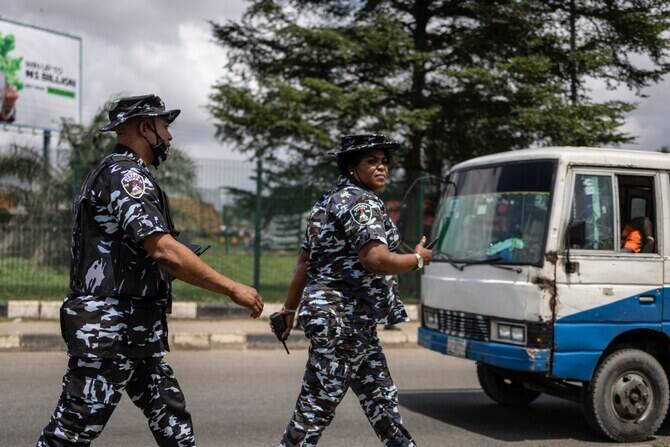
Five Indian citizens were kidnapped in western Niger during an attack last week by armed men that also killed a dozen soldiers, according to two Nigerian security sources and a statement by Indian state authorities seen by Reuters on Wednesday. (AFP/File)
Short Url
Updated 30 April 2025
Follow

Five Indians kidnapped in attack in Niger

  • The victims were working for an Indian company providing services to Niger’s Kandadji dam project
  • The armed men who carried out the kidnapping have not been officially identified

NIAMEY: Five Indian citizens were kidnapped in western Niger during an attack last week by armed men that also killed a dozen soldiers, according to two Nigerian security sources and a statement by Indian state authorities seen by Reuters on Wednesday.
Reuters reported on Saturday that 12 soldiers had been killed in the attack a day earlier near the village of Sakoira in the tri-border region, where the West African Sahel countries of Niger, Burkina Faso and Mali meet.
The victims were working for an Indian company providing services to Niger’s Kandadji dam project, the two security sources said.
The local government of the Indian state of Jharkhand said in a statement that the five citizens had been working in the Tillaberi region.
It said all five were from Jharkhand and that the Indian embassy in Niger had approached Nigerian authorities for support in securing their release.
The armed men who carried out the kidnapping have not been officially identified, but last month Niger blamed the EIGS group, a Daesh affiliate, for an attack on a mosque near the tri-border area in which at least 44 civilians were killed.
Niger, Mali and Burkina Faso are fighting a jihadist insurgency linked to Al-Qaeda and Islamic State that spun out of a Tuareg rebellion in northern Mali in 2012 and later spread to its neighboring countries.
Kidnappings appear to have intensified this year, with an Austrian woman kidnapped in January and a Swiss citizen earlier in April, both in Niger. Also in January, four Moroccan truck drivers went missing on the border between Niger and Burkina Faso.


Swedish intelligence warns of increased Middle East war fallout

Updated 5 sec ago
Follow

Swedish intelligence warns of increased Middle East war fallout

  • “The threat has increased primarily against American, Jewish, Israeli interests or opposition figures” Hallstrom told AFP
  • Hallstrom also said the war in the Middle East could have “considerable impact” on European security

STOCKHOLM: A top Swedish intelligence official on Thursday warned of increased threats against American and Israeli interests, as well as Iranian dissidents, in Sweden because of the war in the Middle East.
The Scandinavian country’s security, which had already deteriorated after Russia’s invasion of Ukraine, has worsened since the US-Israeli strikes on Iran on Saturday unleashed a new war, according to Fredrik Hallstrom, head of operations for the Swedish Security Service (Sapo).
“The threat has increased primarily against American, Jewish, Israeli interests or opposition figures, rather than toward Sweden as a nation or country,” Hallstrom told AFP.
“I’m talking about opposition figures with such influence that they could actually either be perceived as a serious threat to the Iranian regime, or in fact be one,” he explained.
Hallstrom also said the war in the Middle East could have “considerable impact” on European security.
Police have taken measures to increase security around potential targets, such as embassies, he said.
Sapo has previously pointed to Iran, China and Russia as the main threats to the country.
It has accused Iran in particular of recruiting members of Swedish criminal gangs to commit “acts of violence” against Israeli and other interests in Sweden — a claim Iran denied.
Other risks highlighted by Sapo include increased intelligence activities in Sweden, surveillance and actions targeting Iranian dissidents in exile, as well as the acquisition of equipment, research and know-how that could contribute to the development of nuclear weapons.
“We know that Iran uses cyberattacks and hacks phones and computers in order to monitor others,” Hallstrom said.
He added that this monitoring could be potentially used to get individuals “in Sweden to provide information about other people, by exerting pressure.”