ISLAMABAD: The head of the Pakistan-administered region of Kashmir called for international mediation and said on Wednesday that his administration was preparing a humanitarian response in case of any further escalation between nuclear-armed India and Pakistan.
Pakistan’s government has said it has “credible intelligence” that India intends to launch military action soon after days of escalating tensions following a deadly attack on tourists in Indian-administered Kashmir.
India blamed Pakistan for the April 22 attack that killed 26 people, which Islamabad has denied.
“There is a lot of activity going on and anything could happen so we have to prepare for it. These few days are very important,” president of Pakistan-administered Kashmir Sultan Mahmood Chaudhry told Reuters in an interview, calling for rapid international diplomacy to de-escalate the situation.
“We expect some mediation at this time from some friendly countries and we hope that that mediation must take place, otherwise India would do anything this time,” he said. Saudi Arabia, Qatar and the United Arab Emirates could be in a position to mediate, he added.
Chaudhry also said he hoped major players like the United States and Britain might also get involved.
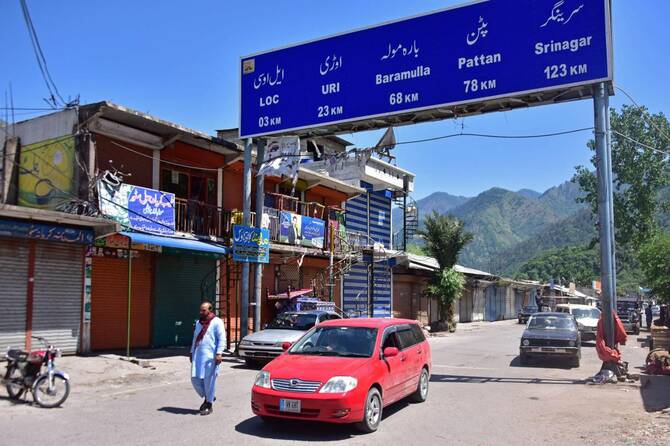
He said activity along the Line of Control (LoC) that divides the two portions of Kashmir was “hot” and that Pakistan had shot down two Indian drones in the last few days.
There had been regular firing by Pakistani and Indian soldiers day and night, though so far there had been no casualties, he said.
Pakistan had also detected Indian Rafale fighter jets flying near the LoC, though they had not crossed, he added.
The Indian Air Force did not respond to a request for comment, though an Indian military official said Rafale jets were doing their usual training and drills along the LoC.
Chaudhry said he had not received intelligence on when and where India was expected to strike, but his administration was working with groups such as the Red Crescent Society to prepare extra medical and food supplies in case of any conflict.
“Red Crescent are working on it and we are working on displaced people in affected areas,” he said.
He said that the international community also needed to pay more attention to Kashmir’s long-term future.
“I think this is the right time for the international community as a whole and the UN to play some mediating role in Kashmir,” he said.
“It’s been a very long time and the people of Kashmir have suffered a lot.”
Pakistan-administered Kashmir has its own elected government but Pakistan handles major issues like defense and its residents hold many of the rights of Pakistani citizens.
UN Secretary-General Antonio Guterres spoke to Pakistan and India on Tuesday, stressing the need to avoid confrontation. The US and Britain have also called for calm.

Head of Pakistan-administered Kashmir calls for international mediation
Short Url
https://arab.news/nqjge
Head of Pakistan-administered Kashmir calls for international mediation
- Head of Pakistan-administered Kashmir says Gulf states could help
- Calls for attention on Kashmir’s long-term future
Canada plans to assist Cuba while Washington squeezes the island
Canada said on Monday it plans to provide assistance to Cuba while the island grapples with fuel shortages after Washington moved to choke off Cuba’s oil supplies.
Washington has escalated a pressure campaign against the Communist-run island and long-time US foe in recent weeks.
US President Donald Trump’s administration has moved to block all oil from reaching Cuba, including that from ally Venezuela, pushing up prices for food and transportation and prompting severe fuel shortages and hours of blackouts.
“We are preparing a plan to assist. We are not prepared at this point to provide any further details of an announcement,” Canadian Foreign Minister Anita Anand said on Monday, without giving details on what such an assistance will include.
The UN has warned that if Cuba’s energy needs are not met, it could cause a humanitarian crisis. Canada said last week it was monitoring the situation in Cuba and was concerned about “the increasing risk of a humanitarian crisis” there.
Emboldened by the US military’s seizure of ousted Venezuelan President Nicolas Maduro in a deadly raid in January, Trump has repeatedly talked of acting against Cuba and pressuring its leadership.
Washington and Ottawa have also had tensions under Trump over issues like trade tariffs, Trump’s rhetoric toward Greenland, Ottawa’s attempt to warm ties with Beijing and Prime Minister Mark Carney’s remarks that “middle powers” should act together to avoid being victimized by US hegemony.
Trump has said “Cuba will be failing pretty soon,” adding that Venezuela, once the island’s top supplier, has not recently sent oil or money to Cuba.
The UN human rights office has said the US raid in which Maduro was seized was a violation of international law. Human rights experts cast Trump’s foreign policy and his focus on exploiting Venezuelan oil and squeezing Cuba as echoing an imperialist approach.
Washington has escalated a pressure campaign against the Communist-run island and long-time US foe in recent weeks.
US President Donald Trump’s administration has moved to block all oil from reaching Cuba, including that from ally Venezuela, pushing up prices for food and transportation and prompting severe fuel shortages and hours of blackouts.
“We are preparing a plan to assist. We are not prepared at this point to provide any further details of an announcement,” Canadian Foreign Minister Anita Anand said on Monday, without giving details on what such an assistance will include.
The UN has warned that if Cuba’s energy needs are not met, it could cause a humanitarian crisis. Canada said last week it was monitoring the situation in Cuba and was concerned about “the increasing risk of a humanitarian crisis” there.
Emboldened by the US military’s seizure of ousted Venezuelan President Nicolas Maduro in a deadly raid in January, Trump has repeatedly talked of acting against Cuba and pressuring its leadership.
Washington and Ottawa have also had tensions under Trump over issues like trade tariffs, Trump’s rhetoric toward Greenland, Ottawa’s attempt to warm ties with Beijing and Prime Minister Mark Carney’s remarks that “middle powers” should act together to avoid being victimized by US hegemony.
Trump has said “Cuba will be failing pretty soon,” adding that Venezuela, once the island’s top supplier, has not recently sent oil or money to Cuba.
The UN human rights office has said the US raid in which Maduro was seized was a violation of international law. Human rights experts cast Trump’s foreign policy and his focus on exploiting Venezuelan oil and squeezing Cuba as echoing an imperialist approach.
© 2026 SAUDI RESEARCH & PUBLISHING COMPANY, All Rights Reserved And subject to Terms of Use Agreement.


